

No viable solution? What technological and life-cycle analyses tell us about the limits of plastic waste management
No viable solution? What technological and life-cycle analyses tell us about the limits of plastic waste management
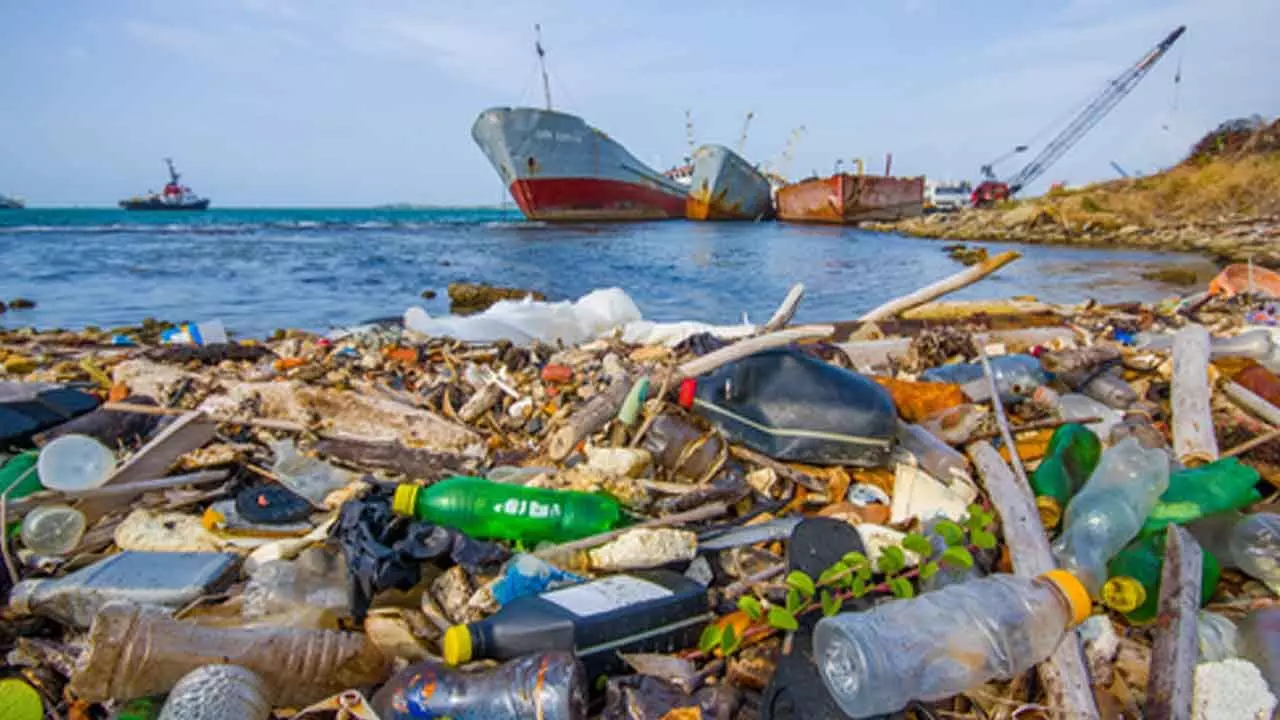
Since the 1950s, when the first plastics emerged, the complexity and scale of this supply chain have only grown. Today, plastic is a global commodity, so ubiquitous that almost everything around us contains some piece of it. Look around you: it's easy to see why global demand for plastics more than tripled between 1991 and 2021
Plastic has grown faster than any other industrial material in the last 65 years. Its cheap durability, initially an innovation, has become an environmental and public health problem of global proportions.
Without an end-of-life strategy, the world is conducting an uncontrolled experiment, with plastic accumulating in poor countries, rivers, and throughout the ocean.
Plastic isn't manufactured in a neighbourhood. Often, it's not even produced within a single country. It depends on a gigantic international supply chain. So-called primary plastics—liquid or gaseous chemicals used to make plastic products—cross oceans to supply factories around the world.
Since the 1950s, when the first plastics emerged, the complexity and scale of this supply chain have only grown. Today, plastic is a global commodity, so ubiquitous that almost everything around us contains some piece of it. Look around you: it's easy to see why global demand for plastics more than tripled between 1991 and 2021.
Such a large increase in molecules synthesised in the laboratory—which do not exist in nature—would certainly bring challenges. Among them is the challenge of contaminating our own bodies and ecosystems.
In places with weaker regulations and/or institutional capacities – especially in countries of the Global South – these challenges transform into visible crises: plastics in the soil, in the water, on the streets, in fish, in breast milk.
Technological assessments and life cycle analyses show that, at all costs, we still do not have a truly efficient waste management system when it comes to plastic, not on the scale at which we have been producing, consuming, and discarding it, nor even considering broad scenarios of recycling and incineration.
The open veins of the plastic
International trade has played (and continues to play) a central role in the plastics value chain worldwide. The plastics industry itself reflects this complexity and scale: leading companies in the sector often do not own their own factories—they rely on extensive networks of third-party manufacturers, usually located in countries with cheaper labour.
The result is a long, complex, and difficult-to-trace chain. For decades, international trade and the oil lobby have sustained the economic dependence on 140 plastic commodities.
Considering the highly interconnected nature of this chain, a Brazilian study conducted by us, the authors of this article, began to highlight the role of certain ports—restricted and delimited territories of international trade—in this chain.
Many global value chains—not just the plastics chain—pass through a few ports scattered around the world. This means that a large part of the power and control of these chains is concentrated in a few port companies at these border crossings.
Even when these companies assume some social and environmental responsibility, they rarely cover the full extent and complexity of the impacts generated. After all, supply chains enter and exit through ports, but spread throughout the world.
In most cases, these are multinational corporations with no commercial ties to the producers and consumers in the domestic part of the plastics supply chain.
The study proposes to investigate which ports, by functioning as funnels in this chain, are strategic points for the implementation of public policies to begin managing this crisis.





