

Trump SHUTS DOOR: H-1B Visa stamping freeze leaves Indians indefinitely stranded
H-1B visa stamping delays leave Indian professionals facing interview wait times up to 2027, disrupting jobs, families, and U.S. companies.
H-1B Visa stamping freeze
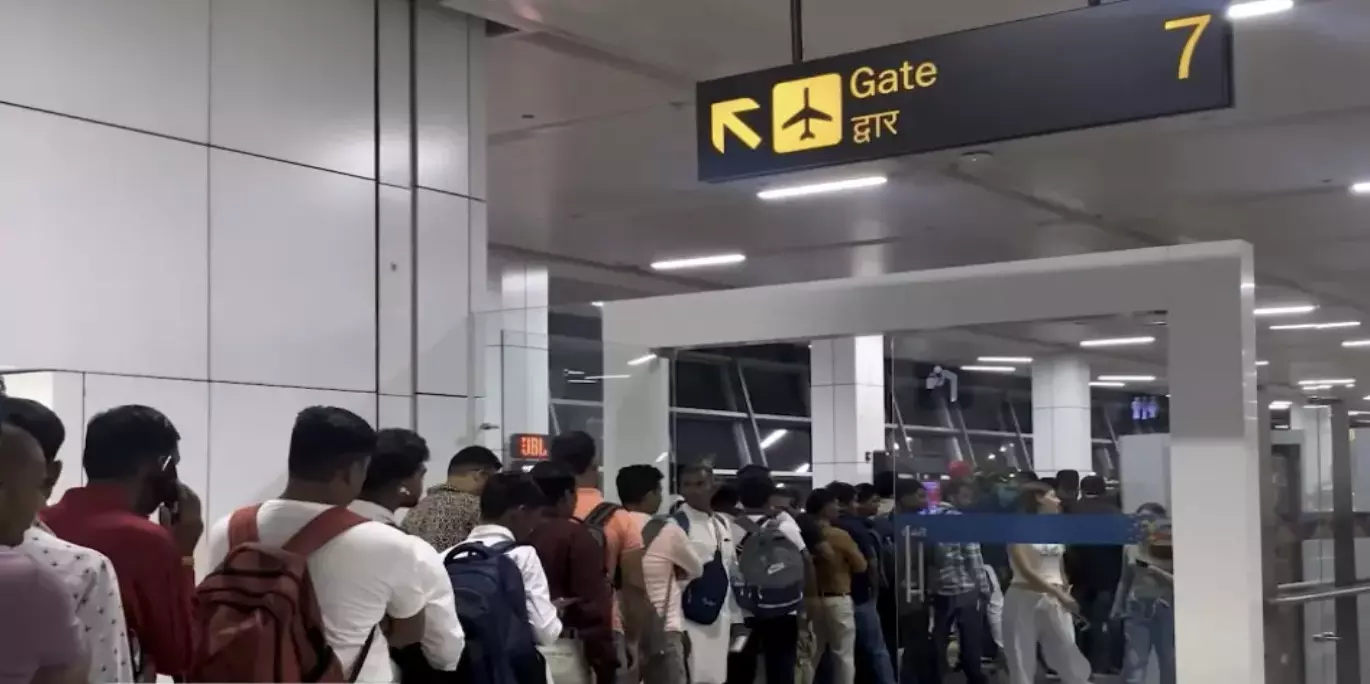
A sudden halt in new H-1B visa stamping appointments in the U.S. has left thousands of Indian professionals in uncertainty, with interview wait times reportedly stretching into 2027, affecting careers, families, and American employers dependent on skilled foreign workers.
A major disruption in the U.S. visa system has triggered anxiety among thousands of Indian professionals after H-1B visa stamping appointments reportedly became unavailable across key American consular centres in India. With no fresh slots visible and waiting periods extending far into the future, applicants now face the possibility of interview timelines stretching as far as 2027.
The development has created widespread uncertainty for Indian workers, many of whom are employed in critical sectors such as information technology, engineering, healthcare, finance, and research. U.S. companies that rely heavily on skilled foreign professionals are also feeling the ripple effects, as project timelines, workforce planning, and global mobility strategies face sudden disruption.
Applicants attempting to secure interview appointments at U.S. consulates in New Delhi, Mumbai, Chennai, Hyderabad, and Kolkata have reported an inability to find available dates. Immigration consultants say this kind of system-wide freeze is highly unusual and has led to confusion over whether the issue stems from policy changes, administrative backlogs, or technical scheduling constraints.
For many professionals, the impact is deeply personal. Workers who travelled to India for visa renewals now risk being stranded for extended periods, separated from their jobs, homes, and families in the United States. Others who had planned job transitions or new employment opportunities are being forced to delay or reconsider their career moves.
Family members on dependent visas are also affected, with schooling, housing, and financial commitments hanging in the balance. Some families face the prospect of living apart for months or even years if the situation does not improve soon.
Industry observers note that the H-1B programme plays a crucial role in supporting the U.S. innovation ecosystem. Indian nationals form a significant share of H-1B visa holders, particularly in the technology sector. A prolonged halt in visa processing could therefore slow hiring pipelines, delay product development, and increase operational strain for American firms.
Immigration attorneys are advising affected individuals to closely monitor official consular updates and avoid relying on unverified information circulating on social media. Some experts suggest that emergency appointments or policy clarifications may be introduced if the backlog intensifies or begins to significantly disrupt business operations.
The situation also raises broader questions about the resilience of global mobility systems in an era of tightening immigration policies and administrative pressures. For now, thousands of skilled professionals remain in limbo, awaiting clarity on when normal visa processing schedules might resume.
Until official guidance emerges, uncertainty continues to dominate, turning what was once a routine administrative step into a major hurdle for global talent movement.





