

The Backbone Of Metal Engineering: What is Metallurgy?
The evolution history of the metallurgy process is thousands of years long. Gold, silver and copper were the first known metals and were discovered in their
image for illustrative purpose
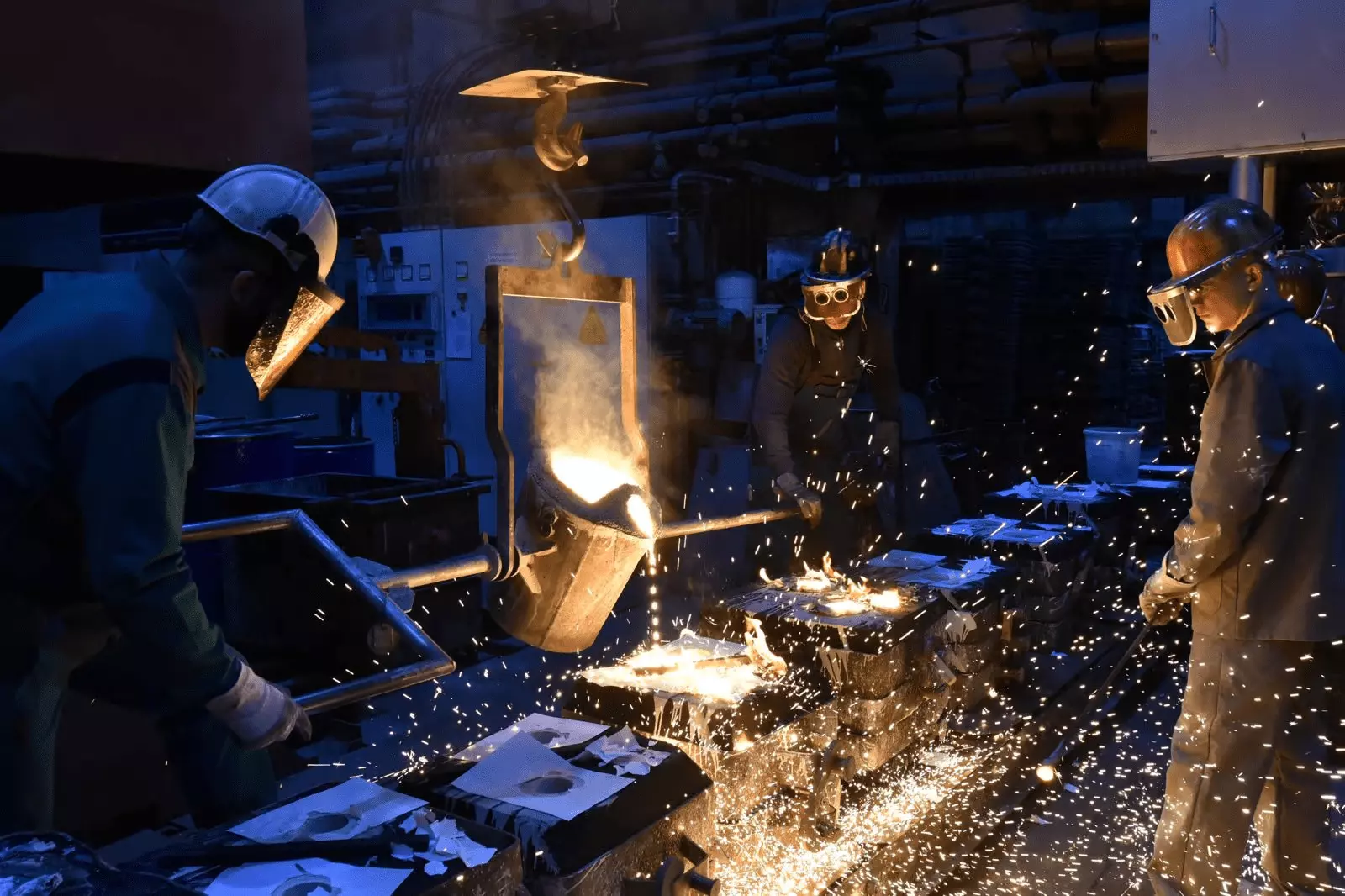
In its most basic form, metallurgy consists of removing the metals in the ores and working and shaping these into the form of a functioning, built-in part, which finds application in light weight metals in a skyscraper, to the high-performing parts in machines and smartphones.
Fundamentally, metallurgy is an engineering science that deals with the study of metals and the different mechanisms of manipulating them because one would be tempted to believe that metallurgy is metals. Yet, metallurgy has the same relationship as the craft of metalworking to the field of medicine.
A Journey Through History From Bronze To High Tech Alloys
The evolution history of the metallurgy process is thousands of years long. Gold, silver and copper were the first known metals and were discovered in their natural state in the riverbeds and sands in the late Stone Age. The Bronze age emerged as human beings learnt to melt and cast metals. Alloying copper and tin allowed individuals to create harder and sharper implements and weapons-a step in terms of utility and longevity.
This was followed by the Iron Age, which came in 1200 BCE. The Iron Age was the period when iron could be smelted, although not to its full melt but to a sufficient degree to obtain wrought iron results using the bloomery furnaces. With further experimentation the processes were refined, carbon was added to iron thus giving rise to a stronger carbon containing iron and steel. This revolution formed the basis of modern civilization and strong tools, weapons and structural materials. (Encyclopedia Britannica)
Since the 19th century, there have been scientific advances in the study of metals at the atomic and the molecular levels with the emergence of the field of thermodynamics and the atomic theory. New knowledge enabled the creation of all kinds of metals and alloys that were strong, durable, resistant to corrosion, and other qualities which were required. It extends to the modern sophisticated aerospace alloys, and electronic parts, to the infrastructure grade steels.
Branches of Metallurgy From Ore to Engineered Metal
Metallurgy is never a one way approach but rather a general branch that has numerous sub-branches that have different concerns to do with metals and their metamorphosis.
Extractive Metallurgy This is where metal is made. It involves extraction of metal in its mineral ores, using smelting (pyrometallurgy), leaching in liquids (hydrometallurgy) and electrolytic refining (electrometallurgy). Ores that are not pure are therefore converted into fairly pure metals that have already made their initial step towards ultimate processing.
- Physical Metallurgy: The physical metallurgy studies the effect of internal structure (crystal lattice, grain boundaries, phase composition) on the physical properties of metals after their extraction: strength, ductility, toughness, electrical/thermal conductivity, etc. The control of microstructure by alloying, heat treatment, etc., allows the engineering of metals for specific performance by the metallurgist
- Mechanical Metallurgy: This field is the study of the behavior of metals to forces; their deforming behavior at stress and strain, their behavior under load, fatigue, creep or other mechanical stress. It plays a significant role in creating metals to be used in carrying loads, machines, structural components, and numerous others.
- Chemical Metallurgy: concerned with the chemical characteristics of metals, how they oxidize, as well as corrode, how they react to environments, and what can be done to avoid their degradation. Chemical metallurgy develops protective roles, corrosion-resistant alloys, and other types of surface treatments.
Further, alloying and heat treatment processes are also part of metallurgy. Alloying is mixing of metals or adding other elements; heating and controlled cooling-annealing, quenching, tempering- are the processes through which the metallurgist can convert metals to have custom-made properties: hard, tough, ductile or resistant to corrosion to specific uses.
Metallurgy in the Modern World: Why It is Matters
Most industries today owe their existence to metallurgy:
Metallurgists in aerospace and automotive engineering develop alloys that can withstand high temperatures, resist fatigue, and be light but strong. Jet engines are driven by advanced super alloys and the high strength aluminium or titanium alloys minimise vehicle weight and enhance fuel efficiency.
Metallurgically optimized steels, irons and other metals are used in construction and infrastructure to construct the skeleton of bridges, buildings, machinery and power plants. Metallurgical science made them strong and durable, which guarantees them safety, durability and cost efficiency.
Metallurgy enables miniaturization and precision in electronics and other high-performance tools. Virtually all modern devices are based on conductive metals, corrosion-resistant alloys and special metal-based parts, and therefore metallurgy cannot be limited to manufacturing processes, but this field is also crucial to the environment and economy. As an example, recycling of metals (e.g. aluminum) through metallurgical processes can conserve immeasurable energy quantities at times as high as 95 per cent. production using raw ore. This conserves the resources and minimizes the environmental footprint.
Conclusion
Metallurgy is often hidden behind the gleaming steel beams, the polished alloy casing of devices, the smooth welds inside engines. Without it, though, modern civilization would be impossible. From Bronze Age tools to modern superalloys, metallurgy has evolved from rudimentary smelting to advanced microstructural engineering.
It is still the bridge between raw earth minerals and the high performance materials our society depends upon. Metallurgy doesn't just shape metal, it shapes progress.





