

Why Freelancers Fail on Platforms (and How to Fix It)
Discover why freelancers fail on platforms and learn the proven fixes to win more clients, build trust, and create steady freelance income.
image for illustrative purpose
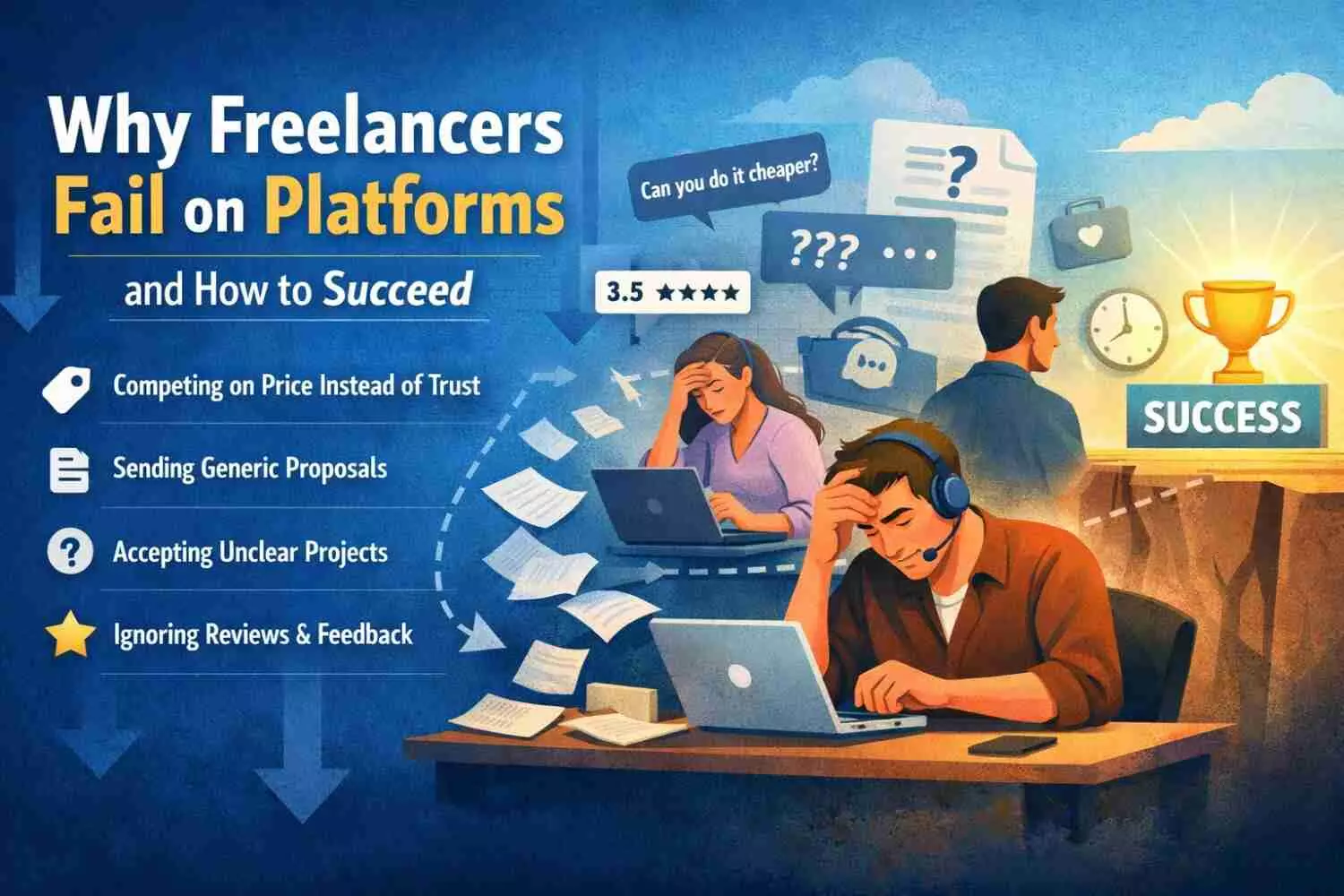
Most freelancers who fail on platforms do not fail because they lack skill. They fail because they misunderstand how platforms actually work. Marketplaces reward clarity, trust, and consistency far more than raw talent, and freelancers who ignore those mechanics struggle no matter how good they are at the work itself.
This article breaks down the most common reasons freelancers fail on platforms and the practical fixes that lead to steady work and long-term survival.
1. Competing on Price Instead of Trust
One of the fastest ways to fail on a platform is racing to the bottom on pricing. New freelancers often believe cheaper means safer for the client. In reality, very low prices raise concerns about quality, reliability, and follow-through.
Clients use price as a shortcut to judge risk. When pricing looks too low, they assume something is missing.
The fix
Price within the normal range for your service, not at the bottom.
Be clear about what is included so clients know what they are paying for.
Focus proposals on outcomes, not affordability.
Clients are buying confidence, not discounts.
2. Writing Profiles About Yourself Instead of the Client
Many freelancer profiles read like resumes. They list traits, tools, and years of experience while ignoring the client’s problem entirely. On platforms, clients skim quickly and skip anything that feels self-focused.
The fix
Open your profile with the problem you solve.
Explain what improves after you do the work.
Use simple language that sounds like a real conversation.
Profiles should make clients feel understood before they feel impressed.
3. Sending Generic Proposals
Platforms punish generic outreach. Clients receive many proposals, and anything that looks copied or vague gets ignored.
The fix
Reference the client’s specific situation in the first few lines.
Explain how you would approach their problem.
Keep proposals short, direct, and relevant.
One strong, tailored proposal outperforms ten generic ones.
4. Accepting Poorly Defined Projects
Freelancers often say yes to unclear work just to get started. This leads to confusion, scope creep, missed expectations, and bad reviews.
The fix
Ask clarifying questions before accepting work.
Define deliverables clearly and in writing.
Confirm what is not included, not just what is.
Clear projects protect both sides and reduce stress.
5. Treating Platforms Like Job Boards
Freelancers who fail often see platforms as places to apply for work rather than systems built around trust and repeat behavior. Platforms reward consistency, communication, and reliability over time.
The fix
Respond promptly and clearly.
Deliver when you say you will.
Use platform tools for milestones, messages, and updates.
Good platform behavior builds momentum faster than chasing new listings.
6. Ignoring Reviews and Feedback Loops
Reviews are not optional on platforms. They directly affect visibility and trust, yet many freelancers fail to manage this part of the process.
The fix
Close projects cleanly and professionally.
Ask for feedback at the right moment.
Use early reviews to refine how you work and communicate.
Strong reviews compound faster than skill improvements.
7. Overloading Themselves Too Early
Burnout causes many freelancers to disappear after early success. Taking on too much work leads to missed messages, rushed delivery, and declining quality.
The fix
Limit how many projects you run at once.
Build simple routines for communication and delivery.
Protect focus instead of maximizing hours.
Consistency beats short bursts of overwork.
8. Choosing the Wrong Environment
Not all platforms reward the same behavior. Some push price competition and vague work, while others emphasize clarity, structure, and long-term relationships.
Freelance platforms like Osdire focus on clearer scopes, trust signals, and professional workflows, which helps freelancers succeed by reducing misunderstandings and unnecessary friction. The lesson applies across platforms: environments that reward clarity and reliability create better outcomes.
The Core Pattern
Freelancers fail on platforms when they rely on talent alone and ignore how decisions are made. Clients want clarity, reduced risk, and smooth communication. Platforms reward behaviour that supports those goals.
Freelancers who succeed do not work harder. They communicate better, set clearer expectations, and operate in a way that makes clients feel safe hiring them again.
Skill opens the door - structure keeps it open.





