

Why are stargazers so curious about interstellar 3I Atlas?
3I Atlas, the third interstellar object, defies physics with shifting form, mathematical signals, and a mysterious archive, forcing humanity to confront cosmic observation.
3I Atlas isn’t Sci-Fi. It’s Ssomething far more unsettling
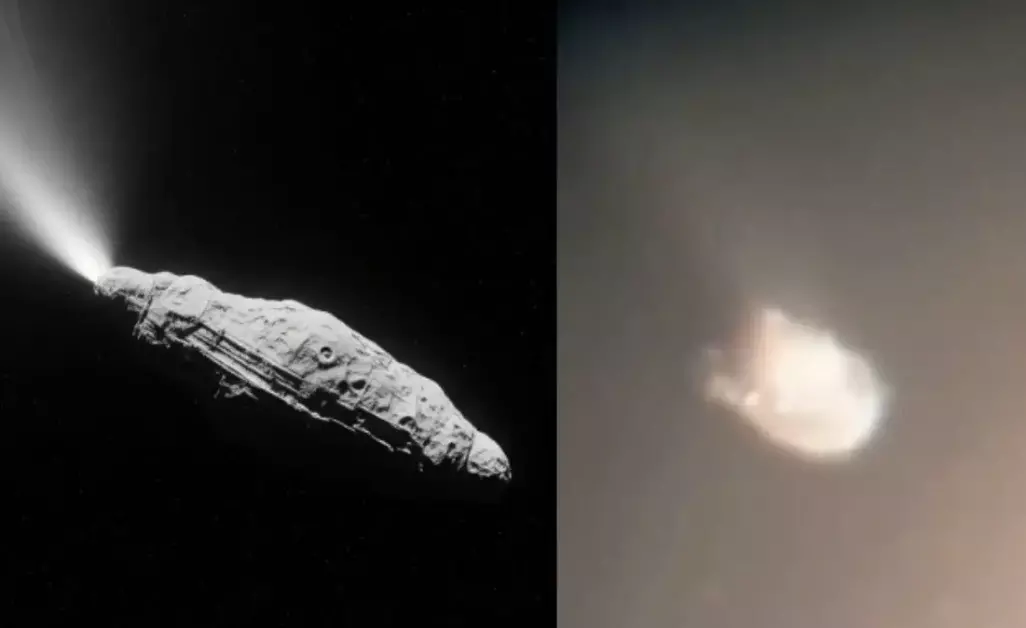
The moment the first confirmed data packet arrived from the deep-space, astronomers knew they were looking at something extraordinary. The object, catalogued as 3I Atlas, did not behave like any celestial body previously recorded. It neither followed a predictable orbital arc nor emitted signatures consistent with known interstellar visitors. Within hours, the scientific community — and soon the world — was asking the same question: What exactly is 3I Atlas, and why does it matter?
A Third Interstellar Intruder
Until recently, humanity had identified only two confirmed interstellar objects passing through our solar system. Both were fleeting, enigmatic, and gone before scientists could fully study them. 3I Atlas, however, was different. Detected early, moving unusually slowly, and displaying deliberate course adjustments, it earned the “3I” designation — the third interstellar object — but quickly surpassed its predecessors in both complexity and intrigue.
What truly set Atlas apart was its trajectory. Instead of slicing through the solar system on a hyperbolic escape path, it appeared to be lingering. Its motion suggested not a random wanderer, but a visitor with intent.
Anomalies That Defy Physics
Initial spectroscopic analysis revealed something unsettling. Atlas did not reflect light like rock, ice, or metal. Its surface absorbed nearly all electromagnetic radiation, yet intermittently released sharp, structured energy bursts at mathematically precise intervals. These pulses were not random. They followed sequences — prime numbers, Fibonacci progressions, and even non-human mathematical constants.
Dr. Elena Morozov, lead astrophysicist at the European Space Agency, described it cautiously:
“Nature produces patterns, but this level of structured emission is… unprecedented. Atlas is not behaving like an asteroid, comet, or debris cloud.”
Even more puzzling was Atlas’s mass-to-volume ratio. Gravitational measurements suggested it was far denser than it appeared — as if much of its structure existed beyond three-dimensional space, a concept once confined to theoretical physics.
A Shape That Refuses to Stay Still
High-resolution imaging only deepened the mystery. Atlas did not have a fixed geometry. Its silhouette subtly shifted, not rotating, but reconfiguring. At times it resembled a flattened disk; at others, a lattice-like framework. Some frames showed internal cavities that vanished moments later.
Artificial intelligence systems tasked with modeling its form failed repeatedly. Each simulation contradicted the last. Atlas, it seemed, was not just unknown — it was unknowable by conventional means.
Social media, predictably, exploded. Was it alien technology? A probe? A weapon? A cosmic lifeform? Governments issued calm statements, urging patience, while quietly elevating planetary defense protocols to unprecedented levels.
The Silence That Speaks Loudest
Perhaps the most unnerving aspect of 3I Atlas was its silence — or rather, its selective communication. While it emitted mathematical signals, it ignored all direct attempts at contact. Radio transmissions, laser pulses, quantum-entangled messages — all unanswered.
Then, something changed.
On Day 47 of observation, Atlas altered its course by a fraction of a degree, aligning itself with Earth, Mars, and the Sun in perfect geometric symmetry. Within minutes, observatories worldwide detected a new signal: a low-frequency wave modulated with Earth’s atmospheric signature — data that could only be obtained by close study of our planet.
Atlas was not just passing through. It was observing.
Fear, Faith, and Frenzy on Earth
Public reaction oscillated between awe and dread. Religious groups debated whether Atlas was a sign, a messenger, or a test. Tech leaders warned of a paradigm shift greater than the invention of electricity. Markets trembled. Defense agencies monitored every movement.
Yet no hostile action followed.
Instead, Atlas slowed further, positioning itself at a gravitationally stable point beyond the Moon. From there, it released what scientists now call the Archive Pulse — a dense, compressed transmission containing star maps of unknown regions, physics equations that extended beyond current human understanding, and biological schematics that did not match any known lifeforms.
This was not a threat.
It was a library.
A Mirror Held to Humanity
As researchers decoded fragments of the Archive Pulse, a chilling interpretation emerged. Atlas was not a scout or conqueror — it was a recorder. Evidence suggested it had visited countless star systems, silently documenting civilizations at various stages of development.
Some had flourished. Others had vanished.
Atlas, it appeared, did not interfere. It observed, archived, and moved on.
The implication was profound: humanity was now being catalogued.
Dr. Arun Iyer of ISRO summarized the global unease:
“Atlas doesn’t judge us. That’s what frightens people. It treats us the way we treat newly discovered species — with curiosity, distance, and no guarantees.”
Why the Curiosity Won’t Fade
3I Atlas has become a mirror reflecting humanity’s deepest questions. Are we alone? Are we important? Are we ready to be seen?
Unlike fictional alien invasions, Atlas offers no clear enemy to fight, no message to obey, no prophecy to decode. Its presence challenges humanity not with destruction, but with perspective. In the vast archive of the universe, Earth may be just one more entry — significant only to itself.
And yet, the fact that Atlas stopped, observed, and shared knowledge suggests something else: that intelligence recognizes intelligence.
For now, Atlas remains motionless, silent once more. Scientists watch. Governments wait. The world wonders.
Because curiosity, like the universe itself, has no end — and 3I Atlas has reminded humanity that the greatest mysteries are not always hostile.
Sometimes, they are simply watching.





