

Serverless Architecture: The Future of Scalable Websites
How serverless computing is transforming website scalability, performance, and cost-efficiency for modern digital platforms
Serverless architecture is reshaping the future of web development by enabling faster scaling, reduced infrastructure management, and seamless performance for growing applications.
Introduction
The development and management of websites has changed over the past ten years. Companies cannot afford to have long,term websites that are costly to scale or slow to respond to customer needs. Growing rapidly and serving up scalable traffic without contributing to unmanageable expenses is now a reality of the modern web with serverless architecture.
Web Development India is a leading Website Development Company in India can use serverless architecture to build scalable, fast, and cost-efficient websites that handle growing traffic with ease.
And the term, 'serverless' doesn't mean there are no servers. It simply means developers are not responsible for owning or managing them. The cloud provider manages the entire infrastructure, scaling, patches, upgrades, availability etc. Developers are free to concentrate on creating the code and building the site, while the service takes care of the back,end. This kind of approach to hosting does a pretty good job of offering speed, performance and flexibility for a high scaled website.
A Web Development Company can use serverless architecture to create scalable, high-performance websites that grow smoothly while reducing infrastructure costs and maintenance effort.
What Is Serverless Architecture?
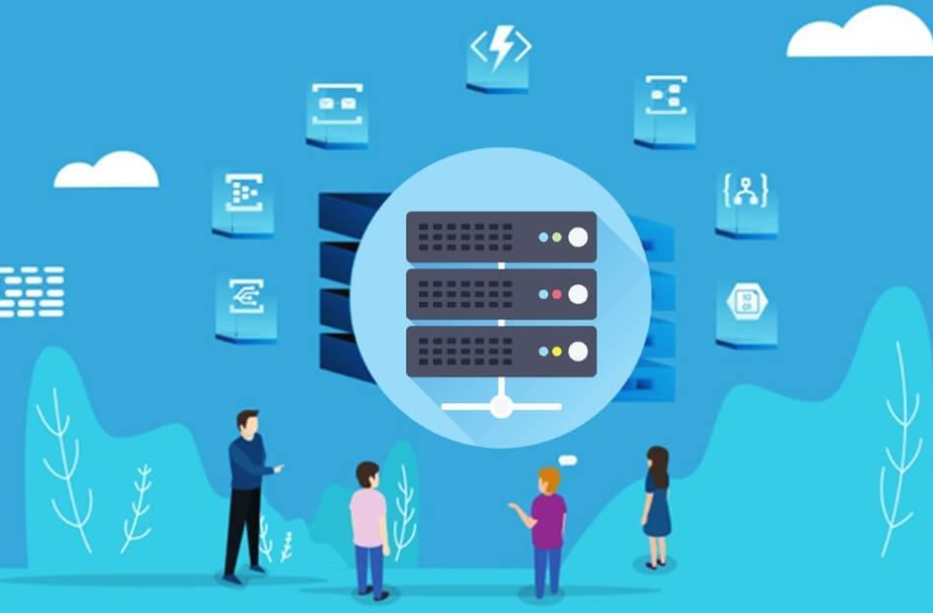
In serverless architecture, the entire infrastructure is handled by a third,party provider, allowing developers not to rent out a fixed server or establish virtual machines but simply deploy functions or services that run on demand – primarily referred to as Function as a Service or FaaS. A small function handles the operation when a user submits a contact form or logs in or uploads an image or makes a purchase. The function ceases operation when the task reaches completion. This sort of event,driven architecture is some of what makes serverless so appealing: resources exist only when needed and websites can adapt to real users' behavior on the fly. This management structure is a stark contrast to traditional hosting, where a server is constantly active regardless of the amount of visitors. In serverless computing, companies are only billed for their actual consumption.
Why Serverless Matters for Scalable Websites
Scalability has been a traditional weakness of web development. Site performance remains stable with normal visitor levels but experiences problems during sudden traffic increases. The combination of a product launch and a seasonal promotion and a viral social media mention and a breaking news story creates an instant traffic surge that brings thousands of visitors to a website. Conventional systems typically need to be over,installed and over,provisioned to cope with that sort of onrush.
Serverless architecture automates a lot of this. The cloud platform should automatically increase the number of functions and services that the site runs behind the scenes as the traffic to your site grows, and scale back when the traffic reduces. For a business where traffic is irregular, this is an important attribute.
Serverless technology enables faster performance as customer websites are allocated resources as needed. Customers can avoid costs of expensive server hardware continually running in advance of possible traffic spikes.
Cost Efficiency and Better Resource Usage
The most significant benefit of serverless (painless?) architecture is the cost savings. In a normal architecture, most companies pay for a server, or a series of cloud instances that are up and running all the time. Even when business is slow, you are still paying those costs, which can be a lot for a startup or emerging brand concerned with limiting costs.
Pricing with serverless is typically based on requests, time executing, and resources consumed. This allows for a pay,as,you,go style service that can work well for sites that aren't running at full strength often. The upside for small business is that they don't have to pay major infrastructure costs all at once while the large business can have better efficiencies and better match spending to visitor levels.
The other benefit of this pattern is a more optimized utilization of computing resources. Servers are not up 24/7, but are only re,activated during user interaction with the applications. This feature makes serverless fast, scalable and cheap.
Faster Development and Deployment
The challenge of today's business is to be as responsive as possible. Companies can't afford long deployment cycles or backend resource management to delay a product release. With serverless the time to market becomes significantly shorter for development teams because they don't have to think about managing and provisioning server infrastructure.
This gives the developer a huge shot in the arm. The teams can also divide their applications into smaller functions, run automatic tests on them, and release the updates without affecting the whole of the application. A website can be designed to complete piece by piece and not all at the same time in one big "monolithic" release. Perfect for the agile teams working on products moving at a rapid digital pace.
The simplicity of the infrastructure considerably lowers running costs. Developers and business owners can invest more time into enhancing UX, content distribution, SEO performance or conversion pathways.
Improved Reliability and Performance
Reliability is vital for any site that customers can trust. If a site fails during busy periods then the business could lose revenue, leads and the trust of customers. The cloud infrastructure built underneath serverless platforms is built around high availability. The biggest providers will typically load balance across lots of data centers and regions. This makes it much less likely that the website will be affected by a problem in any one area.
Another way that performance can be significantly enhanced is when serverless is used alongside content delivery networks, edge functions and managed cloud services. Static content such as images, HTML & scripts can be served from locations nearer to the user, lowering the download time for static assets. Dynamic functions can then be used when people need interactivity.
This makes a powerful overall architecture for a modern website. Static assets will load quickly, central functions will respond to events and the website can still be custom built without being locked into a framework.
Serverless and the Rise of Jamstack
Serverless architecture also emerged from the rise of Jamstack websites. Jamstack – which is an acronym for Javascript, APIs and Markup – is based on a prebuild front,end for performance and serverless functions powering dynamic functionalities.
This method is perfect for sites that require high performance and flexibility. A business site can be fast and as efficient as a static site but still include search, contact forms, payments, booking systems, member areas, third,party integrations etc. A smooth performing, secure, scalable and up,to,date website that performs well for the users and is easy to develop.
It is one of several reasons why many agencies and companies now consider serverless to be part of the future of scalable web development. It tickes the box for fast websites, improved SEO performance, reduced maintenance, and scalability.
Challenges of Serverless Architecture
Serverless is very powerful but isn't a solution for every problem. One particular issue is cold starting where response may be slightly slower if the function hasn't been used or invoked recently.
Another factor to consider is vendor lock,in. As serverless architectures are heavily dependent on particular cloud platforms it is sometimes difficult to move away from them at a later date. Developers need to give attention to monitoring, debugging and designing functions as distributed systems can be more difficult to deal with than a straightforward traditional architecture.
In cases where a website has very long running processes or very 'bespoke' back end requirements, a mixture of models might be preferable. There are a few businesses that use a mixture of serverless functions with containers, dedicated databases or managed back end services to make their strategy work for them.
Why Serverless Represents the Future
The future of websites is more than just having a nice interface. It is about being fast, flexible, resilient and able to scale without demanding all the time of an engineer. Serverless architecture enables all of this. It allows businesses to experiment at a faster rate, respond to traffic fluctuations without over,provisioning, make their infrastructure leaner and focus on delivering value for the user.
With rising expectations it is no longer sufficient for websites to just exist. They have to perform at scale, be easy to integrate with modern tools and enable innovation. Serverless does this by removing much of the operational burden that was once holding us back.
It makes it cheaper for startups to create compelling digital experiences. It is an easier way for large companies to modernize their core business systems. It is a way for developers to create applications that are fast, scalable and resilient.
Conclusion
The future of websites is more than just having a nice interface. It is about being fast, flexible, resilient and able to scale without demanding all the time of an engineer. Serverless architecture enables all of this. It allows businesses to experiment at a faster rate, respond to traffic fluctuations without over,provisioning, make their infrastructure leaner and focus on delivering value for the user.With rising expectations it is no longer sufficient for websites to just exist. They have to perform at scale, be easy to integrate with modern tools and enable innovation. Serverless does this by removing much of the operational burden that was once holding us back.
It makes it cheaper for startups to create compelling digital experiences. It is an easier way for large companies to modernize their core business systems. It is a way for developers to create applications that are fast, scalable and resilient.





