

Poco F8 Pro vs F8 Ultra: Which Xiaomi Phone is Worth Your Money?
Compare Poco F8 Pro and F8 Ultra: cameras, battery, display, and performance. Find out which Xiaomi phone suits your needs in 2025.
image for illustrative purpose
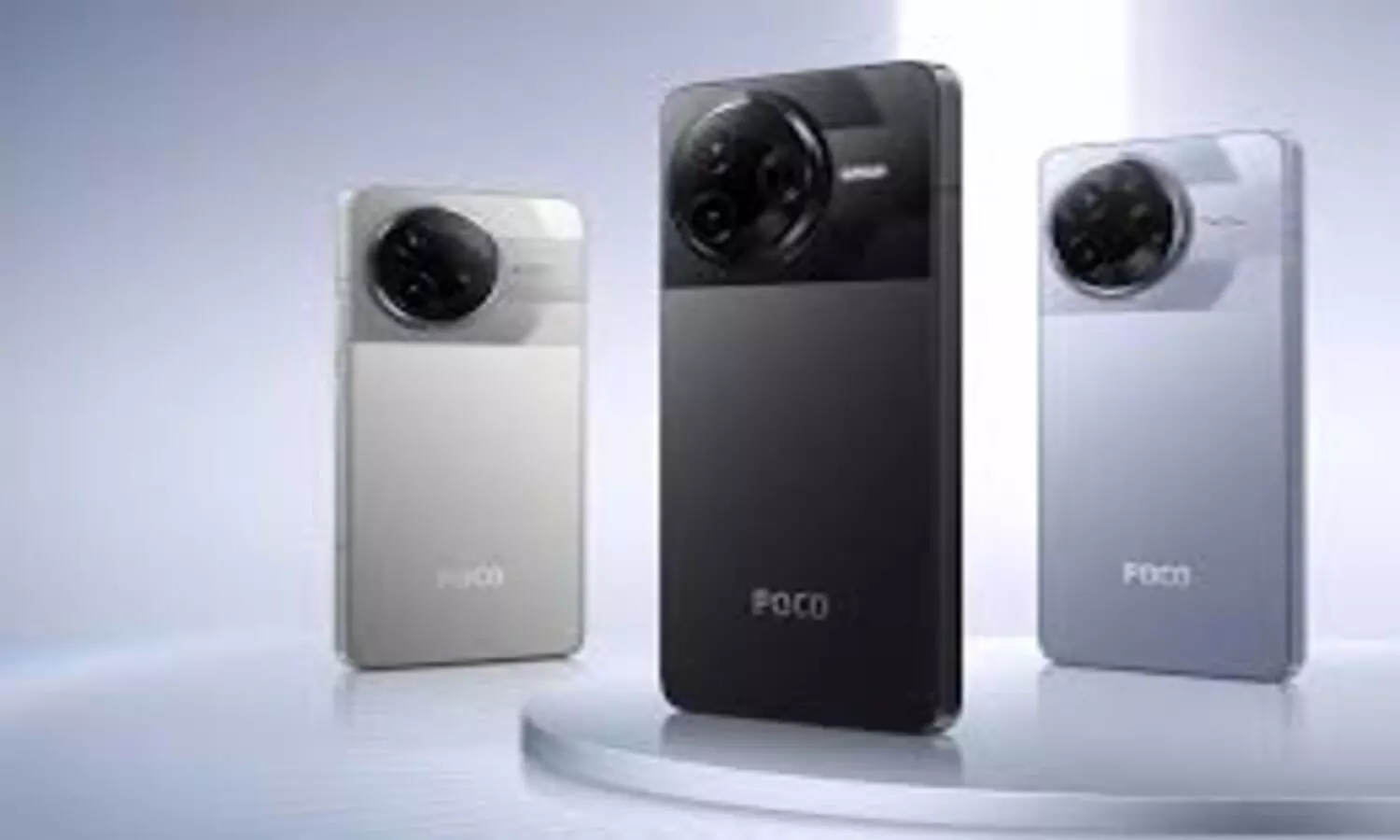
Xiaomi has presented its new Poco range that consists of two different smartphones: the Poco F8 Pro and the Poco F8 Ultra. The two models are identical in terms of design, but the Ultra version has made various upgrades with regard to performance, display, battery, and the camera. The price difference of €180-200 makes one ponder whether the Ultra earns the high cost.
The F8 Pro weighs 199 grams and has a 6.59-inch screen, glass back, and an aluminum frame that is protected with Gorilla Glass 7i. The F8 Ultra, on the other hand, has a larger size and heavier weight of 218 grams, with a 6.9-inch display. Its body is made from a combination of aluminum, fiber-reinforced plastic, or silicone polymer for the Denim Blue version. The buyers looking for a small size may go for the F8 Pro while those choosing the big screen may favor the Ultra.
AMOLED screens are used for both phones equipped with HDR10+ and Dolby Vision. The F8 Pro produces a peak brightness of 1,094 nits whereas the F8 Ultra gets up to 1,077 nits. Even though the Ultra has a bigger screen, both can be considered equal in terms of quality, displaying very vivid pictures and very high brightness levels even for outdoor use.
The F8 Ultra is equipped with a bigger battery of 6,500mAh in comparison to the F8 Pro that has a 6,210mAh unit. Tests reveal a bit longer video and web playback time on the Ultra, though active usage scores are still quite close. Both variants are powered by Xiaomi's 100W HyperCharge which gets them fully charged in about 39 minutes. Apart from this, the Ultra has the advantage of supporting 50W wireless charging which is not available on the Pro.
Both devices are equipped with stereo speakers tuned by Bose. However, the Ultra model comes along with a subwoofer that enriches the sound with stronger bass while making it warmer. The Pro model gives priority to loudness and voice clarity, whereas the Ultra provides richer sound for music and multimedia.
The performance of the F8 Pro is powered by Snapdragon 8 Elite, while the Ultra has the latest Snapdragon 8 Elite Gen 5. Both the base storage capacities are the same at 12GB RAM and 256GB internal storage, but the Ultra has a 16GB RAM option as well. Benchmark results indicate that the Ultra gets up to 26% CPU and 13% GPU gain, which can be interpreted as performance resilience over a longer time period. The two devices have HyperOS 3 on Android 16 as their operating system, which brings four major OS updates and six years of security patches as its promises.
Camera upgrades are the ones that mostly attract the attention of the Ultra. The new version of the phone comes with a bigger main sensor, a telephoto lens with 5x optical zoom, and a higher-resolution ultrawide camera. The Ultra's daytime photos reveal its capacity for producing very large the detail and perfectly accurate color reproduction. The Ultra is the one that enjoys the night photography field with better shadow details and contrast among the competitors. It is said that front cameras have 32MP on the Ultra and 20MP on the Pro, however, in practice, they are not able to tell the difference. In fact, video comparisons show only small differences, with the Ultra giving better dynamic range in the night setting.
Xiaomi’s Poco F8 Ultra wants to be seen as the most sophisticated one among the two. Its price is justified by the improvements in screen size, battery, speakers, camera, and processing power. The F8 Pro continues to be a reasonable option for those users who are not making a big deal of compactness or who are simply looking for a device with a lower price tag.





