

Google Set to Launch Gemini AI Glasses in 2026, a Significant Step in Smart Wearables Comeback
Google introduces its first Gemini AI Glasses ready for 2026, comprising audio-only and display-enabled smart glasses driven by AI for navigation, translation, and live assistance.
image for illustrative purpose
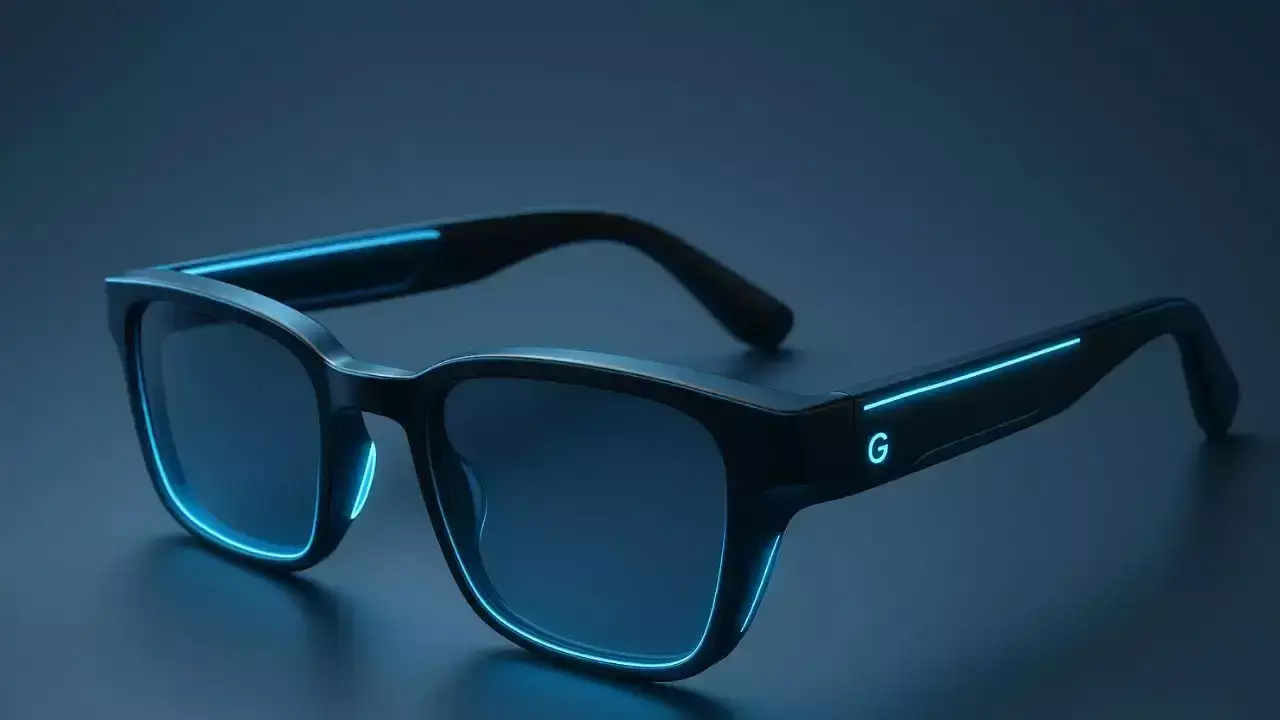
Google Returns to Smart Glasses with Gemini AI Glasses in 2026
Google is making a very clear and bold statement to come back in the smart glasses market where it had already lost the battle a decade back with Google Glass. The technology giant has unveiled that its first glasses with AI-enabled Gemini will hit the market in 2026, thus passing the next-gen AI features on to the wearables arena.
The proclamation was accompanied by the updates of the Google’s Android XR ecosystem which also included the new functions for the Samsung Galaxy XR headset and the preliminary information on the next generation of AI glasses from Google.
Two Types of AI Glasses
In partnership with Samsung, Gentle Monster, and Warby Parker, Google is working on two types of AI glasses:
Audio-only AI Glasses: These glasses are very light in weight and have no screen, thus they allow the person to talk naturally with the Gemini AI assistant, take pictures, and receive instant assistance through the built-in microphones, speakers, and cameras.
Display-enabled AI Glasses: The glasses come with an in-lens display that can show personal navigation directions, translation text, notifications, and other contextual information to the user for a more engaging experience.
A Second Attempt at Smart Glasses
With this product, Google is making its most serious commitment to smart wearables since the Google Glass time frame. Co-founder Sergey Brin pointed out that past attempts had run into problems because the AI was not powerful enough and there were also supply chain issues. “Right now in the AI world, these glasses can help without constantly being a nuisance,” Brin stated.
Powered by Android XR
Both glasses will be running Android XR which is Google’s operating system for XR headsets and glasses. Some prototypes have monocular or binocular AR displays which can show content from Google Maps, Google Meet, and other apps on the top. Most of the glasses will be connected to smartphones via wireless connection to keep the form factor slim and lightweight.
Project Aura: Wired XR Glasses
Google also announced Project Aura, a pair of wired XR glasses from XREAL. Aura is aimed at the productivity segment and it features a 70-degree field of view with optical see-through overlays, which is perfect for guided tasks such as cooking or appliance repairs. Unlike regular XR headsets, Aura is powered by an external battery pack.
Rising Competition in AI Wearables
The market for AI and AR glasses is becoming very competitive. Leading the way is Meta with its Ray-Ban Meta smart glasses, while Snap, Alibaba, and Apple are working on consumer-oriented AR wearables. Google’s collaboration with Gemini AI glasses is a careful, sophisticated strategy of sorting and using AI for improving productivity and personal convenience in daily life.
With the 2026 launch, Google wishes to turn smart glasses into something more practical, intelligent, and widely used, thus clearing the way for the next generation of AI-powered wearables to come.





