

BlueBird Satellite Launch Scheduled for December 24
India to launch BlueBird Block-2 satellite on Dec 24 using LVM-3, boosting global space commerce and heavy-lift capabilities.
BlueBird Block-2 satellite set for LVM-3 launch from Satish Dhawan Space Centre on December 24.
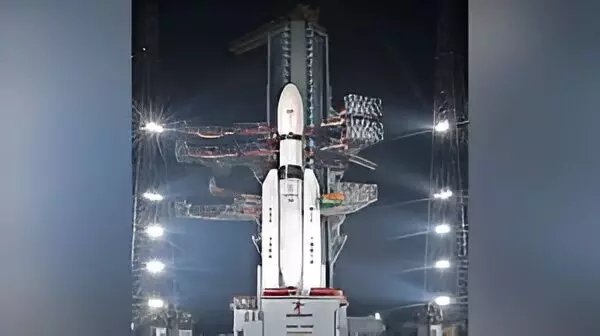
India is set to launch the BlueBird Block-2 satellite on December 24 using its heavy-lift vehicle LVM-3, marking a major step in global space commerce. The mission, managed by NewSpace India Limited (NSIL), will place a high-mass US commercial satellite into low Earth orbit, strengthening India’s reputation as a reliable launch service provider.
Launch Details
At 8:54 AM the LVM3-M6 mission is going to launch from the second launch pad of Satish Dhawan Space Centre. The launch which was originally targeted for mid-December was pushed back after conducting readiness checks. The BlueBird Block-2 (BlueBird-6) satellite will be put in a low Earth orbit.
NSIL and the LVM-3 Vehicle
The NSIL is managing the commercial contract. The PSLV has always been the launch vehicle for foreign satellites, but now LVM-3 is managing the heavier ones, proving India’s potential to orbit over five-tonne satellites. Its commercial use in 2022 opened the door for India’s increasing role in the global launch market.
BlueBird Satellite Features
The 6,500 kg satellite, built by AST SpaceMobile, is part of a plan that will see a satellite constellation providing cellular broadband worldwide directly to smartphones. BlueBird Block-2 is equipped with 2,400 sq ft of antennas in a phased-array configuration which can easily support high processing bandwidth and high-speed connectivity without the need for any special ground hardware.
Key Facts for Reference
LVM-3 can carry over 8 tonnes to low Earth orbit.
NSIL is ISRO’s commercial arm managing foreign satellite launches.
Low Earth orbit is the term used to describe orbits that range from 160 km to 2,000 km in height above the surface of the Earth.
Phased-array antennas can electronically steer the beam without requiring any moving parts.
Strategic Significance
This operation marks the transition of India from a country that relied on the launch of satellites to being a trusted global supplier of advanced satellites. The successful launch of a US commercial satellite having a high value not only confirms the heavy-lift ability of India but also increases its participation in the competitive global space economy.





