

Unlocking Creativity: A Beginner’s Guide to the Magic of AI Face Swapping
image for illustrative purpose
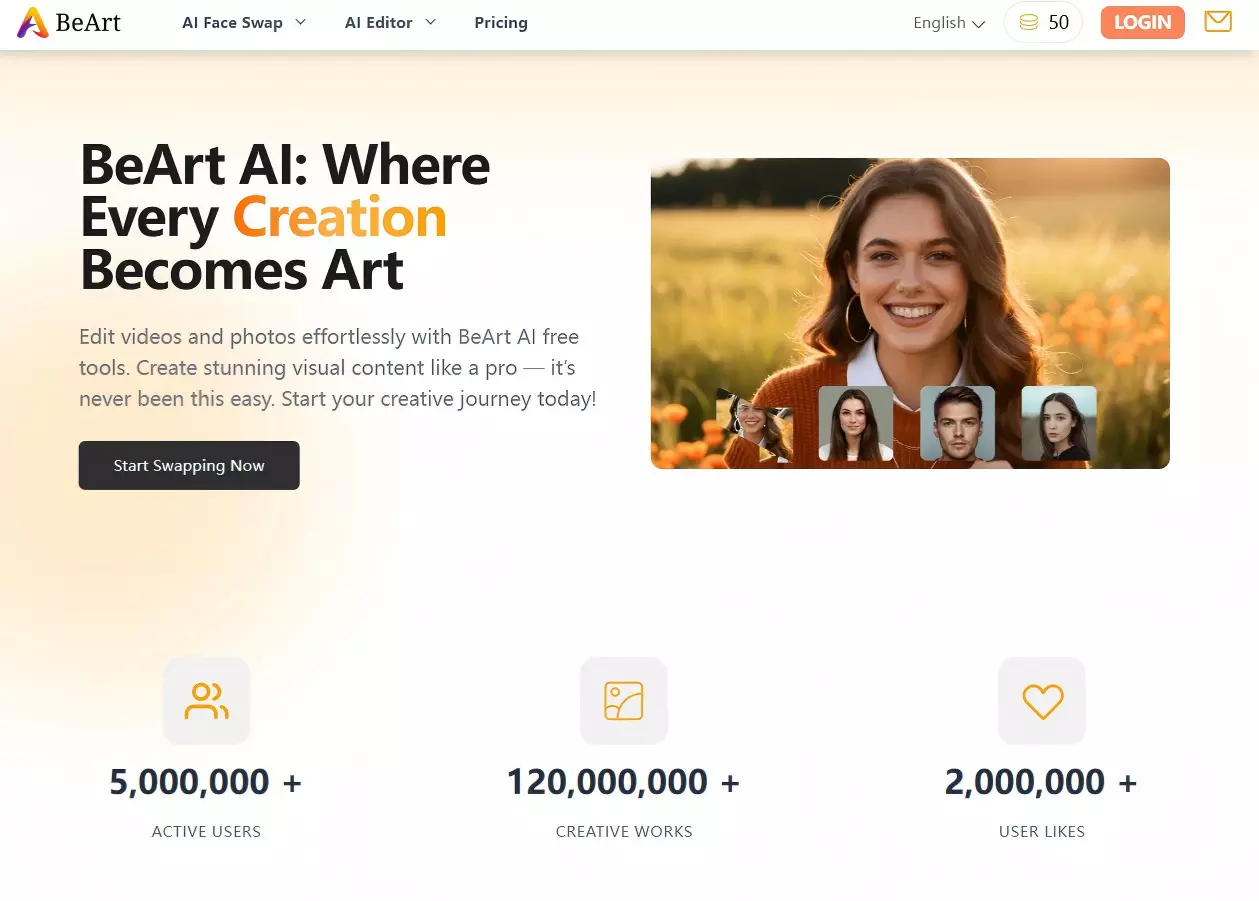
In today's fast-paced digital world, few things have really grabbed people's attention like the tech that lets you swap faces with someone else. This used to be something only big Hollywood studios with huge budgets could do, but now it's available to everyone right in their web browsers. So, whether you want to make a funny meme for a pal's birthday, see yourself in an old-school fashion shoot, or just mess around with digital art, face swap is an easy way to get creative.
It's way easier to get started now, all thanks to smart AI photo editors. Things that used to need tricky coding or knowing how to use layers in fancy software are now handled by simple tech. Places like Beart.ai are great examples of this change. They have easy-to-use setups where AI does all the hard work, so you can just focus on your creative ideas instead of figuring out the technical stuff.
Understanding the Concept
At its core, swapping faces is about more than just cutting and pasting. If you have been to without a doubt reduce a face from one picture and place it on any other, the result might appearance jarring—the pores and skin tones wouldn't fit, the lighting fixtures course might be wrong, and the angles might probably be mismatched.
Modern AI solves this by the use of reading the geometry of the face. It maps out key landmarks: the distance between the eyes, the curve of the jawline, the form of the nostril, and the motion of the mouth. When you upload a deliver photo (the face you need to use) and a goal image (the body or scene you need to put the face into), the AI might not simply overlay the image; it reconstructs the facial abilties to in shape the aim's surroundings. It blends pores and skin textures, adjusts lights to wholesome the shadows of the unique scene, and even corrects the mindset of the face to ensure a natural look.
How to Achieve the Perfect Swap
For the average user utilizing a tool like Beart.ai, the process is surprisingly linear, though achieving a "perfect" result requires a bit of finesse in selecting your assets.
1. Selection of the Source Image
The process begins with choosing the face you want to transfer. For the best results, clarity is king. An ideal source photo is a high-resolution portrait where the subject is facing the camera directly or at a slight angle. Avoid photos where the face is obscured by hair, hands, or heavy shadows. The AI needs a clear "map" of the facial features to understand what it is transferring. If the source image is blurry or pixelated, the final result will lack definition.
2. Choosing the Target Image
When using the online tool, you can upload your target photo and simply click once. The AI will swap in the face and generate a new avatar for you.
3. The Processing Phase
Once both images are uploaded, the AI Photo Editor takes over. This is where the neural networks analyze pixels. The software extracts the identity features from the source and applies them to the structural features of the target. It creates a composite that retains the expression and lighting of the target image but with the likeness of the source. This usually takes only a few seconds or minutes, a stark contrast to the hours of manual editing required a decade ago.
Enhancing the Result
While the AI does the heavy lifting, the user’s eye for detail makes the difference between a funny glitch and a stunning image.
- Lighting Consistency: The most common giveaway of a digitally altered image is mismatched lighting. If the target photo was taken at sunset with warm, orange light, but your source face was taken under harsh, blue office lighting, the swap might look "pasted on." Advanced tools attempt to color-correct this, but selecting images with similar lighting conditions initially yields superior results.
- Resolution Matching: Try to ensure both images have a similar level of sharpness. A 4K face on a grainy, low-resolution body will look unnatural.
- Facial Expressions: The AI is generally good at adapting expressions, but it helps if the "vibe" matches. A screaming face swapped onto a calm, meditating body might distort weirdly. Matching the emotional tone helps the algorithm blend the features more seamlessly.
Ethical Creativity and Responsibility
As we embrace these powerful tools, the conversation must also touch upon responsibility. The ease of Face Swap technology comes with a duty to use it ethically.
The primary rule of thumb for general users is consent. It is fun to swap faces with consenting friends, family members, or to place yourself into fictional scenarios or historical paintings. However, using someone’s likeness without their permission, particularly in misleading or defamatory contexts, is a misuse of the technology.
Platforms are increasingly building guardrails to prevent the creation of harmful content, but the ultimate filter is the user’s intent. The goal should be entertainment, artistic expression, or personal visualization (like trying on a haircut or a makeup style virtually).
Conclusion
The trajectory of this era factors towards even more dynamic integration. We are shifting beyond static pictures into video content, wherein users can superstar in their very own brief clips. Tools have become quicker, processing excessive-definition swaps in actual-time.
For the everyday author, this means an elevated toolkit for storytelling. You can visualize yourself in tour destinations you haven't visited but, create personalised greeting cards wherein you're the superhero, or restore vintage circle of relatives pictures through clarifying capabilities.
In end, attaining a face swap today is less approximately technical prowess and extra approximately innovative vision. With available structures, every person can end up a digital artist. By knowledge the fundamentals of image choice and respecting the moral limitations of digital identity, users can liberate a brand new global of visual opportunities, turning the inconceivable into the photorealistic.





