

The Art of Natural AI Writing: Making Your Content Sound Authentically Human
It does not necessarily mean to struggle against AI detection tools such as AI Detector systems, but to know how to direct AI, so as to come up with automatic content,
image for illustrative purpose
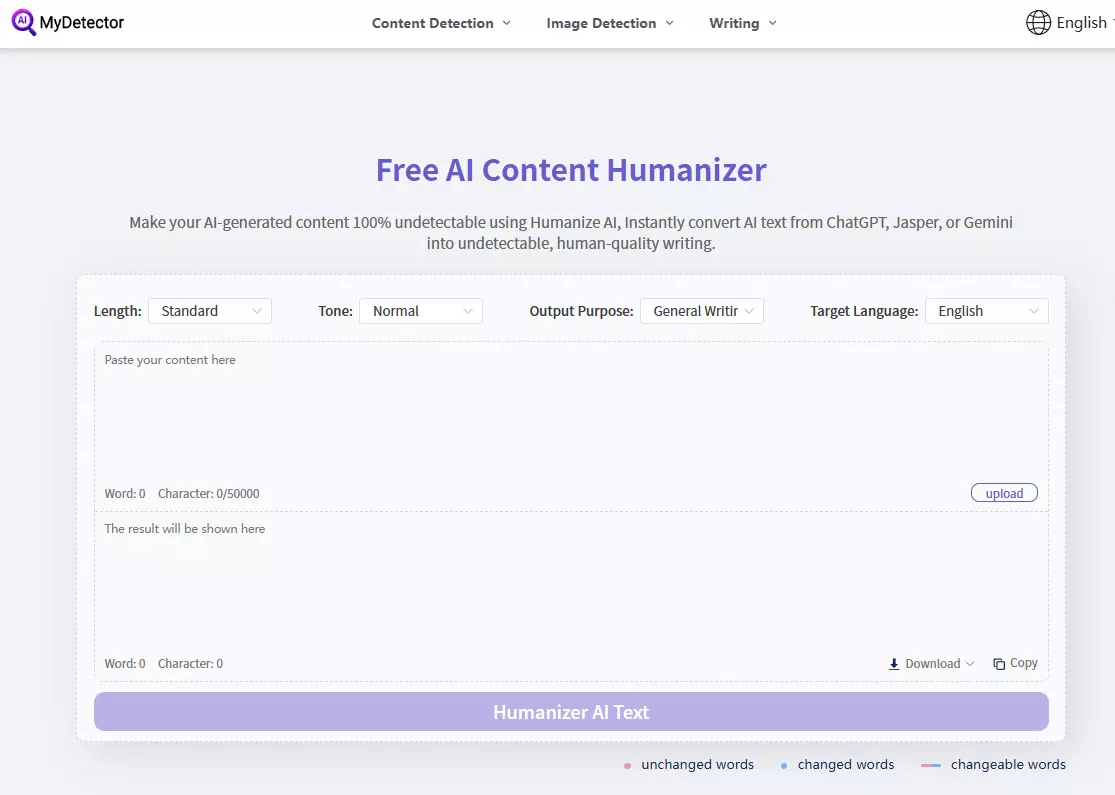
Content creation has been transformed by artificial intelligence, although there is one question that writers still cannot resolve: how can AI-written text sound human? You may be a blogger, student, a marketer, or a business owner and needing to know the secret of writing natural AI will help you save time and keep using the natural voice that your readers desire. It does not necessarily mean to struggle against AI detection tools such as AI Detector systems, but to know how to direct AI, so as to come up with automatic content, which does not fail to capture the natural pattern of human thinking, as well as the communication style.
Understanding the Challenge
At the beginning when you use AI writing tools, you may find something strange in the output. The wordings are grammatically impeccable, almost too much so. The language may be excellent and strangely official. It is as mechanical as reading a well-structured instruction manual as opposed to conversing with an educated friend. This is due to the fact that AI models are trained using large amount of text and they are inclined to follow the patterns that they seem to see in their training data.
It is not true that AI does not write well, it is that it writes in a very AI manner unless instructed to do otherwise. What most people are afraid of is being detected by the detection systems but what should matter more is whether or not your readers like what they are reading and trust it. Anyway, your readers will not be impressed by content that comes across as robotic no matter how much it comes out of a detection test.
Start with Your Own Voice
There is no better way to write with natural AI than to just start typing the first prompt. Imagine you are telling your friend about your topic over coffee. What examples would you use? What tangents might you go on? What are the questions they would have? this psychological preparation forms a structure of more realistic content.
Be personality-filled when you write your AI prompt. Most people would respond to a question like: write an article about productivity tips, by responding with something like: I am addressing busy professionals who feel overwhelmed with their to-do list. Ask me to describe three unconventional productivity ideas that I have learned, in a non-technical manner and practical situations in real life. The context and specificity you give also has a direct impact on the feeling of natural output.
The Conversation Technique
The first might be to consider AI as a writing partner and not a content selling machine. Begin by requesting the AI to create a first draft, and then have a two-way conversation. Request it to describe some sections in other ways, add personal details, or write some parts in a more conversational tone. This repetition creates diversity and disrupts these AI patterns as a natural course of action.
An example would be: say a paragraph is too stiff: you could say: This paragraph is too formal. Write it out as though you were explaining it to someone who is a sceptic who must be convinced with a practical example. The AI will also adapt its style and with multiple iterations of the improvement you will create content that will be almost human-created.
Strategically Accept the Imperfection
This is a contrapunt fact: ideal writing usually feels like the fake handwriting. Humans have a natural way of varying sentence construction, sometimes may leave part of the sentence to emphasize the point, and may also give personal remarks. We may begin a sentence with And or But although it is frowned on by English teachers. We use contractions freely. We retrace ourselves sometimes to make a point we have already pointed out.
At the time of the AI-generated content review, identify the possibilities to add these human components. The AI Content Humanizer strategy can include including a personal story, a rhetorical question, or use of a short and concise sentence to break a long sentence. You even might be open to admit not knowing something: I am not quite sure why this works like that, but in my case... This form of veritable confession makes your writing accessible.
Layer in Specific Details
There is screaming AI writing. The closer and more detailed you are in what you write, the more genuine it becomes. In case the AI writes that many people have problems managing time, ask it to expand on it: a recent discussion I had with a marketing manager made it apparent that she responded to emails as late as 11 PM because she simply did not find the time to do it during her working hours, which were full of back-to-back meetings.
These tangible descriptions produce vivid images on the mind and reflect actual knowledge as opposed to mechanical summary. Continually ask AI to provide examples, statistics of your own research, or situations that depict real-life situations when you are using it. The AI will be able to assist in organizing your thoughts, although the content must be based on actual wisdom.
Edit with Intent
This is the last step that natural writing is created. Read whatever you have had an AI helping you on aloud, and you will know where it feels awkward or unnatural. Rhythm troubles, ungrateful phrases, that your eye may overlook, your ear catches. You should never ask yourself a question when writing, but you should ask yourself the following: Would
I really say this in conversation? Does this sound like me?"
Make bold editing choices. Combine disjointed sentences. Split rambling sentences. Use less advanced vocabularies where the use of complex vocabularies is unintelligible. Include transition sentences that help to take the reader through the flow of ideas. Erase complete passages that do not augment your message, even when they are a good passage of writing.
Conclusion
Writing via AI is not cheating because it is just an opportunity to use the technology to enhance your knowledge and thoughts. It is not about trying to outwit detection systems but rather produce content which actually benefits your readers. When you treat AI as a means of conveying your true voice more effectively instead of your voice being consumed in totality, the outcome of the AI will automatically feel more human.
The authors that manage to achieve success with AI are those who retain the creative control of the process. AI is used to break a writer block, organize complex thoughts and to write more quickly, but they add their own personality, polish language and accuracy. They know that such tools as detection systems are not meant to catch the violators of the rules but to hold the quality of the content at a certain level that can be appreciated by everyone.
Finally, natural AI writing refers to cooperation between the human imagination and the artificial intelligence potential. What you need to do is bring the vision, voice, and verification and leave the heavy lifting of first composition and first structure to AI. Master this balance,





