

How women are redefining the future of STEM
How women are redefining the future of STEM
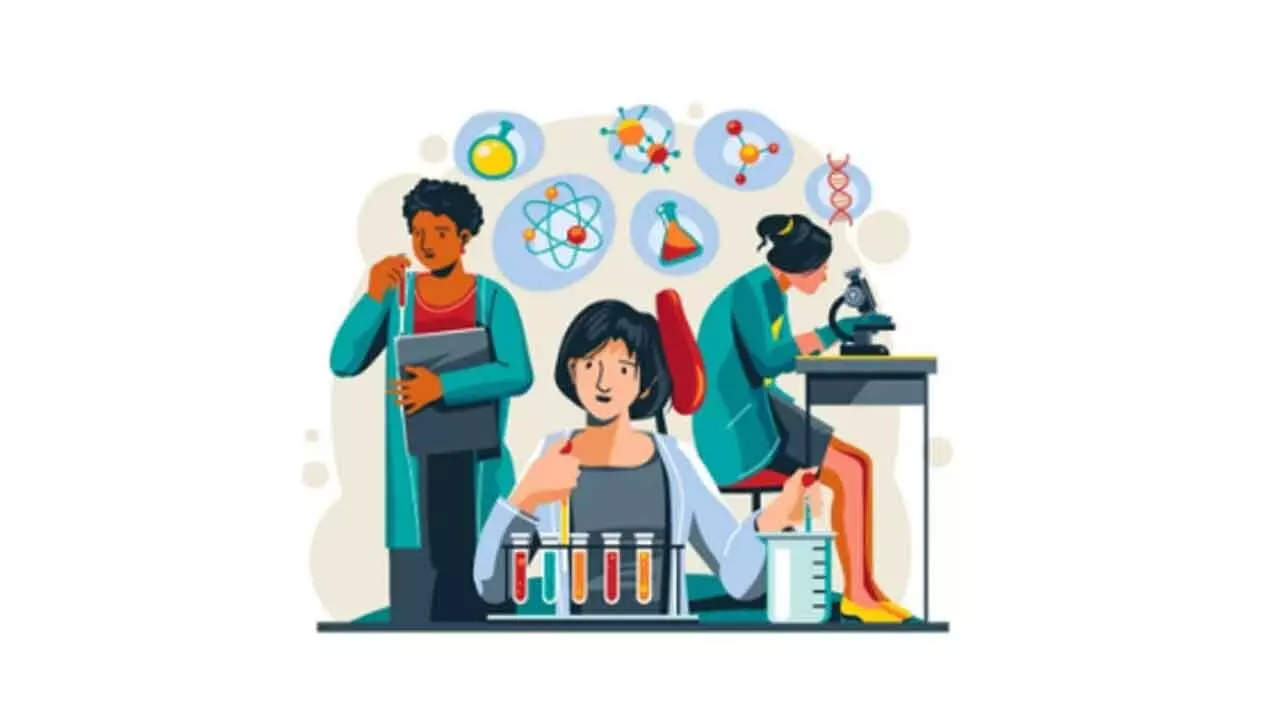
For decades, engineering laboratories, coding floors, and technical boardrooms have been cast in a monochrome—overwhelmingly male, quietly exclusionary, and resistant to change. This stereotype endured not merely because of numbers, but due to a deeper cultural inertia that subtly discouraged women from entering these spaces. Today, that narrative is being rewritten—not with noise, but with quiet, decisive momentum.
Much of the contemporary anxiety around Artificial Intelligence centres on job disruption, with some arguing that women may be disproportionately affected. This view, however, is incomplete and misleading. It overlooks a far more compelling reality: women are not retreating from the technological frontier; they are helping define it. Across continents, they are entering, excelling, and reshaping STEM fields with a confidence once systematically discouraged.
The numbers tell a persuasive story. India, long regarded as a key engine of global technical talent, reports that women make up approximately 41 per cent of its STEM student population—a formidable presence. Even more striking are trends across the Middle East, where female participation often ranges between 40 and 50 per cent, reaching as high as 56 per cent in some contexts. Countries such as the UAE exemplify this surge, with women forming the majority of STEM graduates in government universities.
Elsewhere, the shift is equally visible, if more gradual. The United States has seen women’s participation in STEM rise to around 35 per cent, while nations like the United Kingdom and Germany are inching forward, now approaching similar figures. Germany’s recent crossing of the 36 per cent threshold marks a symbolic turning point—evidence that even historically slower adopters are beginning to recalibrate.
In countries like Malaysia and Tunisia, gender parity in STEM education is no longer aspirational; it is nearly achieved. These examples challenge long-held assumptions about geography and progress, suggesting that cultural will and policy alignment matter more than legacy perceptions.
Yet, celebrating these gains without acknowledging their fragility would be premature. Access to education, while critical, is only the first step. Beyond it lie subtler, often more obstructive barriers—financial constraints, bureaucratic delays, and limited institutional support. A delayed visa, an unmet application fee, or a denied scholarship can derail ambition at the final moment. For many women, the journey into STEM falters not due to lack of ability, but because the ecosystem fails to keep pace with their aspirations.
This is where the conversation must evolve. Opportunity alone is not enough. It must be supported by intentional systems—mentorship networks, flexible financing, inclusive policies, and a cultural shift that normalises women in technical leadership. Encouragement cannot remain rhetorical; it must translate into structural ease.
Modern feminism, in this context, is not about symbolic victories or isolated success stories. It is about recognising talent without prejudice and ensuring ambition is not quietly taxed by gendered expectations. It is about enabling women to step into global arenas—whether in AI, engineering, or data science—not as exceptions, but as equals.
The arc of change is visible, but not self-sustaining. If nurtured with care and clarity, this moment could mark not just a correction in numbers, but a redefinition of who builds the future—and how.





