

Ayush's citizen-centric pavilion draws visitors at AI Impact Summit
Presents comprehensive architecture of Ayush Grid – flagship digital public health platform for traditional medicine
Ayush's citizen-centric pavilion draws visitors at AI Impact Summit
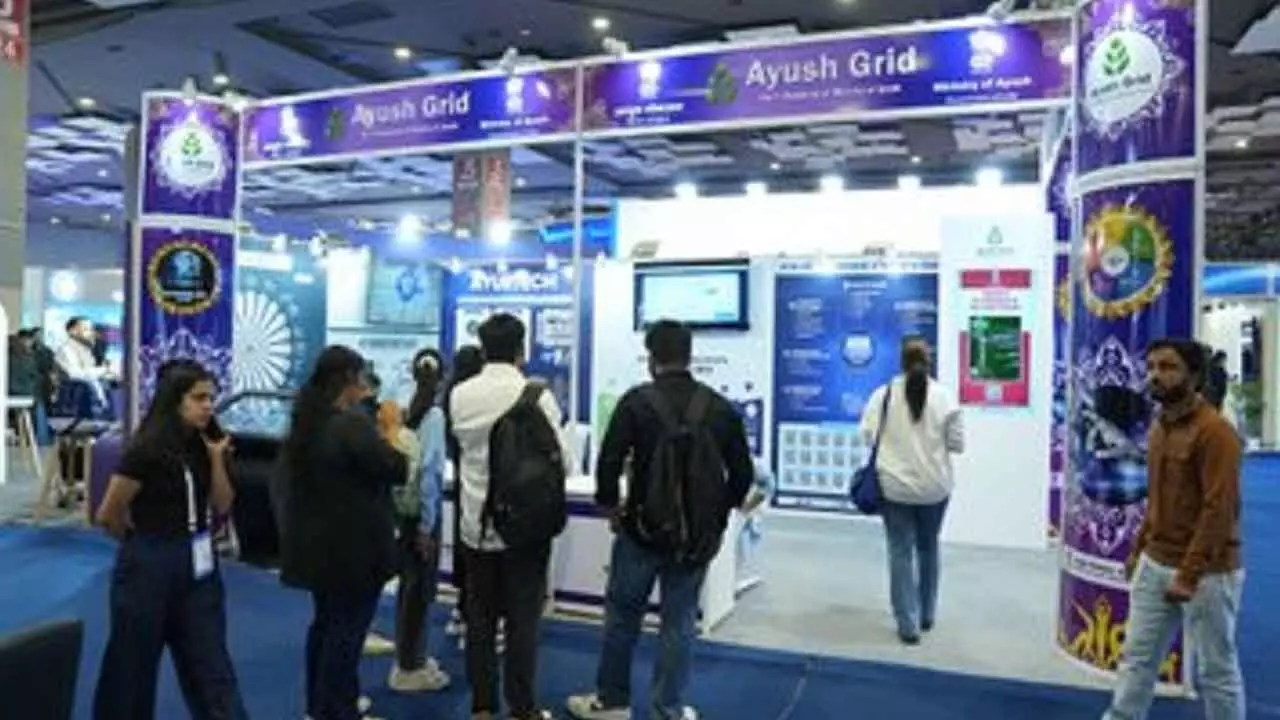
The Ayush Pavilion set up by the Ayush Ministry at the ongoing AI Impact Summit-2026 at the Bharat Mandapam is drawing visitors with a unique display of citizen-centric AI innovations focused on holistic health and wellbeing, officials said.
The pavilion is presenting a comprehensive architecture of the Ayush Grid – India's flagship digital public health platform for traditional medicine, they said.
A key component of this ecosystem is the 'My Ayush Integrated Services Portal’ (MAISP), the master digital portal developed under the Ayush Grid. Envisioned as the backbone of the digital Ayush ecosystem, MAISP operationalises the vision of ‘One Portal: Complete Ayush Ecosystem’ by integrating healthcare services, capacity building, medicinal plants research and development, and Ayush drug administration, education and outreach on a unified platform.
The portal, launched by Prime Minister Narendra Modi at the second WHO Global Summit on Traditional Medicine held in Delhi last December, streamlines access to authentic traditional medicine services for citizens and institutions alike.
Reaffirming the ministry's commitment to aligning traditional knowledge systems with emerging technologies, senior leadership emphasised the transformative potential of responsible AI in public health, the officials said.
Ayush Minister Prataprao Jadhav said, “Guided by the vision of Prime Minister Narendra Modi, the Ministry of Ayush is committed to ensuring that artificial intelligence becomes an instrument of 'Sarvajana Hitaya, Sarvajana Sukhaya – welfare and happiness for all.
“Through the Ayush Grid and AI-enabled innovations, we are building a digital public infrastructure that strengthens transparency, expands access, and integrates India's timeless health knowledge with future-ready technologies for inclusive and affordable healthcare.”





