

‘AI slop’ to substance? Microsoft CEO Satya Nadella wants to reset the narrative for 2026
‘AI slop’ to substance? Microsoft CEO Satya Nadella wants to reset the narrative for 2026
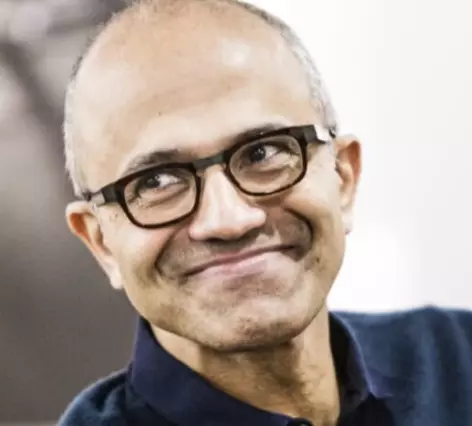
After a year in which “AI slop” became shorthand for everything that felt broken about artificial intelligence, Microsoft CEO Satya Nadella is calling for a reset. In a reflective year-end blog post, Nadella argues that the AI industry must move beyond spectacle and novelty—and start proving that the technology is genuinely useful, credible, and socially acceptable.
“Slop” may have earned Merriam-Webster’s Word of the Year title for 2025, but Nadella wants it off the industry’s vocabulary altogether. According to him, AI has exited its honeymoon phase. The real challenge now isn’t whether models can impress—it’s whether they can actually deliver value in the real world.
Nadella described 2025 as a transition year, one that exposed the widening gap between flashy demos and practical outcomes. Instead of obsessing over whether AI outputs are dazzling or embarrassing, he believes the focus must shift to how AI is applied, designed, and governed at scale.
At the heart of his argument is a revival of Steve Jobs’ famous metaphor of computers as “bicycles for the mind.” Nadella wants AI to be seen not as an autonomous intelligence replacing humans, but as a cognitive amplifier—one that helps people think better, work faster, and achieve more. In that vision, raw model power matters less than thoughtful product design and meaningful human interaction.
That idea, however, remains controversial. “AI slop” entered the mainstream precisely because so much AI-generated content has been repetitive, misleading, or low quality. Research—including studies co-authored by Microsoft—has also raised concerns that overreliance on AI tools may erode critical thinking rather than enhance it. Against this backdrop, the promise of AI as a universal cognitive upgrade is still far from proven.
Beyond philosophy, Nadella outlined a technical course correction. He argued that the future of AI lies not in standalone models, but in structured systems—combining multiple models, agents, memory layers, permissions, and safeguards. In simple terms, Microsoft believes AI’s current unreliability can only be tamed by embedding it within carefully designed frameworks that make its outputs trustworthy and scalable.
Perhaps the most revealing part of Nadella’s message was his acknowledgement of AI’s real-world costs. From massive energy consumption to soaring compute demands, he warned that AI cannot be deployed everywhere by default. To earn what he called “societal permission,” AI must deliver measurable benefits—not just excitement or hype.
Read between the lines, and the tone is notably cautious. Microsoft has invested tens of billions of dollars into AI, yet public sentiment has often ranged from skepticism to outright frustration, especially when half-baked AI features disrupt everyday tools. Nadella’s emphasis on “messy discovery” and conditional success suggests an industry still searching for a convincing endgame.
Whether AI becomes the transformative computing shift Nadella envisions—or remains defined by the “slop” it produces today—will depend less on bigger models and more on restraint, better design choices, and honesty about AI’s limitations. By Microsoft’s own admission, 2026 will be the real test.





