

5 smartphones that are actually faster than the iPhone
Five Smartphones That Outperform the iPhone in Raw Power
Apple’s iPhone has long been the gold standard for smartphone performance. With every new generation, the company refines its hardware and software, delivering industry-leading chips, exceptional cameras, and a smooth, reliable user experience. The latest iPhone 17 series continues that tradition, powered by Apple’s A19 Pro chip, which features a six-core CPU and GPU, a 16-core Neural Engine, and support for hardware-accelerated ray tracing. This level of performance has enabled console-grade gaming experiences on iOS, including titles like Resident Evil 7 and Death Stranding.
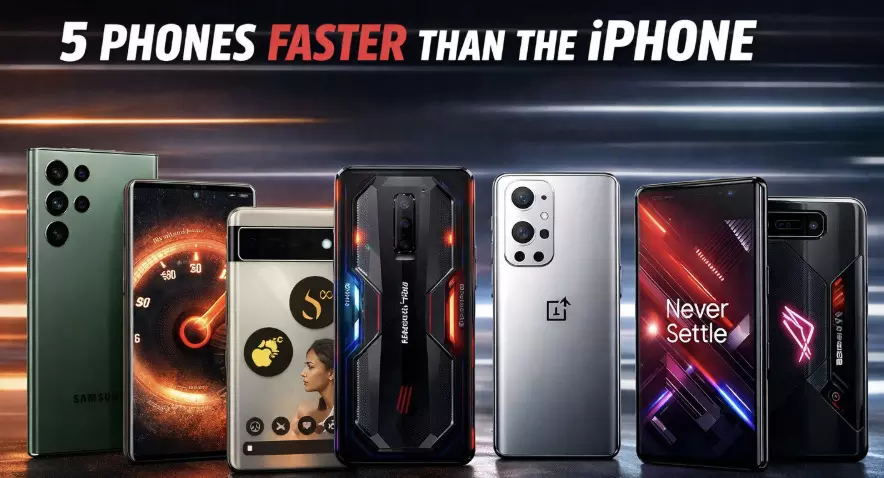
However, raw power alone doesn’t define the modern smartphone market. As iOS faces growing criticism over recent updates, many users are reconsidering Android—especially since several Android flagships now rival or even surpass the iPhone in certain performance metrics. Based on expert reviews and real-world testing, here are five smartphones that deliver performance on par with, or exceeding, Apple’s latest iPhones.
Samsung Galaxy S25 Ultra
Samsung’s Galaxy S Ultra line remains the most direct Android alternative to the iPhone Pro series. The Galaxy S25 Ultra, starting at $1,299, continues Samsung’s premium formula with a refined design, class-leading display, and top-tier cameras. Powered by the Snapdragon 8 Elite chipset and paired with up to 16GB of RAM, the phone handles everyday tasks and demanding games with ease.
While its processor is one generation behind Apple’s newest chip, real-world performance remains excellent. Reviews highlight smooth gameplay even in graphically intensive titles, along with strong battery life and Samsung’s increasingly polished One UI 8 software experience.
OnePlus 15
OnePlus has built its reputation on delivering flagship-level performance at comparatively accessible prices, and the OnePlus 15 stays true to that philosophy. Equipped with the Snapdragon 8 Elite Gen 5 processor, up to 16GB of RAM, and 1TB of UFS 4.1 storage, the device is engineered for speed.
A standout feature is its 6.78-inch LTPO AMOLED display with a 165Hz refresh rate, aimed squarely at mobile gamers. Effective thermal management ensures sustained performance during long gaming sessions, while OxygenOS 16 remains fast, responsive, and feature-rich. Though camera performance trails some rivals, the OnePlus 15 is undeniably a performance powerhouse.
RedMagic 11 Pro
Designed with gamers in mind, the RedMagic 11 Pro prioritizes performance above all else. Its aggressive design houses advanced cooling hardware, including liquid cooling, allowing the Snapdragon 8 Elite Gen 5 chip to run at full throttle for extended periods. With configurations offering up to 24GB of RAM, this phone pushes mobile performance to extremes.
Performance benchmarks show it outperforming the iPhone 17 Pro in multi-core workloads. While its cameras and software experience lag behind mainstream flagships, the RedMagic 11 Pro delivers unmatched gaming performance at a starting price of $699.
Oppo Find X9 Pro
Oppo’s rise in the premium smartphone segment continues with the Find X9 Pro. Powered by MediaTek’s Dimensity 9500 chipset, the device offers strong performance comparable to Snapdragon’s top-tier processors. High-end variants include up to 16GB of RAM and 1TB of fast storage.
The phone also stands out with a massive 7,500mAh battery and 80W fast charging, ensuring long endurance with minimal downtime. Reviews from major tech publications praise its balanced performance, excellent display, and versatile triple-camera system. Availability remains limited in some regions, including the U.S., but it remains one of Oppo’s most impressive releases.
OnePlus 15R
For users seeking high performance without flagship pricing, the OnePlus 15R offers compelling value. Powered by the Snapdragon 8 Gen 5 processor, it delivers performance that rivals the standard iPhone 17 and older Pro models. The phone features a 6.83-inch AMOLED display with a 165Hz refresh rate, 12GB of RAM, and a large 7,400mAh battery with 80W fast charging.
While it sits a tier below the absolute fastest chips, its multi-core performance, smooth gaming experience, and overall efficiency make it a strong alternative to Apple’s non-Pro models.
How These Phones Were Selected
Benchmark scores alone don’t tell the full story, especially when comparing Android and iOS devices built on different architectures. Instead of relying purely on synthetic results, performance evaluations considered sustained workloads, thermal management, gaming stability, and software optimization.
Devices featuring Snapdragon 8 Elite Gen 5 and MediaTek Dimensity 9500 chips consistently matched or exceeded iPhone 17 Pro performance in real-world use, while slightly lower-tier processors still delivered excellent results. Reviews and testing from trusted publications such as CNET and TechRadar were also factored into the selection.
Bottom line: While Apple continues to lead in efficiency and long-term support, Android smartphones now offer compelling alternatives that meet—or surpass—the iPhone in raw performance, especially for power users and gamers.





