

Modi’s retreat into old rhetoric of Hindu pride?
The history of the invasion of Somnath temple needs careful treatment
image for illustrative purpose
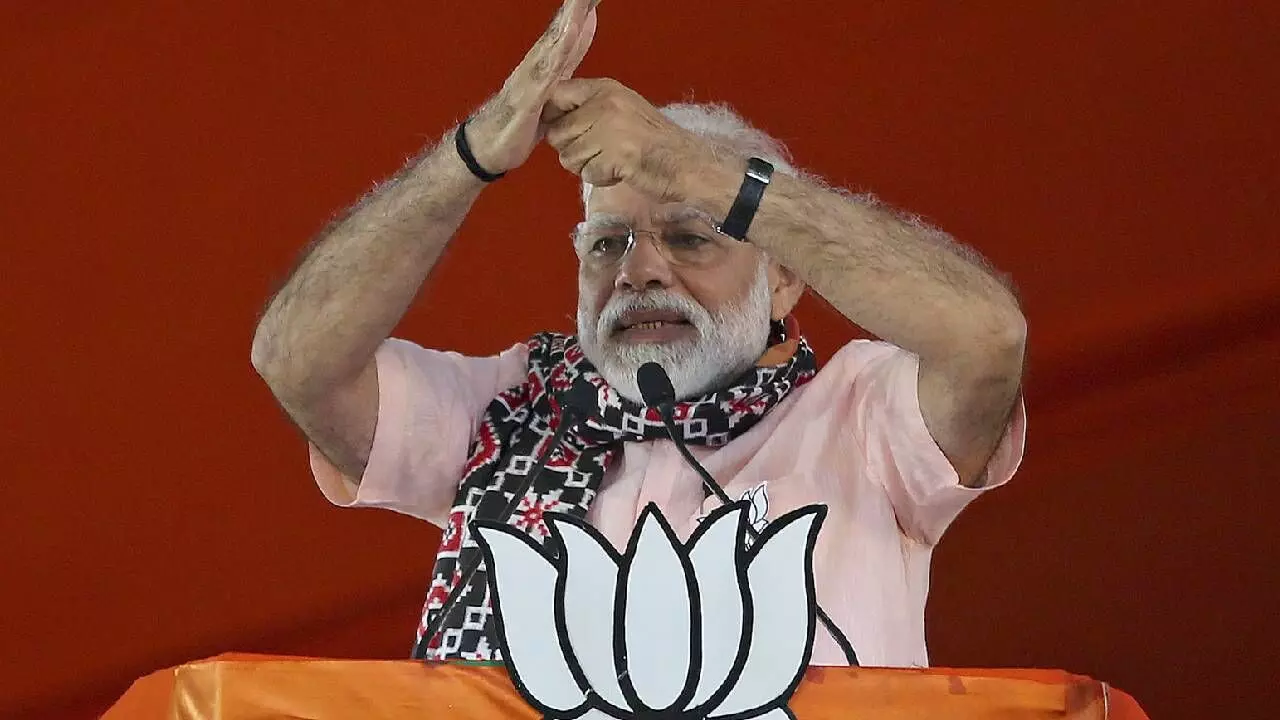
It was hardly unanticipated that the Indian media would celebrate the reappearance of Somnath metaphor after three decades of Lal Krishna Advani’s Rath Yatra. In fact, it was the same old interpretation of history that reiterated Muslims as invaders and destroyers of Hindu culture and religion, and that Islam is an alien faith. However, the timing of the show at Somnath only reminds us of a great retreat the ruling force of India has made through it. It shows a recapitulation by hiding in the jungle of history.
It was well expected that the ideology of Hindutva could not offer anything to reshape our future. If anything is remarkable about the ideology, it is its ability to mask the current dispensation's inability to confront the problems we face as a nation and civilisation. The Prime Minister wanted a recusal, and the Somnath event provided it. We need not go into the details of how he performed in music and dance events, and viewed the drone show. It is also now normal for him to appear as a common believer of a particular and presiding religious function as the Prime Minister. I think people have accepted it.
There should not be any doubt that his appearance as a Hindu leader only undermines the position of the Prime Minister and weakens India’s global standing. No one could deny that his resorting to such tactics to mobilise people is inspired by the BJP’s endless craving for power. The party, however, forgets the harm it is causing to the nation. The open display of partisan views by the state not only weakens us from within but also brings scorn from the outside world.
The point I wish to make goes beyond the above considerations. Can such retreats provide us with a theme for the nation to stand on? Before addressing the question, we should discuss the interpretation of the history of Somnath and its renovation in the early 1950s by the RSS and the BJP.
“After the Junagadh rally the Sardar visited the Somnath temple at Prabhas Patan. With him was Gadgil, his colleague in the Cabinet. Both were 4 ‘visibly moved to find the temple which had once been the glory of India looking so dilapidated, neglected and forlorn”. Gadgil felt that the temple should be renovated. .He mentioned the idea to Patel, who at once agreed and publicly proposed it. The Jamsaheb of Nawanagar, who was with them, donated a lakh of rupees on the spot, and Samaldas announced a sum that the Arzi Hukumat would give. Gadgil’ s Ministry, responsible for public works, undertook the task and the Cabinet approved, but after a discussion between Gandhi and the Sardar it was decided that a trust should renovate the temple with funds from the public.
Vallabhbhai told the Mahatma that “not a single pie would be taken from the treasury of Junagadh” or from the Government of India’s resources. The two agreed that India’s government was “not a theocratic one” and did “not belong to any particular religion”, writes Rajmohan Gandhi, the grandson of Mahatma Gandhi. Does Prime Minister Modi have the courage to declare the conviction Sardar Patel showed towards the constitution?
The history of the invasion of Somnath needs careful treatment. The inscriptions and Jain sources say beyond doubt that the people of the region never identified the invaders on the basis of religion and the differentiated between the invading Muslims and local population. The animosity between communities based on religion is of colonial origin. The latest communal division took its shape in 1980s and 1990s. Prime Minister Modi has participated in the movement.
Should it not be considered a retreat on Modi’s part to return to a three-decade-old movement?
While speaking at the conference of speakers and presiding officers of commonwealth countries, Modi says:
“India is the world’s fastest-growing major economy. Today, India’s UPI is the largest digital payment system in the world. India is the largest vaccine producer in the world. India is the second-largest steel producer. India has the third-largest startup ecosystem. India is the third-largest aviation market. India has the fourth-largest rail network. India has the third-largest metro rail network. India is the largest milk producer. India is the second-largest rice producer.”
He is celebrating the development India has made through science and technology. He does it daily. Do his utterances and performances at Somnath endorse it?
“ The Somnath Pride Festival is not merely a remembrance of the destruction that took place a thousand years ago. It is a celebration of a thousand years of journey. It is also a festival of India’s existence and pride. For at every step, at every milestone, we see unique parallels between Somnath and India. Just as there were repeated attempts, repeated conspiracies to destroy Somnath, in the same way, foreign invaders tried for centuries to annihilate India. Yet neither Somnath was destroyed, nor India was destroyed! Because India and the centers of India’s faith are inseparably bound together,” he says. Can we achieve anything for the nation by invoking such pride? Can the belief of a particular community become the basis of our national pride? Moreover, we, as a nation, have never endorsed it.
The retreat of the Prime Minister into the safe abode of religion and faith displays our inability to cope with the challenges the country currently faces in the wake of the new world order emerging after the changes President Trump has introduced in the US policy.
(The author is a senior journalist. He has experience of working with leading newspapers and electronic media including Deccan Herald, Sunday Guardian, Navbharat Times and Dainik Bhaskar. He writes on politics, society, environment and economy)





