

Battle for Nabanna: Bengal polls turn high stakes
Battle for Nabanna: Bengal polls turn high stakes
Amid widespread speculation and deliberate narratives over the possible imposition of President’s Rule, the Election Commission of India has announced two-phase polling for West Bengal. In fact, the Commission has reduced the number of phases—from eight in the 2021 Assembly elections to two this time.
Much like the 2021 Assembly polls, the Saffron brigade has already built a narrative suggesting it is on the verge of toppling the three-term government led by Mamata Banerjee. The All India Trinamool Congress, however, remains confident that Nabanna, the State’s seat of power, will remain firmly in its hands, possibly with an increased tally.
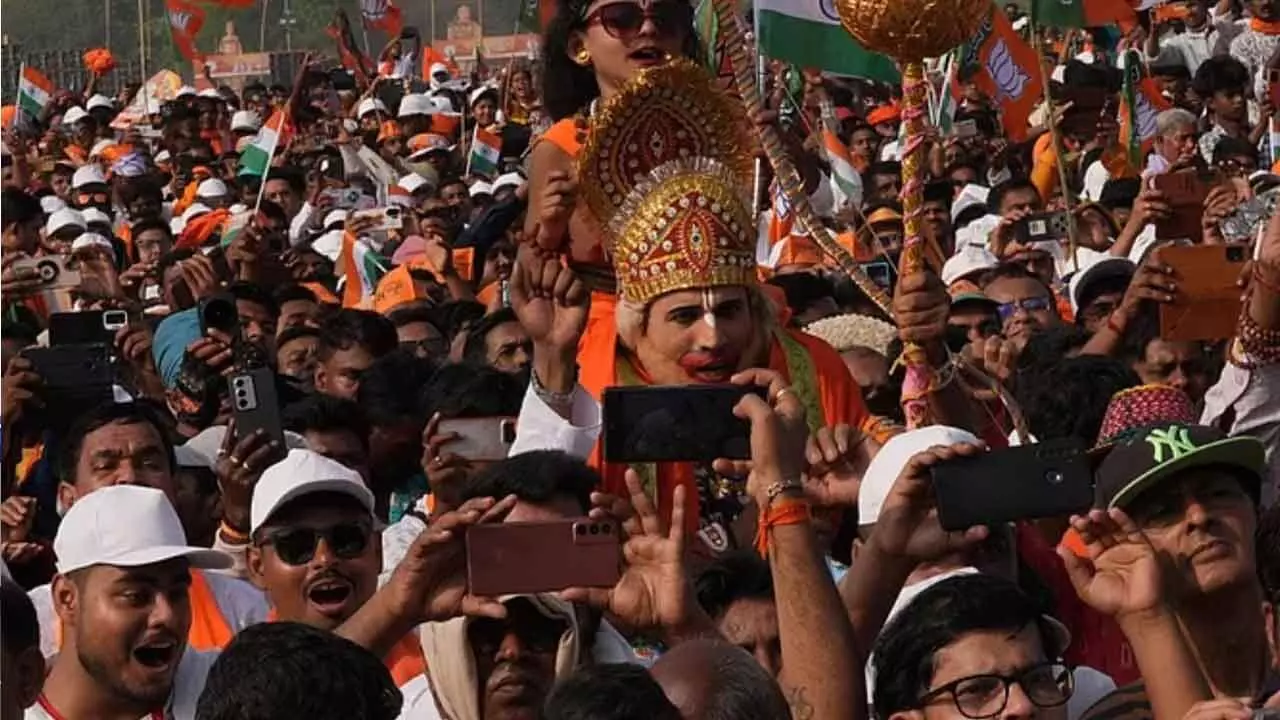
The Bharatiya Janata Party has also attempted to build momentum around the recent rally addressed by Narendra Modi at Kolkata’s historic Brigade Parade Ground, claiming a record turnout.
However, the same ground has witnessed far more historic gatherings in the past, such as rallies addressed by Nikita Khrushchev and Nikolai Bulganin during the height of Indo-Soviet friendship in 1955, Sheikh Mujibur Rahman in 1972, and joint anti-Congress rallies featuring leaders like Jyoti Basu, Atal Bihari Vajpayee and Lal Krishna Advani. The venue has also hosted several major rallies of Mamata Banerjee during her days in the Opposition.
By comparison, Modi’s rally last Saturday appeared modest. Only a portion of the sprawling ground was utilised and large gaps between attendees were visible. The vibrancy, spontaneity and thunderous response typical of historic Brigade rallies seemed largely absent.
That said, public anger, grievances and disappointment are natural when a government that has been in power for 15 years faces the electorate again. As the saying goes, familiarity breeds contempt. Mamata Banerjee, the astute politician that she is, understands this well.
In response, she has somewhat reversed roles, at least in the eyes of many voters, and has taken to the streets to protest against the Centre on issues such as the Special Intensive Revision (SIR) of electoral rolls and the cooking gas crisis. Banerjee has always performed effectively as a street fighter and opposition leader, a role that resonates strongly with her political persona.
At the same time, while the BJP leadership under Narendra Modi and Amit Shah focuses on expanding its voter base, Banerjee is banking heavily on the large beneficiary network created through various state welfare schemes.
Another advantage for the Trinamool Congress is its youth wing, widely considered one of the strongest among political parties in the state, driven by the initiatives of Abhishek Banerjee. For the BJP, the challenge remains formidable.
To dislodge the Mamata government, it would need to make significant inroads into the Trinamool’s Muslim vote base, attract disillusioned voters from the Left, and expand its appeal beyond its current support base.
Perhaps the most crucial factor will be whether the BJP can convincingly position itself as a party representing the quintessential Bengali identity, including all domicile Bengalis. So far, the party has struggled to achieve this.





