

Are India's youth becoming cannon fodder in Russia-Ukraine conflict?
From Job Dreams to Frontline Nightmare: Indians Recruited into Russian Army
Are India's youth becoming cannon fodder in Russia-Ukraine conflict?
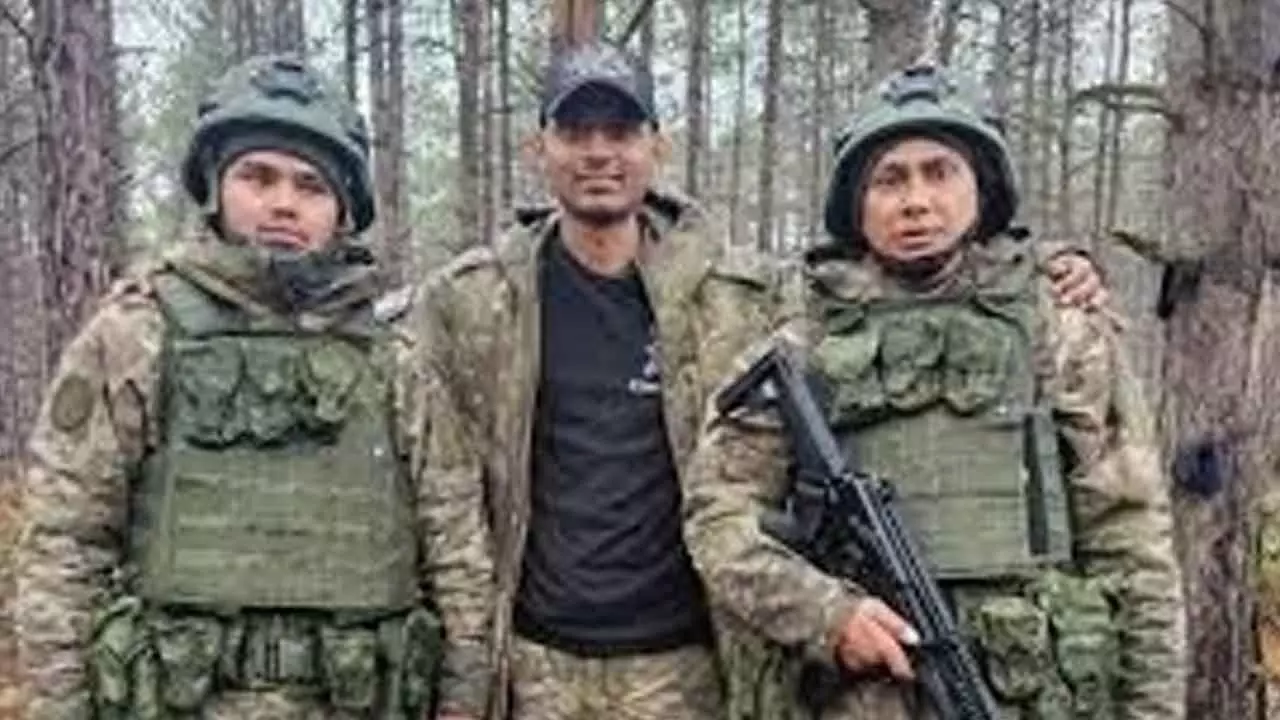
As Ukraine and Russia are fighting a grim war, a growing number of families across northern and western India say their sons were lured abroad with promises of high paying jobs or study opportunities, only to be coerced into signing military contracts and sent towards combat zones.
Families say the pitch is aimed at unemployed or financially stressed young men. The promises vary, security guard, kitchen helper, construction work, electrician jobs, with quoted salaries often in the range of Rs 1 lakh to Rs 2 lakh a month. In several versions of the story, agents allegedly charge hefty fees upfront, with families saying they sold jewellery or took loans to pay intermediaries. Once abroad, relatives allege, the rules change.
The Government of India has, for its part, publicly acknowledged the problem and issued repeated warnings. In a 11 June 2024 statement, India’s Ministry of External Affairs said two Indian nationals “recruited by the Russian Army” had been killed in the conflict and that its mission in Moscow was pressing for early repatriation of mortal remains.
Returnees and relatives also describe a short training period, often described as about two weeks, before men are moved closer to the front. According to various media reports, they were told it would be guard duty, not a war. Others say their sons were told they would be doing “support tasks” and would not be sent into combat, only to later hear of injuries, deaths or disappearance.
Money is another recurring grievance. Families allege bank accounts are opened in Russia, wages are deposited, but access is controlled by intermediaries. Several claim ATM cards or login details are taken away by middlemen who promise to transfer salaries to parents back home, then withdraw most of the funds and send only small amounts to keep families calm. In cases of death, families allege they were asked to arrange large sums for the return of mortal remains, with figures varying by case, and with little clarity on compensation or entitlements.
While many accounts come from distressed families and are hard to independently verify in full, one publicly documented case provides a detailed timeline that helps illustrate how the trap can work. An Indian national identified as Majoti Sahil Mohammed Hussain from Morbi described arriving in Saint Petersburg on 11 January 2024 and referenced study arrangements linked to ITMO University.
In his account, he later took up delivery work, was given coordinates for a pickup that was explained to him as narcotics, refused, and then faced police pressure and a sequence of detentions. He said he passed through multiple detention facilities before being pushed into signing a contract that appeared to offer a way out of jail but instead led into military service. He described subsequent transfers through different locations, a training period of 16 days at a field site, and then deployment towards the war zone.
Parliamentary replies have also put numbers on the scale of the crisis. In a Lok Sabha reply dated 7 February 2025, the MEA said that, as per available information, there were 127 Indian nationals in the Russian armed forces, services of 97 had been discontinued, 12 were reported to have lost their lives, and 18 remained, of whom 16 were reported missing by the Russian side.
In a Rajya Sabha reply dated 18 December 2025, the government said that As per information available, 202 Indian nationals are believed to have been recruited into the Russian armed forces. Concerted efforts by the Government have resulted in early discharge of 119 of them; 26 are reported to have lost their lives and 07 are reported missing by the Russian side.
Efforts are ongoing for early discharge of 50 individuals. The Ministry has provided assistance in repatriation of mortal remains of 10 deceased Indian nationals to India, and local cremation of two deceased Indian nationals. DNA samples of family members of 18 Indians, who were reported dead or missing, have been shared with the Russian authorities in an effort to help establish the identity of some of the deceased Indian nationals.
What families are asking for is straightforward: confirmation of where their relatives are, proof of life where possible, clear timelines for release, and a credible process for repatriation. Many say the most painful part is the gap between the last phone call and months of silence, with only rumours filling the space.
The warning signs, however, are already clear, and officials privately urge families to treat them as red flags. Any overseas offer that comes through an unlicensed agent, demands large upfront payments, uses a visa type that does not match the promised job, presents a contract only in Russian, refuses to provide a translated copy, pushes for immediate signatures, or ties “resolution” to police or immigration threats should be treated as high risk.
The same applies to roles framed as “support work” linked to military structures, even when the pitch insists there is no combat component. The MEA’s public language is blunt: stay away.
(The author is Delhi-based senior journalist and writer. He is author of Gandhi's Delhi, which has brought to the forth many hidden facts about Mahatma Gandhi)





