

CBFC Has No Authority Over OTT Content; Streaming Platforms Governed by IT Rules, Clarifies Centre
The Centre clarifies OTT platforms are not under CBFC control and must follow IT Rules 2021 with a three-tier self-regulation framework.
OTT platforms like Netflix and Prime Video will continue self-regulation under IT Rules, not CBFC censorship.
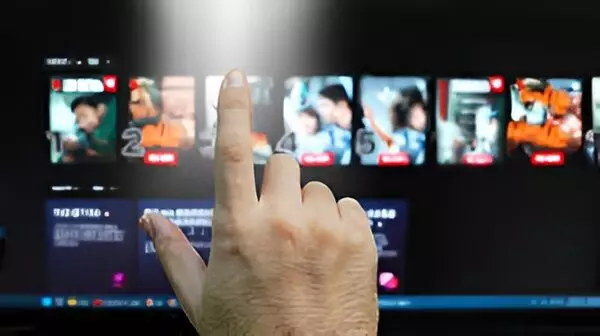
The Central Government has explicitly stated that the Central Board of Film Certification (CBFC) will not exercise its power over the content streamed on Over-The-Top (OTT) platforms. Despite this, the digital content will continue to be governed by the Information Technology (IT) Rules, 2021, which obligate online publishers to be bound by a separate Code of Ethics.
The MIB (Ministry of Information and Broadcasting) provided the clarification during a Lok Sabha discussion on December 17; it was a vigorous repetition that the CBFC's power is limited to theatrical films according to the Cinematograph Act, 1952. Its authority does not extend to content released on digital streaming platforms.
According to the ministry, OTT platforms such as Netflix, Prime Video, JioHotstar and SonyLIV are required to follow the Code of Ethics outlined in the IT Rules. These rules mandate that platforms must not publish content prohibited by law and must self-classify their programmes based on age-appropriate categories.
“The Code of Ethics requires OTT platforms to ensure compliance with existing laws and adopt age-based classification of content as prescribed under the IT Rules,” the ministry stated.
Three-Tier Regulatory Framework Explained
To ensure accountability and address public grievances, the IT Rules, 2021 have introduced a three-tier institutional mechanism for regulating digital content.
Tier 1: Self-Regulation by Publishers
At the first level, OTT platforms are responsible for monitoring their own content and addressing viewer complaints internally. Each platform must appoint grievance officers and establish content moderation processes.
Tier 2: Self-Regulation by Industry Bodies
If grievances are not settled through the platform, they go to the second tier, a regulatory body created by the publishers or their associations that has self-regulation.
Tier 3: Government Oversight
The last tier is the central government’s Inter-Departmental Committee consisting of representatives from various ministries, e.g., Information and Broadcasting, Home Affairs, Law and Justice, Women and Child Development, Electronics and IT, and External Affairs, who step in when the issues still remain after two tiers of resolution.
Minister of State for Information and Broadcasting L Murugan presented this structure in a written reply in Parliament stressing that the system is aimed at public concerns and at the same time is a content quality standard.
Guidance After OTT Content Spats
The Ministry of Information and Broadcasting issued an advisory earlier in the year that warned OTT platforms against the broadcasting of any content violating Indian laws. The advisory was a result of the controversy surrounding the showing of the sexually explicit remarks during the broadcast of India’s Got Talent, which led to public protests and complaints.
The government’s stand is that OTT platforms have the right to choose creatively, but they have to conduct themselves in a legal manner as per the IT Rules.
The Centre claims that with the fast-paced growth of digital streaming in India, the current regulatory framework is such that it does not compromise on either the creative side or the law; content suitable for the age group is simply not disseminated.





