

Work, workers and wealth, why employment remains India’s greatest economic test
As India’s economy shows resilience and promise, employment quality and absorption remain critical challenges
Work, workers and wealth, why employment remains India’s greatest economic test
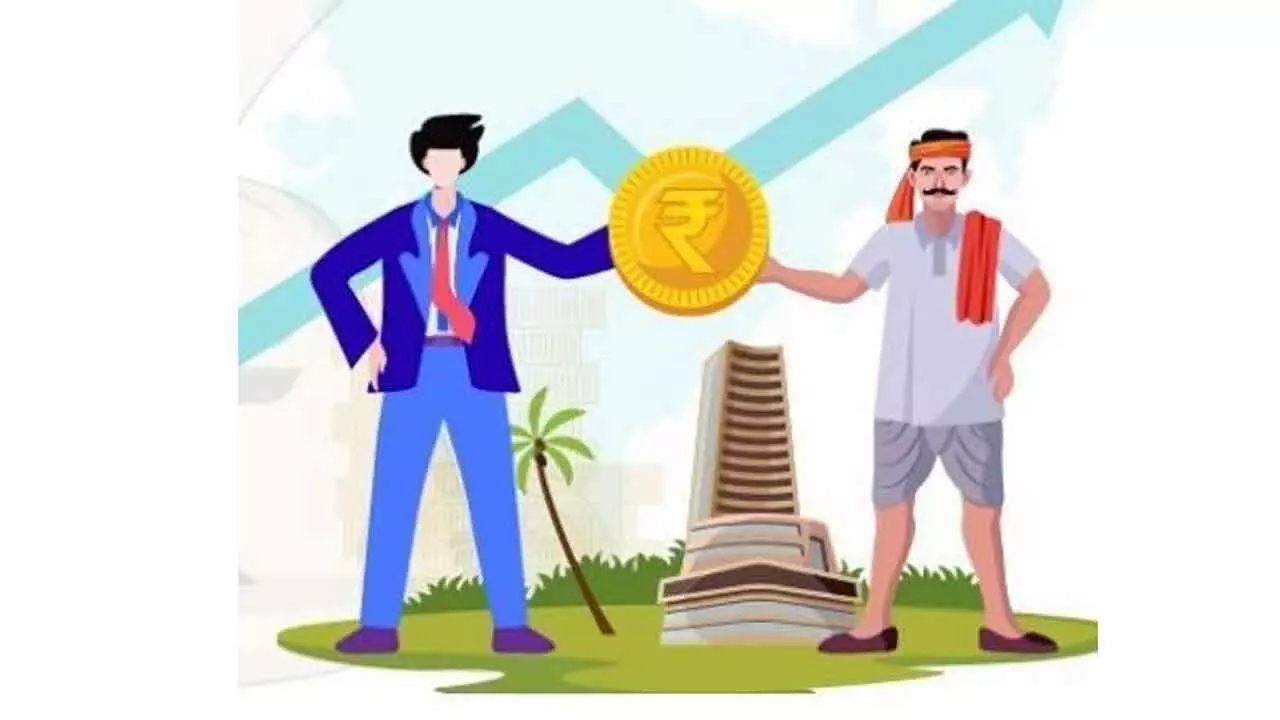

An earlier piece in this column had examined the strengths and weaknesses of the Indian economy and some possible measures to make it move forward on the road to sustainable development and rapid growth.
As is well-known, the features of a healthy economy include steady (GDP) growth, low unemployment, stable prices, rising living standards, efficient resource use and equitable distribution of wealth and income.
The economy of India is considered reasonably healthy for several reasons. The country has the world's third largest consumer market, which drives nearly 70% of the Gross Domestic Product (GDP), an indicator of the confidence of the growing middle class.
The secondary and tertiary sectors are growing robustly. The government and private investors are bestowing adequate attention on developing infrastructure, and the financial system is resilient with low inflation.
A large and growing workforce, diversified foreign exchange reserves and a favourable balance of payments position are all reassuring factors, as are the high capital inflows, which demonstrate global confidence in India’s performance and promise.
Employment is vital for an economy as it fuels GDP growth through consumer spending, boosts business productivity, generates tax revenues, fosters innovation, ensures social stability and helps reduce poverty. It is, in fact, the backbone of a thriving economy which can transform individual effort into collective prosperity and stability.
Employment in India falls broadly into the categories of formal, informal and self – employment apart fromtraditional sectors, such as agriculture, services and manufacturing. Modern versions include gig workers, contract–based workers, time workers, and freelance positions.
Formal employment involves jobs with written contracts, social security, and regulatory compliance, mainly in the organized sector, including the government, public/private corporations, education, and finance. It comprises types of employment such as full-time, part-time, contractual roles, apprenticeships, and traineeships, all offering benefits like insurance, paid leave, and retirement plans.
Workers in the informal type, however, lack legal protection, social security and connected benefits. The category includes street vendors,domestic workers, waste pickers, construction laborers, gig workers, and agricultural laborers, alongside self-employed artisans, small traders, and unpaid family workers, characterised by lack of social security and job labor protection, spanning agriculture, services, and manufacturing.
Self-employed workers are those who work for themselves, such as farmers, small business owners, freelance and consultants, the largest workforce segment.
The phenomenon of gig workers is of recent origin and indicates a labour market shift, with individuals working on short–term contracts for freelance projects (also known as gigs), rather than being in traditional full-time employment. It offers flexibility but suffers from instability and a lack of reasonable benefits. Driven by technology, workers, such as drivers, writers, and designers, are connected, via digital platforms, with prospective employers needing specific tasks, creating a dynamic workforce for everything from deliveries (Uber, Swiggy) to specialised consulting.
It is redefining how people earn incomes and how companies operate. The employment is characterised by flexibility and economy, as workers can set their own hours and choose projects which provide control over work–life balance. The work is also task – oriented,ranging from micro tasks to professional services. The segment is proving to be promising and attractive on the one hand, it offers to potential employers the benefits of reduced overheads, no permanent employee costs, as well as access to specialist talent and scalability.
The phenomenon is redefining traditional employment, impacting tax, labour laws and social safety net while also creating a significant, yet often informal, workforce.
The phenomenon of unemployment, particularly among the youth, is a continuing concern in India. No doubt it is not as high as in countries such as the US, UK or France, but remains higher than other countries such as Japan or Germany.
Unemployment, generally regarded as a negative feature, does have some positive impact. Frictional unemployment, for example, which is caused by people being in the process of moving from one job to another, provides an opportunity to develop skills, reassess career prospects and also find the time to pursue personal interests such as travel or spending quality time with the family.
It also creates a workers pool, enabling employers to hire the best candidates, while also helping find a job that matches their skills, thus increasing productivity. The benefits usually provided to those unemployed create a safety net, while preventing a drastic drop in consumption and supporting workers as they search for jobs.
There are types of unemployment that can mimic the classic variety, such as, for instance, disguised unemployment, or hidden employment, arising out of more people working on a job than needed, rendering their contribution to output practically none; an under labour resource and an example of zero marginal productivity caused by a labour surplus.
A shop needing just one worker, instead of having five workers; or seven people working on a farm while four can easily manage; or a highly skilled person, such as a painter or a plumber, taking on a job requiring no training. Or, for that matter, a software engineer working as a delivery driver for want of an opportunity suited to his qualifications.
The phenomenon is sometimes also known as apparent employment. A similar manifestation of unemployment is underemployment, which describes the situation of persons being employed but not fully utilising their skills, education, or potential, often involving fewer hours of work or lower pay. A person holding a doctorate in physics, for instance, working as a shop assistant is a good example.
The large number of persons being without a job is a serious matter. However, to end this part of the discussion on a humorous note, just to lighten the atmosphere, here is what I heard recently. There are many jokes about unemployed people, but, unfortunately, none of them work!
(The writer was formerly Chief Secretary, Government of Andhra Pradesh)





