

When the capital can’t breathe; the real price of Delhi’s pollution
Despite policies and programmes, the capital’s air crisis continues to outpace action
When the capital can’t breathe; the real price of Delhi’s pollution
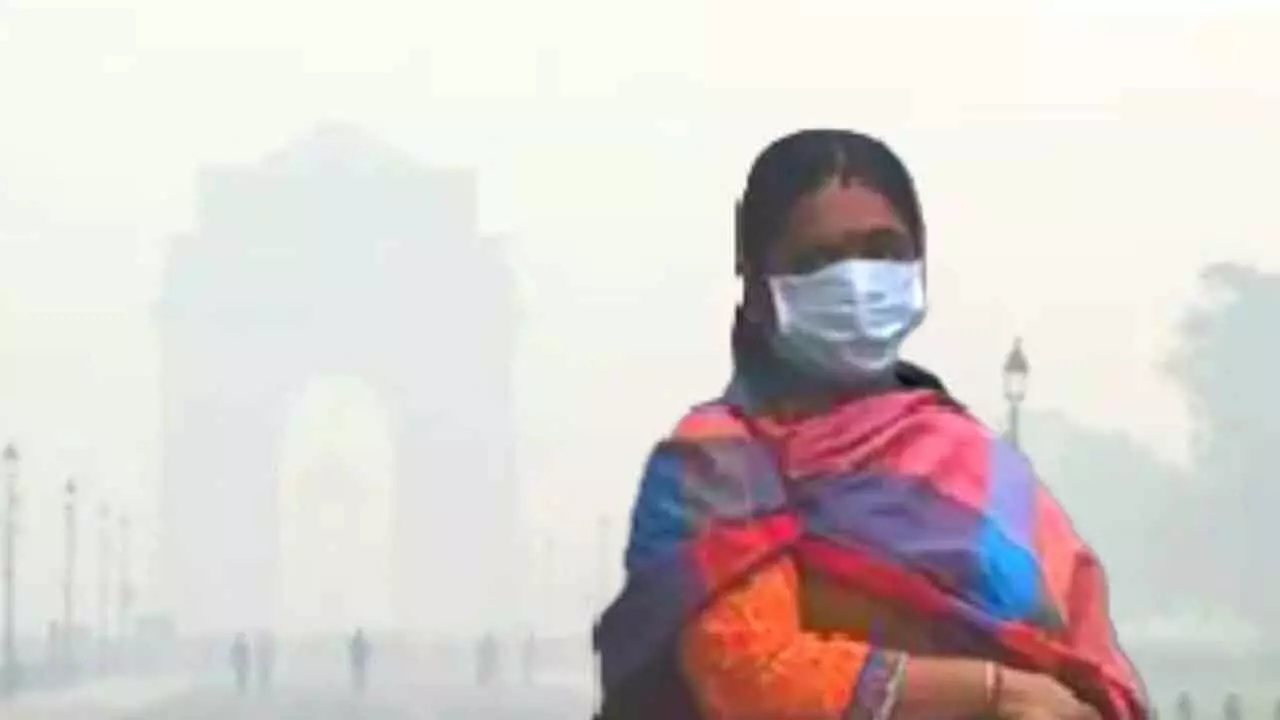

The severe pollution in Delhi and some suggested steps for combating it figured in this column last week. Some readerswanteda moredetailedsequel this week. The situation is worrisome, especially when monetised costs and socio-economic fallouts are looked at.
Monetised losses, for instance, are estimated to be up to 75,000 crores, almost the GDP of the capital city! Health complaints will rise, straining the Delhi/NCR region’shealth care system, whose share of work days lostannuallyin the country (estimated at about 13crores), will go up,resulting inenormouslosses of income and health costs. The present estimateof 54,000 prematuredeaths annuallymaygo up,reducing the lifeexpectancy of the citizens by about 12 years.
International and domestic tourists, as well as skilled workers and expatriates, will avoid visiting Delhi. Restrictions imposed by the Graded Response Action Plan (GRAP) to combat pollution willcause interruptions in construction works, leading to time and cost overruns. The ‘odd-even’ vehicle ration periodscausing a fall insales of automobilesandlosses incurredby airlineson account of reduced visibility in winter months, will continue. Thecrisis affects the poor the most, as they work in open-air conditions and cannot afford air purifier or masks, straining their economic condition by increasing health costs.
The very viability of the capital city of the country as a major economic hub is therefore in danger of being seriously dented.
The central government and the state governments of Punjab, Haryana, and Uttar Pradesh have taken several steps to combat the issue of both the In-Situ and Ex-Citu Crop Residue Management (CRM) types.
In-Situ measures include subsidies to farmers and Cooperative Societies for purchasing equipment, establishment of Custom Hiring Centres, spraying bio/decomposer on fields to turn the stubble into manure, and promoting the sowing of early – maturing paddy varieties.
Ex-Situ measures promote use of paddy straw as a resource in biomass – base power plants and fuel in industrial boilers and pellet– firing in thermal power plants, in keeping with the Pradhan MantriJi-Van Yojana of the central government for setting up plants to convert bio-mass into fuel and using the support provided by the Central Pollution Control Board for setting up pelletisation plants utilising paddy straw.
Regulatory and monitoring measures in placeinclude the extant initiatives of CAQM, the rather innovative practice of making ‘red entries’ in the land records of farmers found to be burning residue, consequent penalties and disqualification from subsidies, increased satellite surveillance using Indian Space Research Organisation (ISRO) data, and deploying flying squads to monitor and stop fires.
Some state governments provide cash and other incentives to farmers who avoid burning crop residue and to those who shift to alternative crops such as pulses, oil seeds and maize, and provide cattle manure in exchange for stubble.
Many years ago, M.G. Devasahayam, a farsighted civil servant then working as the Managing Director of the Industrial Development Corporation of the Haryana government, had suggested that stubble could be used as a raw material for paper manufacturing units. The suggestion is now an active component of the state’s Ex-Situ strategy, with the government, in collaboration with CAQM, tasked several industrial units to adopt that method.
An Information Education and Communication campaign is already on, to create awareness about finding alternatives to burning crop residues. Also, credit – linked capital subsidy mechanisms have been put in place to help acquire machinery.
The central and state governments are determined to ensure strict administrative accountability in the implementation of the laws and policies.
Positive and encouragingresponse from all these measures notwithstanding, high costs of machinery, limited infrastructure, and the shortness of the window between the harvesting of a crop and the sowing of the next one,continue to preventrealisation oftheir full impact. Those looking for the reassuring gesture, of a continuing commitmenton the part of the government of India to the problem, through the current year’s budget, have, however, expressed disappointment at the total lack of a reference to it.
Some among the many initiatives that can be taken to mitigate the impact of stubble burningarethe announcing of the Minimum Support Price for stubble well in advance of the Khariff season, so that farmers sell the straw rather than burn it, establishing temporary storage centres at placestoo far away fromprocessing units for viable transport, and incentivising the shift to short-duration paddy varieties.
Formulating a holistic, integrated, and technology-driven National Bio-energy policy is an urgent and much-needed initiative. It needs also to be remembered that the Apex Court of the country has interpreted the right to a clean and pollution-free environment as a vital part of the right to life, in a verdict that applies to all cities and citizens. The entitlement, thus, is no longer a policy aspiration, but a constitutional entitlement.
Regrettably, all the Constitutional, statutory and administrative provisions and programmes, notwithstanding, neither the pace, nor the quality of consequential action match either their spiritnor the expectations.
Several real life examples speak of the suffering of poor people on account of pollution in Delhi, like that of HemaSudin, a rickshaw puller, whose breathing is difficult, as he has to strain his body to pedal with a 50 kg load. Despite chronic coughing and chest burning. He cannot stop working, for fear of starving himself and his family. Other such poor people include street vendors, outdoor workers, and slum dwellers.
What needs to be done, in what way, and what resources are required will be, is fairly clear. For one thing, all these people can benefit from one or other of the programmes of the government of India and the state governments. Also, assuming more funds are likely to be required, they can hardly constitute a challenge when viewed against the enormous wastage of funds on, say, the food, fertiliser subsidies, the flab in manpower, in the central and state governments, and their public sector undertakings, and the time and cost overruns on projects.
All such efforts will only succeed when they areinclusive, carrying all stakeholders on board, such as the citizens, the Civil Society Based Organisations, Non-Government Organisations, academic institutions, the corporate sector, and the scientific and technical community. They should also be focused, so that the wood is not missed for the trees and the disease is addressed rather than the symptoms; and, needless to say, transparent, to be able to withstand external scrutiny.
India has arrived as a happening country.What withIndia’s economy ranking as the 4th largest in the world, after Japan,massive foreign direct investment inflows taking place, the ‘Make in India’ initiative boosting local manufacturing, the implementation of GST unifying the country into a single market, and with tax collections hitting record highs, the country’s economy is on a roll.
What is more, the road, rail, and air transport sectors have recorded spectacular growth.
Great achievements have also been recorded in space exploration. The country received accolades for its management of the Covid – 19 pandemic. Diplomacy and defence are areas where India has done much better than ever before. Remarkable strides have also been taken in the development of agriculture and allied sectors.
Historic and spectacular feats have been performed in games and sports at the regional and international levels. What is more, magnificent sculptures have been erected to commemorate the memories of great heroes of the past. And majestic world class buildings have come up to house institutions such as Parliament.
Bharat Mata has thus, in recent years, added many feathers to her much-decorated cap.
Despite all this, children continue to be sold in the streets of the metropolises, women are killed in the name of honour, farmers commit suicides due to distress, and India persistently ranks poorly in international indices, such as the HDI of the UNDP.
These disturbing factors need to be clearly brought to the notice of those in whose power it is to order the priorities for future strategies for the rapid growth, sustainable, and equitable development of the country and her people. One feels confident that, then, the enlightened spirit of those at the helm of affairs ofthe nation will lead to the right options being chosen for investing the precious public resources of the country.
One also hopes that, come winter 2027, one will once again be able freely to loiter about in Daryagunj, to lunch at MotiMahal in ChandniChowk, to sample the delicacies of ChapatiGali and take a dekko at MirzaGhalib’s residence, browse through the books in the shops at Kashmiri gate and revisit familiar areas such as Okhla, Shahdara and Kamla Nagar.
And sample the delights of the city which Zaukh was unwilling to leave, even in the face of the greatest temptation offered by the Nizam of Hyderabad, saying, “KaunjaayeZauq Par Dillikigaliyaanchoddkar.”
(The writer was formerly Chief Secretary, Government of Andhra Pradesh)





