

What a Taiwan flashpoint means for India
How escalating tensions across the Taiwan Strait could reshape India’s security and foreign policy
What a Taiwan flashpoint means for India
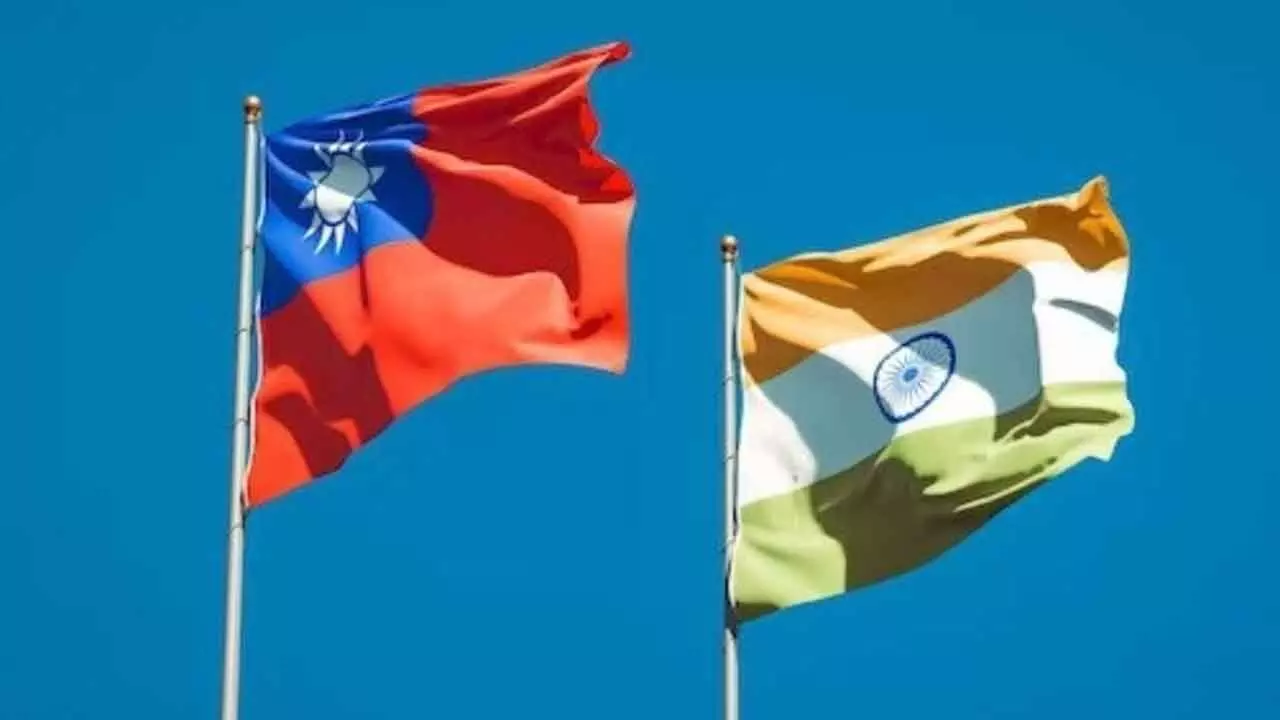

A China-Taiwan conflict would severely impact India economically through trade disruption (especially semiconductors, electronics from Taiwan/China), sparking inflation, supply chain crises, and potentially slowing GDP, while strategically forcing India into difficult Quad/Indo-Pacific security choices, though also creating opportunities for deeper India-Taiwan tech partnerships in semiconductors and diversifying away from China.
It could cause disruption of sea lanes - the Taiwan Strait, the Strait of Malacca which are crucial for India-Asia trade.India heavily relies on Taiwan (TSMC) for advanced chips; a conflict would cripple this, raising costs for many Indian industries.A global economic shock cannot also be ruled out, which could leadto inflation, increased oil prices, and a potential 1-2% GDP slowdown in India
“Power tends to corrupt, and absolute power corrupts absolutely.” -Lord Acton, English Catholic historian, Liberal politician, and writer
That was what Lord Acton had to say about the tendency of power to corrupt people in authority. Professor C.L. Wayper, whose book ‘Teach Yourself Political Thought’, was the source for my preparation for the civil service examinations in 1967, ingeniously twisted this famous line to say, “Peace corrupts and everlasting peace corrupts everlastingly.” That was the context of how leaders of nations have this dialogical method of keeping the people of the country busy worrying about its external security. Deteriorating relations with neighbouring countries, unresolved border disputes that threaten to develop into major conflicts, are normally enough, nothing like a war, really, to distract the minds of people from the discontent caused by other pressing issues,many major superpowers in the world today practice this fine art.
Chinese President Xi Jinping, on 31st December, 2025, a day after Beijing concluded two-day military drills around the island, said that reunification of Taiwan with China is “unstoppable”.
“We Chinese on both sides of the Taiwan Strait share a bond of blood and kinship. The reunification of our motherland, a trend of the times, is unstoppable,” said Xi in his New Year address.
Taiwan is a crucial strategic asset in the Indo-Pacific region; Chinese control of the island would allow the People's Republic of China (PRC) to break the “first island chain” and expand its military influence, challenging the US-led regional order.
China has intensified its military posturing, conducting frequent large-scale military drills, air and maritime incursions, and "grey-zone" warfare tactics around Taiwan. These actions are viewed by Taiwan and its allies as aggressive and designed to intimidate, increasing the risk of miscalculation and potential conflict.
Taiwan's background is a complex blend of indigenous Austronesian roots, centuries of Chinese migration and rule by the Qing dynasty, a period of Japanese colonization and its modern identity as a self-governing, democratic, high-tech economy, shaped significantly by the relocation of the Republic of China (ROC) government after losing the Chinese Civil War to the Communists, leading to ongoing political tensions with mainland China (PRC) over sovereignty. The first inhabitants were Australo-Papuan peoples. Han Chinese began settling in significant numbers in the 17th century, with waves of immigrants from Fujian and Guangdong.
Around the same time, European powers established trading posts, with the Dutch colonizing the south and the Spanish the north before the Dutch expelled them. Later, China's Qing rulers took control, overseeing significant Han Chinese immigration and development. After the First Sino-Japanese War, Taiwan became a Japanese colony, experiencing modernization but also strict rule and cultural suppression.
Countries with a “Taiwan-like status” are partially recognized states or de facto independent territories that operate with sovereignty but lack widespread formal diplomatic recognition, similar to Taiwan (Republic of China), which is claimed by the PRC but functions independently, with allies like Somaliland, Kosovo, or the Holy See (Vatican City) exhibiting similar complex international positions, though none are identical.
These nations often maintain robust unofficial ties with many countries despite limited official recognition, navigating complex geopolitical realities where economic and cultural engagement often outweighs formal diplomatic status.
The split personality mindset among Taiwanese people is a complex perception rooted in the political and cultural dualities of the island. It arises from the internal conflicts and societal paradoxes concerning identity and political affiliation.
Beyond the political identity issue, general observations of Taiwanese personality traits often highlight a cultural emphasis on harmony and respect, influenced by Confucian values.
Most people in Taiwan identify solely as Taiwanese, while a small minority identify as primarily Chinese, and the remaining as both. This divergence creates a societal dynamic where identification is often seen as a political statement.
Younger generations are much more likely to assert a distinct Taiwanese identity, viewing themselves as culturally and behaviorally separate from the Chinese stereotype. Older generations, particularly those who arrived with the Kuomintang (KMT) in 1949, are more likely to have an emotional attachment to China or identify as both Chinese and Taiwanese.
Taiwanese people are often perceived as reserved, polite, and introverted in public settings, similar to Japanese cultural norms. They can, however, be very social and extroverted in private or relaxed environments.
A China-Taiwan conflict would severely impact India economically through trade disruption (especially semiconductors, electronics from Taiwan/China), sparking inflation, supply chain crises, and potentially slowing GDP, while strategically forcing India into difficult Quad/Indo-Pacific security choices, though also creating opportunities for deeper India-Taiwan tech partnerships in semiconductors and diversifying away from China.
It could cause disruption of sea lanes - the Taiwan Strait, the Strait of Malacca which are crucial for India-Asia trade. India heavily relies on Taiwan (TSMC) for advanced chips; a conflict would cripple this, raising costs for many Indian industries. A global economic shock cannot also be ruled out, which could lead to inflation, increased oil prices, and a potential 1-2% GDP slowdown in India.
India, as a Member of the Quadrilateral Security Dialogue (QUAD) of Australia, India, Japan and the United States, will face pressure to respond to Chinese aggression, balancing its China trade/border issues with strategic commitments.
India will need to increase naval surveillance in the South China Sea and the Taiwan Strait, working with partners like the US, Japan, and Australia.
Heightened tensions could also push India to strengthen its unofficial ties with Taiwan (economic, tech) as a strategic counterweight to China. On the other hand, the situation could push India to develop domestic semiconductor capabilities and deepen ties with Taiwan and other partners.
The global response to a Chinese attack on Taiwan would set a precedent for territorial disputes and the future of international law and democratic norms worldwide.
The current situation around Taiwan maintains a precarious peace that is under constant threat due to China's assertive push for unification and the international community's interest in preserving Taiwan's de facto autonomy and the regional status quo.
(The writer was formerly Chief Secretary, Government of Andhra Pradesh)





