

Three Kartavyas, one vision: Budget 2026–27 charts the road to Viksit Bharat
Growth, capacity building and inclusive participation define India’s development roadmap
Three Kartavyas, one vision: Budget 2026–27 charts the road to Viksit Bharat
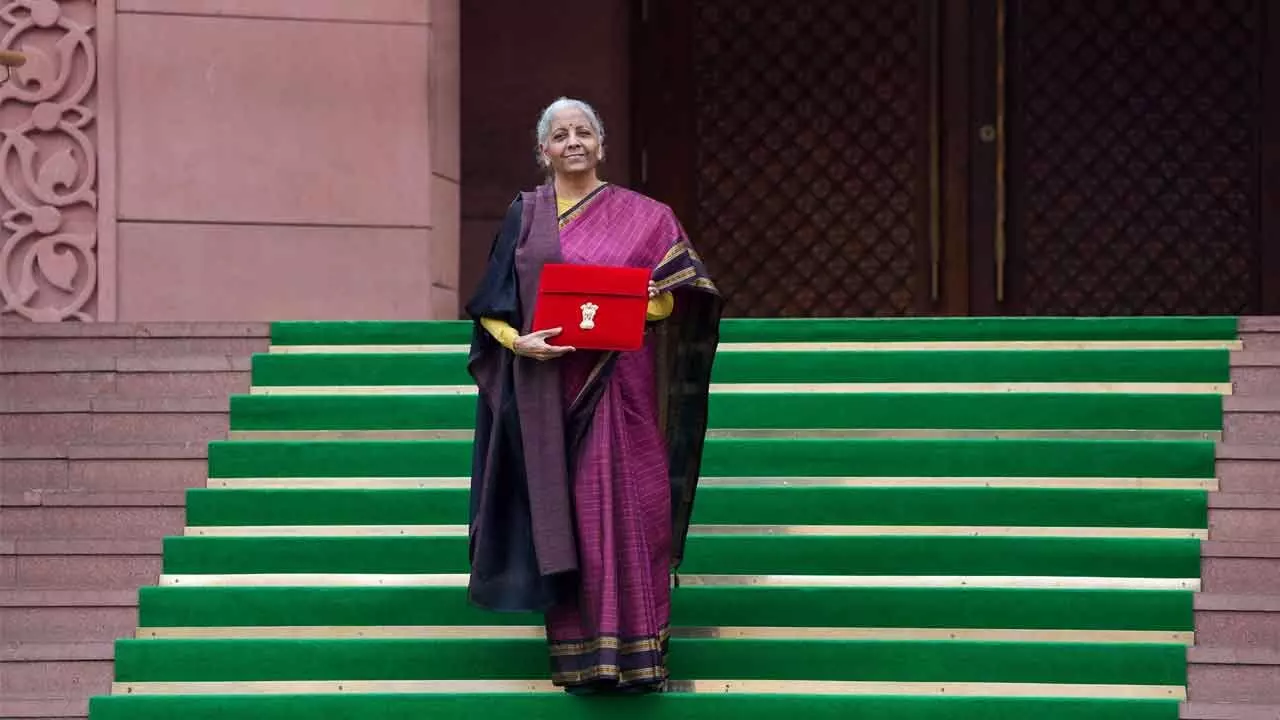

The recent submission of the Union Budget 2026–27 has received an overwhelmingly positive response, barring a brief sharp fall in the equity markets following the enhanced taxation on derivatives. Subsequently, markets began to factor in the various positive measures envisaged in the Budget for short-term and medium-term growth, as well as India’s long-term economic transformation.
This, coupled with the trade agreement entered into with the European Free Trade Association and the much-awaited trade agreement with the United States, which reduced tariffs sharply to around 18 per cent, has provided renewed positive momentum to equity markets.
With strong policy enablers, a clear fiscal consolidation path, continued focus on capital expenditure, quality of spending and fiscal prudence, along with new initiatives to support domestic demand, the Budget has laid a solid foundation for India’s march towards Viksit Bharat by 2047.
As the Union Finance Minister, Nirmala Sitharaman, presented the Budget for the ninth time from Kartavya Bhavan, she articulated three Kartavya (duties). The first and foremost priority is to accelerate and sustain economic growth. India is expected to grow at around 7.4 per cent this year. While this compares favourably with global peers amid prevailing global headwinds, including geopolitical uncertainties, trade disruptions and supply-chain disturbances arising from sanctions, this growth rate needs to be further accelerated.
India lost valuable momentum post-COVID-19, which delayed the milestone of becoming a $5 trillion economy. To achieve the goal of a developed economy by 2047 and scale up to a $30 trillion economy, GDP growth must accelerate to 8–9 per cent. While challenging, this is achievable given India’s strong consumption-led economy and expanding opportunities in global trade. This will require bold structural reforms, enhanced private sector capex, continued government-led infrastructure investment, and rapid scaling of sunrise sectors. Productivity and quality-driven growth across manufacturing and services must remain central to this effort.
The second Kartavya is to fulfil the aspirations of the people and build their capacity. India has already lifted a significant portion of its population out of poverty, bringing those below the poverty line to historically low levels. The focus must now shift to empowering the youth (Yuva Shakti) and enabling women to take a leadership role in nation-building. Increasing women’s participation in employment, self-employment and entrepreneurship through targeted enablement and effective utilisation of Nari Shakti has become imperative.
Manufacturing, which currently contributes about 15 per cent to GDP, must be scaled up to the desired level of 25 per cent, positioning India as a global manufacturing hub. This will require technology adoption, enhanced R&D, global technology collaboration, innovation-led investments, productivity gains and quality enhancement. Emerging technologies, including AI, offer significant opportunities to boost services exports and create high-value employment.
At the same time, reducing excess employment dependence on agriculture by encouraging self-employment, local arts and crafts, and micro and small enterprises is essential. Initiatives such as “One District, One Product” and sustained policy support for MSMEs, including equity support announced in the current Budget, will play a crucial role. Agriculture itself must transition to higher productivity through technology adoption, quality seeds, better inputs, diversification into fruits and allied sectors, agro-parks, improved cold storage, warehousing, logistics and direct procurement mechanisms that ensure better price realisation for farmers by reducing dependence on intermediaries.
These measures collectively ensure that the aspirations of all sections of society are addressed, enabling Viksit Bharat to become a shared national commitment. Rising per capita income, improved quality of life, better education, higher skill levels, enhanced healthcare, expanded social infrastructure, girls’ hostels in every district, access to clean water, improved urban amenities, smart cities, strengthened gram panchayats and municipal corporations, and incentivisation of municipal bond issuance are all steps in the right direction.
The third Kartavya emphasises alignment with the vision of Sabka Saath, Sabka Vikas. Growth must be inclusive and participatory. Both the Centre and States need to remain development-focused, prioritising capex, encouraging domestic and foreign investments, and collaborating to create robust physical and social infrastructure. Cooperative federalism and mutual support will enhance acceptance, social impact, private sector participation and ensure that the common citizen tangibly benefits from growth.
It is particularly gratifying that, despite the commitment to bring the fiscal deficit down to 4.3 per cent by 2026–27, the government has increased public capital expenditure to Rs12.2 lakh crore, up from Rs11.2 lakh crore in 2025–26. Road infrastructure has seen massive expansion, with improved connectivity and reduced travel times between major centres. Allocation for roads and highways has increased to Rs3.10 lakh crore from Rs2.87 lakh crore in the previous Budget. Over the past decade, expenditure by the Ministry of Road Transport and Highways has increased nearly six-fold, supporting a 60 per cent expansion of the national highway network to over 1.46 lakh kilometres.
Railways have also received a major boost, with the Budget proposing seven high-speed rail corridors as growth connectors to promote environmentally sustainable mobility. The allocation of Rs2.78 lakh crore for 2026–27, the highest ever, is up from Rs2.65 lakh crore in 2025–26. These corridors, spanning nearly 4,000 kilometres, are expected to attract investments of approximately $192 billion (Rs16 trillion), reinforcing railways as a central pillar of future mobility.
Further, the proposed Rs10,000 crore SME Growth Fund aims to nurture MSMEs as future champions. MSMEs already contribute over 30 per cent to GDP and 45.73 per cent to exports, with ambitious targets to raise these shares to 50 per cent and eventually 75 per cent. They are also the second-largest employer, with over 6.5 crore units providing jobs to nearly 28 crore people and contributing 35.4 per cent of manufacturing output.
Overall, the Union Budget 2026–27, with its innovative and inclusive proposals across sectors, strong emphasis on fiscal prudence, and focus on execution-driven outcomes, has laid a robust foundation for Viksit Bharat. The key imperative now is swift implementation, effective monitoring and measurable impact to translate intent into tangible results.
(The author is former
Chairman & MD of Indian Overseas Bank)





