

Smog over memories: How policy paralysis is clouding Delhi’s future
From frozen winters to choking smog, the story of a city and a system under strain
Smog over memories: How policy paralysis is clouding Delhi’s future

The best years of my life, the most enjoyable and productive , were the ones I spent in Delhi. They spanned my journey from being an undergraduate student at Hindu College, Delhi University, to serving as Joint Secretary, Additional Secretary, Special Secretary and Secretary to the Government of India, and later, post-superannuation, as a Member of the National Disaster Management Authority and a visiting Professor at IIT Delhi.
I continue to receive invitations from friends and colleagues to visit Delhi. Much as I am sorely tempted to return to that wonderful city, so full of memories from my teenage years and the most fulfilling period of my service, I am put off by the weather and the pollution. The cold is something I am not only used to but actually enjoy immensely, thanks to the winters I spent there, which were far more severe then.
Minimum temperatures would dip to as low as 0°C, and water often froze in supply pipes, sometimes causing them to burst. One invariably required five layers of insulation, a considerable ask, particularly for a South Indian experiencing his first winter there. And how inviting the treat was: chapatis wrapped around aloo masala curry, lovingly prepared by my mother for lunch, washed down with a hot cup of tea in the college canteen!
The pollution, however, puts me off. This relatively recent phenomenon, exacerbated by stubble burning in states neighbouring Delhi, has only added to my despondency. Still, I remain sanguine that somehow, sometime soon, things will improve and I shall once again be able to revisit the theatre of my fondest memories.
India has the dubious distinction of having 14 of its cities among the 15 most polluted in the world. Within the country, the capital city just fails to head the pack, much like Abu Ben Adhem, relegated to second place in the roll of honour of the 10 most hazardously polluted cities.
I have spent over two decades of my service in agriculture, allied activities and rural development. No such credentials are needed, however, to understand that stubble burning destroys soil fertility, kills microbes and causes nutrient loss. It also creates a heavy economic burden through healthcare costs and productivity losses, damages biodiversity and contributes to climate change. Regrettably, the efforts of both central and state governments to curb the practice have largely proved ineffective.
There are several reasons why farmers resort to burning crop residues. For one, they find the suggested alternatives either costly or unsuitable. The highly ill-advised non-stop wheat–rice cropping cycle not only causes soil fatigue but also shortens the window between crops.
Stubble burning is the quickest method of preparing fields for the next sowing. The delayed onset of the monsoon, often attributed to climate change, makes this interval even shorter.
Strangely enough, subsidies and inputs such as seeds, machinery, fertilisers, pesticides and power have had the opposite effect of what was intended, encouraging intensive farming and thereby increasing crop residues. For farmers, residue burning remains the cheapest and fastest solution compared to alternatives such as bio-decomposers or Happy Seeders, which require investment, effort and time.
The central government has extended financial assistance of around Rs3,000 crore over the last seven years to Punjab, Haryana and Uttar Pradesh. This support was meant primarily for supplying farm equipment to individual farmers and Custom Hiring Centres, establishing supply chains for paddy straw as raw material for bio-energy plants, boilers and industrial fuel, monitoring air quality systems, and conducting research and awareness programmes.
Even this assistance , nowhere near adequate, has not been properly utilised. On the other hand, the Government of India has largely turned a deaf ear to repeated requests from states, particularly Punjab, to increase and better target this assistance.
As a matter of fact, residue burning is prohibited by law and has been held by the Supreme Court to violate the fundamental right of citizens to live in a pollution-free environment. Yet, the indulgent attitude of political dispensations at both the Centre and the states has precluded tough measures. In fact, in the wake of the mass farmers’ protests in 2021, the central government even acceded to demands to decriminalise stubble burning.
The Punjab Preservation of Subsoil Water Act, in force in Punjab and Haryana, which aims to delay paddy sowing to conserve groundwater, has further reduced the time between harvesting paddy and sowing wheat, making stubble burning even more attractive.
This situation is compounded by the fact that paddy can be sown only during the monsoon, with harvesting in early November, leaving barely 10 days for farmers to prepare their fields for the next crop. Fearing reduced yields due to delayed sowing, farmers hasten to burn residues.
Going forward, the central government would do well to encourage crops other than paddy for inclusion in the MSP basket, thereby incentivising diversification. In fact, prioritising funding for diversification over assistance for procurement of equipment might have made government intervention far more effective.
The agricultural marketing system is also distorted, with middlemen (adtias) in northern states controlling crop prices, credit, taxes and market linkages, a practice that leads to distress sales and, invariably, indebtedness.
Crop residue is a valuable natural resource, rich in nutrients such as nitrogen, phosphorus, potassium and sulphur. Proper management, including zero-tillage methods, can maximise these benefits, reduce fertiliser use and enhance long-term productivity.
Western Uttar Pradesh, Punjab and Haryana are facing second-generation issues arising from Green Revolution practices of the 1960s, centred primarily on the rice–wheat cropping system. These issues are environmental, economic and social. Costs of cultivation have risen sharply owing to higher input costs and declining productivity, reducing net returns. Indebtedness has become so severe that many farmers have resorted to the tragic step of suicide.
Greater emphasis on creating adequate infrastructure such as storage facilities and processing units and offering stronger support to diversified crops will help significantly in addressing these challenges.
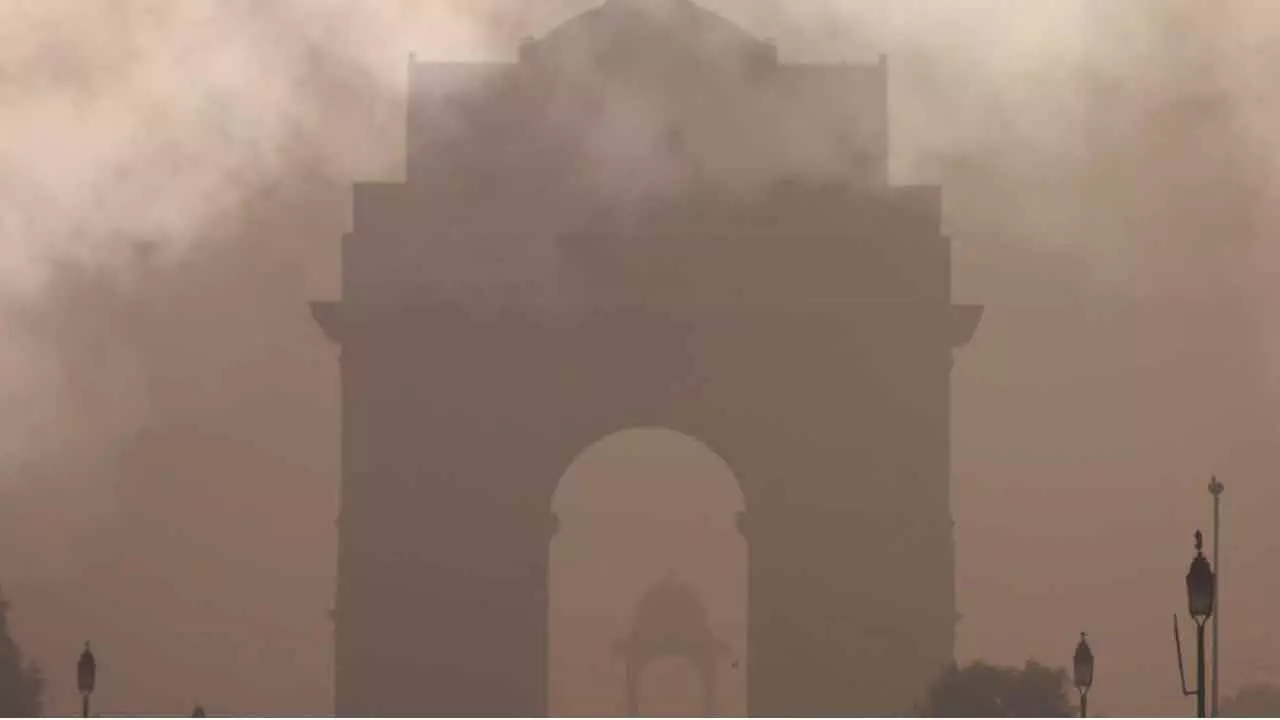
The smog in Delhi is said to be so thick these days that everybody sees everything only in black and white.
I understand that Bollywood actress Simi Garewal recently shared a viral image of three parrots with the caption: “Honestly, guys! I am not a crow. I just arrived from Delhi.” A telling reflection of how smog can erase colour from life itself.
(The writer was formerly Chief Secretary, Government of Andhra Pradesh)





