

Rising oil, disrupted trade: World urged to seek peace
Prolonged conflict between Israel, US and Iran disrupts energy flows, trade routes and global economic stability
Rising oil, disrupted trade: World urged to seek peace

The war between Israel and the United States on one side and Iran on the other, which began on February 28, continues unabated. With Iran targeting American bases across the Middle East, the conflict has expanded across the region, resulting in significant destruction and severely disrupting trade, tourism and economic activity.
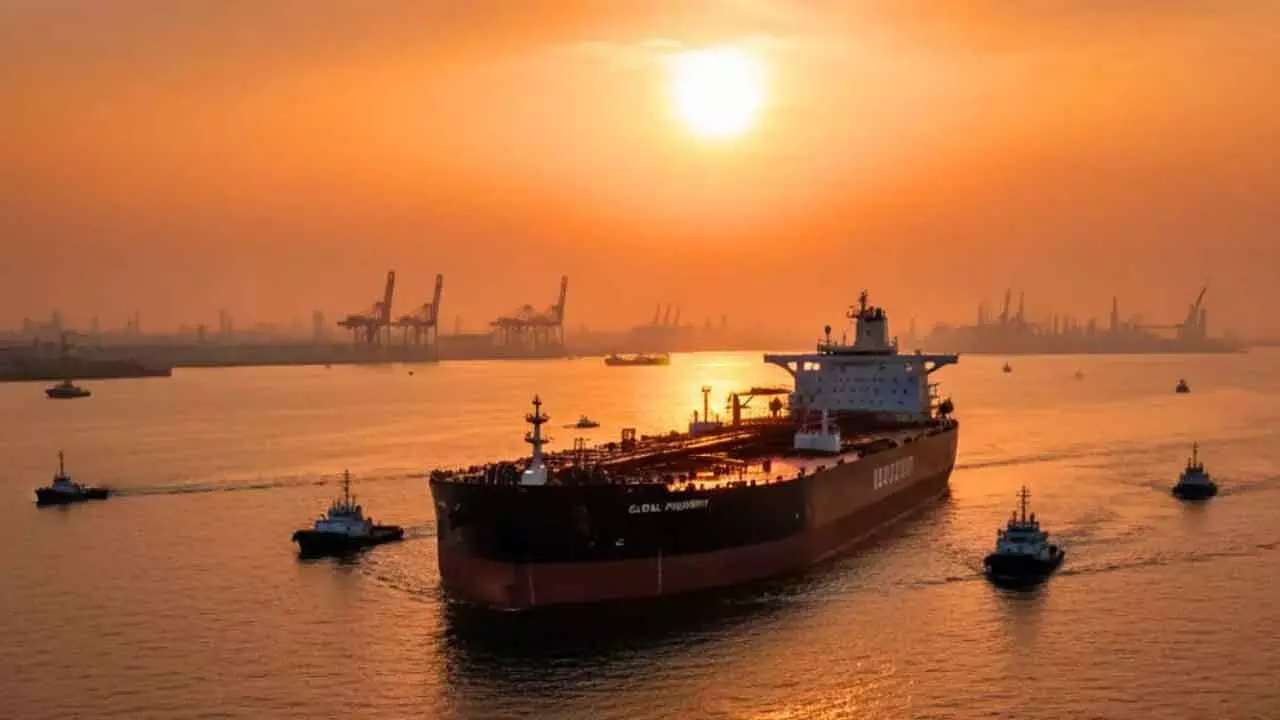
Iran has closed the Strait of Hormuz and is preventing commercial ships from passing through this critical route. The move has badly affected global supply chains, pushing up prices of oil, natural gas and fertilizers while also leading to shortages. These disruptions are increasingly affecting daily life across many countries.
Earlier, frequent drone attacks near Dubai International Airport and other critical sites caused major disruptions to air travel, leaving tourists stranded. Limited flight operations have also pushed ticket prices sharply higher.
Some oil extraction facilities in the region have been damaged or shut down due to the attacks, further aggravating the scarcity of oil. This is particularly worrying for countries like India, which depend heavily on oil imports from the Gulf region. Supplies of cooking gas and industrial gas have also been affected.
Instances of hoarding by traders hoping to profit from rising prices have worsened the supply situation in some places.
The Government of India has been attempting to diversify its sources of oil and gas and expand supply lines to minimize disruptions. Authorities have repeatedly assured the public that there is no immediate shortage and that adequate supplies will be maintained.
However, reports from the ground suggest panic buying in some areas, and some restaurants have reportedly scaled down operations due to limited availability of gas.
The government has also conducted raids on hoarders to prevent profiteering during the crisis. Meanwhile, India has engaged in discussions with Iranian officials to ensure safe passage for India-bound vessels.
Reports indicate that due to the long-standing relationship between India and Iran, Tehran has agreed to allow Indian-flagged ships carrying essential supplies to pass through the Strait of Hormuz. Accordingly, two India-flagged LPG tankers of the Shipping Corporation of India crossed the Strait of Hormuz on March 14 and are now headed toward India.
This development is significant because several hundred vessels, including 28 Indian-flagged ships, had been stranded after US and Israeli strikes on Iran triggered retaliatory attacks across the region.
Another Indian-flagged oil tanker, Jag Prakash, carrying gasoline from Oman to Africa, has also reportedly resumed its voyage after sailing from east of the Strait of Hormuz.
Earlier, US President Donald Trump had described the war as a limited operation intended to neutralize specific threats and possibly trigger regime change in Iran. The US claimed success in killing Iran’s earlier Supreme Leader Ali Khamenei along with several senior military leaders and damaging key nuclear and military facilities.
However, the objective of forcing Iran into unconditional surrender has not materialized. Iran has continued its attacks on Israel and US-linked targets across the Middle East and has proceeded with appointing a new Supreme Leader.
A committee of senior clerics has appointed Mojtaba Khamenei, the 56-year-old son of Ali Khamenei, as the new Supreme Leader, according to reports by The New York Times.
In his first televised address on March 12, Mojtaba Khamenei vowed to avenge the killing of his father and declared that Iran would continue blocking the Strait of Hormuz. He also demanded that neighboring countries close all US military bases, warning that they would otherwise be treated as legitimate targets.
Threats and counter-threats continue, with no clear sign of a ceasefire. The ongoing conflict is already affecting global trade and economic stability, particularly for countries that depend heavily on the Middle East for energy supplies.
The war has triggered a major global economic shock. Oil prices have surged by more than a third to above $100 per barrel, while around 20 per cent of global oil and LNG shipments that pass through the Strait of Hormuz face disruption. This situation is also likely to fuel global inflation.
Rising energy costs are increasing fertilizer prices, which could affect agriculture and food production, while manufacturing supply chains are also under strain.
Central banks around the world are closely monitoring the situation and may be forced to tighten monetary policy even as economic growth weakens, raising fears of stagflation.
According to an opinion piece dated March 12 by Robert Muggah, founder of the Igarapé Institute, the cascading economic fallout from the Middle East conflict is spreading far beyond the Gulf region and could reshape markets and supply chains for years.
He notes that the Strait of Hormuz remains a critical global chokepoint where disruption threatens not only oil shipments but also fertilizer supplies and high-tech supply chains. These economic shocks disproportionately affect import-dependent Asian economies and vulnerable nations already facing high inflation and rising debt.
The war is also causing heavy human and infrastructure losses across the region. Iran has recently threatened to target banks in Gulf countries, which could further deepen economic distress
If the conflict continues, the prolonged uncertainty, supply chain disruptions and destruction could have long-lasting economic consequences. Even if the war ends soon, restoring normalcy could take several months.
India, despite relatively strong macroeconomic fundamentals, remains vulnerable due to its dependence on imported oil and relatively limited strategic reserves. Although India has diversified its sources in recent years, including imports from Russia, the current crisis could still have serious economic consequences. Higher energy prices are already feeding inflation, weakening the rupee and threatening economic growth. Food prices, including wheat, have also begun to rise. Inflation, which had recently eased due to lower food prices, may now climb again due to both the war and climate-related pressures.
The Reserve Bank of India had earlier estimated inflation at slightly above 4 per cent for the current year. However, rising oil prices, fertilizer costs and cooking gas prices linked to the conflict could push inflation higher.
The broader implications for global trade are also significant. The closure of the Strait of Hormuz has disrupted oil and gas exports from major producers such as Saudi Arabia, United Arab Emirates, Iraq and Kuwait.
Brent crude prices have risen above $100–$110 per barrel, increasing energy costs worldwide. Shipping disruptions in high-risk zones such as the Red Sea are forcing vessels to take longer routes, such as around the Cape of Good Hope, increasing insurance costs and delaying deliveries.
Shortages of petrochemicals and helium are also affecting manufacturing sectors such as automobiles and semiconductors. Import-dependent Asian economies face growing trade deficits and higher inflation, which could slow industrial activity.
It is not in the interest of any country to allow this war to continue. Prolonged conflict will damage not only the economies of the countries directly involved but also those dependent on Middle East energy supplies.
Many countries with limited fiscal space could face severe foreign exchange shortages, currency depreciation and rising debt servicing costs, which would in turn derail development programmes.
World leaders must therefore come together urgently to initiate a credible peace plan instead of remaining passive observers. The world is already grappling with the prolonged Russia–Ukraine War, which continues despite four years of peace efforts.
The global economy cannot afford another prolonged conflict that disrupts strategic supply chains and energy markets. It is hoped that wisdom will prevail and a peace plan will be implemented soon to prevent further economic damage and loss of human life.
(The author is former Chairman & Managing Director of Indian Overseas Bank)





