

Planet plastic: Time to act before it’s too late
Reducing plastic use is no longer optional. It is essential for safeguarding the planet’s future
Planet plastic: Time to act before it’s too late
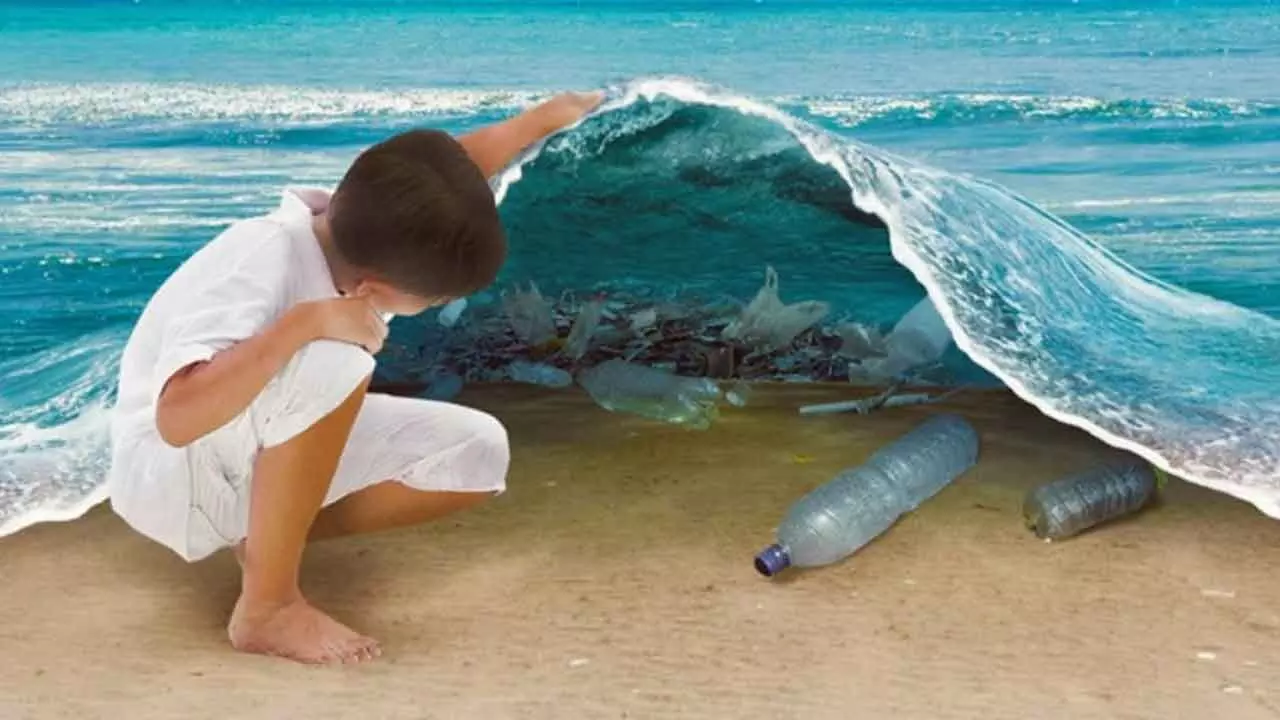

Pollution caused by environmental degradation is among the gravest hazards confronting the future of humanity, contributing to an escalating planetary crisis. The Earth is, quite literally, drowning in plastic litter and microplastics. This is a global concern that demands urgent international response involving all stakeholders at multiple levels. Maintaining the status quo is no longer an option. Loss of biodiversity and climate change further compound these alarming challenges.
Micro-level participation is critical if future strategies are to succeed. Urban Local Bodies (ULBs) and Panchayati Raj Institutions (PRIs) must play an active role. A balanced “carrot and stick” approach is essential, rewarding institutions that perform well while holding accountable those that fail to meet environmental mandates.
Equally important is the need to build environmental consciousness through education. Integrating environmental protection into school and university curricula can help instil awareness at a formative stage, nurturing a generation that values sustainability and ecological balance.
This column has previously examined the issue from the perspective of judicial intervention and the need for greater corporate participation. However, the problem warrants renewed attention from another angle, namely the urgent need to curb the indiscriminate use of plastics, a major contributor to pollution. Moreover, in the context of global geopolitical tensions, such as the US–Iran conflict, disruptions in oil supply are likely to increase demand for alternative fuels like gas, indirectly influencing plastic production and consumption.
Every year, on June 5, countries across the globe observe World Environment Day. Established in 1972 by the United Nations Environment Programme (UNEP), the event seeks to promote global awareness and action for environmental protection. The 2025 celebrations focused on ending plastic pollution, recognising that the crisis affects ecosystems worldwide, from Mount Everest to the Mariana Trench. The Republic of Korea hosted the event for the year 2025. A country hosting the event acts as the global focal point and highlights a specific theme to drive global action, which, for the year 2025, was plastic pollution. The celebration showcases national leadership through in-country events, high-level policy initiatives, and global advocacy campaigns. India had previously hosted the event in 2018, with the theme ‘Beat Plastic Pollution’.
The United Nations Environment Assembly (UNEA), comprising all 193 member states, is the world’s highest decision-making body on environmental matters. UNEP operates under its guidance. In 2022, UNEA adopted a historic resolution to develop an international legally binding instrument to combat plastic pollution. An Intergovernmental Negotiating Committee (INC) was subsequently established, and its work is ongoing. Founded in 1948, the International Union for Conservation of Nature (IUCN) is the world’s largest environmental network, comprising governments and civil society organisations. It is widely regarded as a global authority on the status of the natural world and measures required to safeguard it. The organisation has been at the forefront of addressing plastic pollution across more than 20 countries in six regions.
Another important institutional platform is the Geneva Environment Network (GEN), established in 1999. Supported by the Swiss Federal Office for the Environment and administered by UNEP, GEN brings together over 100 international non-governmental organisations and UN bodies. Addressing environmental degradation also aligns with the United Nations’ 17 Sustainable Development Goals (SDGs), which aim to overcome barriers to a sustainable future.
One novel and innovative movement, aimed at encouraging reduction of plastic pollution, apart from saving wildlife and promoting sustainable habits to make for a healthier planet, was the ‘Say No to Plastic’ slogan. Also known as the anti-plastic or ‘Break Free from Plastic’ movement, it originated as a necessary response to the global environmental crisis caused by the rapid accumulation of plastic pollution in ecosystems, particularly oceans and waterways. The movement gained significant global momentum with the launch of the ‘Plastic Free July’, 2011 which, started by a single woman in Western Australia as a personal challenge, grew into a worldwide movement. Today, it inspires millions of people to reduce single-use plastic consumption. Each July, individuals, communities, and organisations participate by rejecting plastic products and adopting sustainable alternatives. The movement offers practical ways to live more sustainably and preserve the integrity of the environment for future generations. Catchphrases such as “Switch to Eco, Let the Plastic Go” have further amplified its message. Several countries, including the United States, the United Kingdom, Australia, New Zealand, and Pacific Island nations, are actively identifying unnecessary and problematic plastics with the goal of phasing them out.
A powerful example of community-driven environmental action is the clean-up of Chowpatty Beach in Mumbai. Initiatives such as the “Sunday beach cleanup” drives organised by ‘Change Is Us’, a youth-led environmental group founded in 2019, have played a significant role in raising awareness and removing plastic waste. Volunteers, students, and organisations, including the Mangrove Cell, have contributed to these efforts.
Belonging to the same genre of activist efforts directed at protecting the environment through containing plastics use is a truly remarkable venture in the shape of the first ever all women– run multi-state cooperative Society founded by Deepa Dhurjati Sanka in Hyderabad. This organisation promotes environmental sustainability while empowering women and transgender individuals through self-employment opportunities. It produces eco-friendly alternatives such as jute bags. A notable achievement has been the replacement of plastic bags with jute bags in temples across Andhra Pradesh for distributing ‘prasadam’. This columnist had the privilege of having been associated with that effort, right from its inception and enjoyed the pleasure of watching it grow into what promises to be a greatly respected and nationwide movement.
I have always believed that the spirit of conditioning one’s attitudes and approaches in an environment friendly manner, much like ‘charity begins at home’. In my own, humble way, but not with total success, I have had many plastic containers, boxes and bottles at home replaced by those made of steel. I have also cultivated the habit of politely saying no to the offer of a carry bag after completing my shopping in a departmental store. Instead, I carry a non-plastic bag with me and use it to fill it with the purchased items.
While achieving a completely plastic-free world may be unrealistic, significantly reducing plastic consumption is both possible and necessary. Eliminating all polymers would disrupt modern healthcare, food supply chains, and infrastructure. However, reducing reliance, especially on single-use plastics, which account for nearly 40 per cent of plastic waste, is critical. Transitioning to alternatives such as glass, metal, and sustainable materials presents challenges but remains essential for a healthier planet.
(The writer was formerly Chief Secretary, Government of Andhra Pradesh)





