

Outrage without understanding: Opposition undermines serious policy debate
As the India–US trade deal becomes the latest political punching bag, the opposition chooses chaos over scrutiny—and rhetoric over responsibility
Outrage without understanding: Opposition undermines serious policy debate
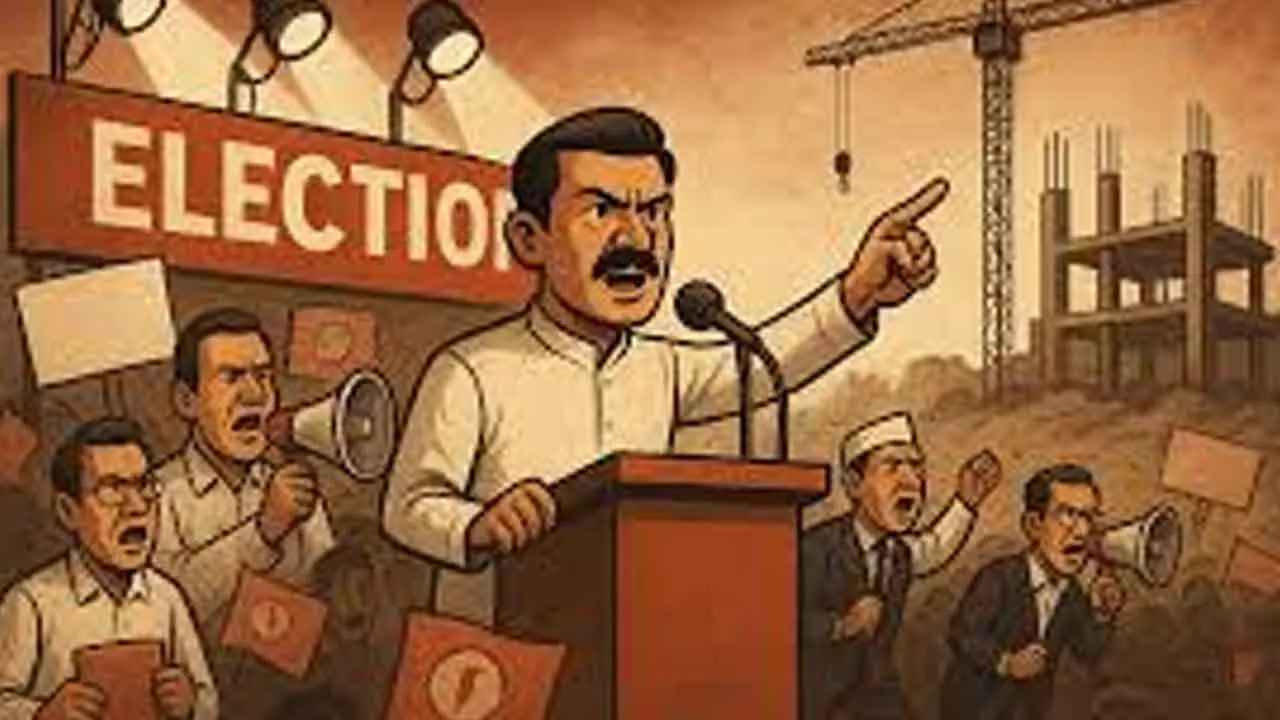

The sharp and intemperate reaction of the opposition to the proposed India–US trade deal reveals far less about the agreement itself and far more about the current state of India’s opposition politics.
What should have been an opportunity for informed scrutiny and constructive engagement has instead descended into disruption and outrage. The opposition appears less interested in cornering the government through evidence and argument, and more determined to manufacture chaos.
Trade agreements are, by definition, negotiated compromises—complex, technical, and rarely perfect. They involve balancing national interests, managing domestic sensitivities, and navigating global realities. Yet the discourse around the India–US trade deal has been irresponsibly reduced to a crude binary of nationalism versus betrayal, leaving little space for nuance, economic reasoning, or sober debate.
One wonders whether leaders like Rahul Gandhi fully grasp the fundamentals of diplomacy. Even if he does not, his allies—Akhilesh Yadav of Samajwadi party and several senior figures within the Congress party and the INDIA bloc—certainly should. Diplomacy does not operate through blunt refusals.
A diplomat who says an outright “no” is not practising diplomacy; he is escalating confrontation. Rejection in international negotiations is usually conveyed through calibrated delay, conditional engagement, or quiet closure of options. Continuity, not confrontation, is the essence of effective diplomacy.
Against this backdrop, the opposition’s conduct over the past two days, both inside and outside Parliament, has been deeply disappointing. Trade policy deserves serious engagement, not ideological grandstanding.
The opposition demanded a statement from the government and then refused to listen when the commerce minister rose to make one in the Lok Sabha, choosing instead to create a ruckus. This disregard for parliamentary procedure, the authority of the Speaker, and institutional decorum sets a dangerous precedent.
Ironically, this behaviour comes from an opposition ecosystem that often claims moral and generational superiority. What it actually reflects is contempt for rules and democratic norms. “We care only for what we want to see” is not dissent; it is disorder. Such conduct weakens Parliament itself and undermines the credibility of opposition politics.
India’s economic engagement with the United States is neither new nor ideologically alien. Successive governments—across political divides—have worked to deepen trade, investment, and strategic ties with Washington.
Defence procurement, civil nuclear cooperation, services trade, market-access negotiations, and debates on intellectual property rights all gained momentum during the UPA years. The present government may have accelerated or reframed this engagement, but it did not invent it.
Yet the opposition ecosystem showed no willingness to wait for the joint statement or examine the fine print of the agreement before launching its attack. In doing so, it exposed not only impatience but also a troubling lack of understanding of trade economics and agricultural sensitivities. Worse, it squandered a genuine opportunity to challenge the government through informed critique.
According to the Commerce Minister, agriculture and dairy have been shielded in the proposed deal. Cereals, maize, soybean, genetically modified food, and other sensitive agricultural products are reportedly excluded. Experts also suggest the agreement is unlikely to result in any near-term reduction in India’s imports of Russian oil. These details directly address the opposition’s stated anxieties, yet they were largely ignored.
It is possible that Indian refiners may diversify more towards West Asia over time. But trade deals are not permanent or ideological commitments; they evolve with market conditions, pricing, supply stability, and national interest. There is no concept of loyalty in trade—only value. If one supplier offers the same quality at a better price, any rational buyer will choose that option. Oil is no exception.
The commerce minister has also indicated that India stands to benefit from lower tariffs. Until a detailed joint statement is released, the opposition would do well to exercise restraint. Slogans such as “Narendra surrender 2.0” may generate momentary political heat, but they add nothing to serious policy discussion.
Based on available information, industry experts believe the agreement could reset India’s export outlook, benefiting textiles, chemicals, and semiconductor manufacturing units across Tamil Nadu, Gujarat, Maharashtra, Karnataka, Uttar Pradesh, Andhra Pradesh, and Telangana. A sharp reduction in tariffs—from about 50 per cent to roughly 18 per cent—offers immediate relief to sectors that account for a significant share of India’s exports to the United States.
The textiles and apparel industry could emerge as the biggest beneficiary. The deal may also ease uncertainty for the gems and jewellery sector, particularly in bullion-linked exports and pricing dynamics. A stronger rupee could soften domestic bullion prices in the near term. The solar industry, too, may see incremental gains due to improved market access and lower tariffs.
Before resorting to disruption, the opposition should also recall that India has imported crude oil from Venezuela in the past. This is not unprecedented. But importing from Venezuela does not imply dependence; it cannot meet all of India’s energy requirements. Diversification of supply sources is a strategic strength, not a vulnerability.
Concerns around agriculture, pharmaceuticals, MSMEs, data governance, and labour standards are legitimate and deserve scrutiny. These sectors invariably feature in negotiations with the United States, which is known for aggressively pursuing its commercial interests. The appropriate response, therefore, is to demand transparency, parliamentary oversight, and clearly articulated safeguards—not pre-emptive condemnation driven by political reflex.
What stands out in the current debate is the absence of clause-by-clause engagement. Instead of asking which sectors gain, where protections exist, and how adjustment costs will be managed, the opposition has defaulted to outrage. Trade agreements are treated not as economic instruments but as symbols of alleged cronyism or surrender.
This tendency is most evident in Rahul Gandhi’s political style, which increasingly gravitates towards moral absolutism. Complex policy choices are framed in stark binaries: democracy versus authoritarianism, people versus corporations, patriots versus collaborators. Such framing leaves little room for nuance—particularly in foreign policy and trade, where pragmatism and continuity are essential.
Trade policy cannot be conducted through protest politics. It requires patience, institutional memory, and the ability to balance competing interests over time. By personalising critique and moralising negotiation, the opposition risks undermining India’s credibility as a serious negotiating partner. International stakeholders closely watch domestic debates; constant delegitimisation of agreements erodes confidence in India’s ability to honour long-term commitments.
There is also a deeper ideological discomfort at play. Sections of the opposition remain uneasy with closer engagement with the United States, preferring the rhetoric of “strategic autonomy.” But autonomy does not mean disengagement. In a fragmented global order, economic partnerships are instruments of leverage, not signs of subordination. Countries fiercely protective of their sovereignty—from France to Japan—negotiate tough trade deals with Washington while safeguarding core interests.
The irony is unmistakable. Many of the processes now being criticised were initiated, normalised, or defended by earlier governments. To oppose them today without acknowledging that lineage is to indulge in selective amnesia. Policy continuity is not ideological betrayal; it is a mark of state maturity.
They should demand rigorous examination, transparent disclosure, and informed parliamentary debate. But outrage is not analysis, and disruption is not accountability.
India needs an opposition that can distinguish between dissent and disruption, between negotiation and capitulation. In the current debate over the India–US trade deal, that distinction has been blurred—not by economic evidence, but by political anxiety.
(The author is a former Chief Editor at The Hans India)





