

Middle East conflict tests India’s growth story
Energy shocks and trade disruptions challenge India’s growth momentum
Middle East conflict tests India’s growth story
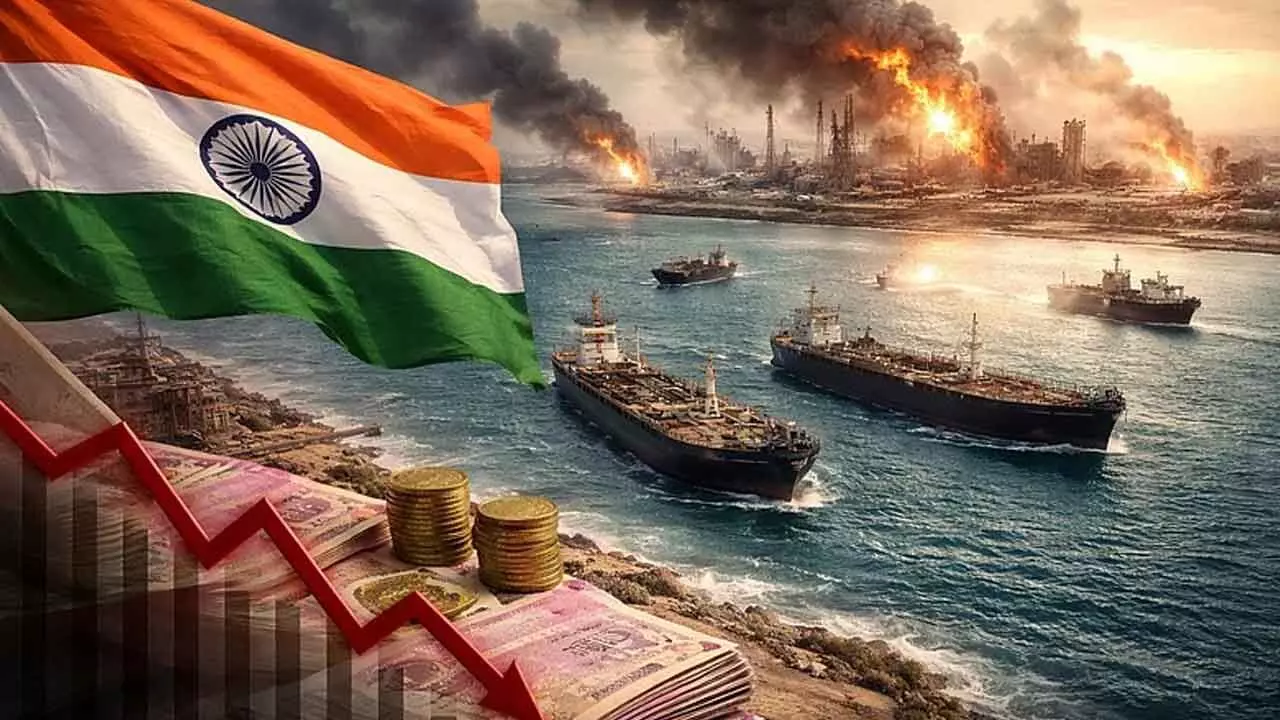

India remains among the fastest-growing economies, even as global growth faces headwinds. However, the outlook has become increasingly vulnerable to risks and uncertainty, according to the World Bank in its India Development Update, April 2026.
The ongoing Middle East conflict has led to significant disruptions in global supply chains. Prices of oil, gas, fertilisers and other essential commodities have risen sharply, while supplies have become uncertain. Restrictions in the Strait of Hormuz have hindered the movement of ships carrying critical cargo. Additionally, damage to oil and gas infrastructure due to strikes in several countries has worsened the situation.
Transportation, insurance, and freight costs have surged, and there is a shortage of containers and vessels due to perceived risks in maritime movement. This has led to a sharp rise in import costs and, in some cases, shortages of essential commodities. Consequently, there is mounting pressure on foreign exchange reserves due to higher outflows.
Inflationary risks are rising, and currencies of vulnerable countries are under pressure, leading to depreciation and further increases in import costs. Foreign portfolio investments have weakened, with significant outflows, while net foreign direct investment has turned negative. Additionally, remittances from Gulf countries, an important source of foreign exchange, may be affected due to reduced employment opportunities arising from the conflict.
Countries heavily dependent on imports and already burdened with high fiscal deficits and external debt are likely to face severe stress. Their ability to service debt may be challenged due to rising financial requirements and limited fiscal space. At the same time, climate-related risks are intensifying. The impact of El Niño, characterised by warming sea surface temperatures in the Pacific Ocean and weakening trade winds, could lead to significant weather disruptions. India may experience either deficient monsoons or excessive rainfall and flooding. Rising temperatures, water scarcity, and drying rivers are already affecting agricultural productivity.
The Reserve Bank of India, in its monetary policy dated April 8, 2026, has flagged El Niño as a key risk to inflation. Weather agencies have also warned of below-normal monsoon rainfall in the coming years, which could adversely impact crop production and push up food prices.
Despite these challenges, India continues to demonstrate resilience. According to the World Bank, the country is expected to remain the fastest-growing major economy, with GDP growth projected at 7.6% for FY26 (up from 7.1% in FY25). However, growth is expected to moderate to 6.6% in FY27 due to external headwinds, particularly the Middle East conflict.
India’s strong macroeconomic fundamentals, prudent fiscal management, and controlled fiscal deficit provide a buffer against downside risks. The country has diversified its energy sourcing, importing from over 40 countries, reducing dependence on any single region.
The current crisis underscores the importance of energy diversification, fiscal discipline, and trade expansion. India has also accelerated efforts to secure trade agreements with partners such as the UK, the European Union, and the United States, which are expected to support export growth and ensure continuity of essential imports.
In its latest policy, the RBI maintained a pause on the repo rate and retained a neutral stance. The RBI Governor noted that elevated energy prices and supply disruptions, particularly in the Strait of Hormuz, could impact growth in 2026–27.
The central bank acknowledged government measures to ensure supply continuity, including excise duty cuts on fuel and support to oil marketing companies. It also highlighted positive domestic factors such as GST rationalisation, increased public capital expenditure on infrastructure, a potential revival in private investment, and strong credit growth. However, the RBI cautioned that merchandise exports could be adversely affected by disrupted shipping routes, rising freight and insurance costs, and weaker global demand.
Taking these factors into account, the RBI has revised its GDP growth projection for FY27 to 6.9%, down from its earlier estimate of 7.6%. However, this projection appears optimistic, with downside risks persisting if the conflict between the US, Israel, and Iran escalates further or remains unresolved.
Other global agencies have adopted more conservative estimates. The OECD has projected growth at 6.1%, while Moody's has lowered its estimate to 6%. The World Bank’s projection stands at 6.6%.
The downward revisions are largely driven by the sharp rise in oil prices, which have increased by nearly 50% since the conflict escalated in late February 2026. This has heightened inflationary pressures and could dampen consumption-driven growth in India. Uncertainty in the Gulf region is expected to persist, potentially reducing growth by around 1 percentage point compared to earlier projections. Export growth may also face risks due to weaker global demand, despite India’s efforts to expand trade agreements. Global growth had remained resilient prior to the conflict but is now facing severe disruptions. Rising energy prices and supply shocks are weighing on the global outlook.
While current disruptions are expected to be temporary, with energy prices easing from mid-2026, the situation remains uncertain. Inflation is likely to remain elevated in major economies due to higher energy costs.
According to OECD simulations, if energy prices rise significantly above baseline levels and financial conditions tighten, global GDP could decline by around 0.5% by the second year, while inflation could rise by 0.7% in the first year and 0.9% in the second year.
The RBI has assumed a baseline crude oil price of $85 per barrel for FY27 and $75 for FY28. It has also revised its exchange rate assumption to Rs94 per US dollar, compared to Rs88 earlier.
Inflation is projected at 4.6% for FY27, with core inflation slightly lower at 4.4%. However, risks remain tilted to the upside due to energy prices and potential weather disruptions.
Although food grain stocks and reservoir levels are currently comfortable, the possible emergence of El Niño conditions could pose risks. The government and RBI are expected to adopt supply-side measures and maintain adequate liquidity to manage inflation. Meanwhile, efforts to resolve the conflict remain inconclusive. Prolonged tensions could increase volatility in global financial markets and further impact growth.
A swift resolution is essential to stabilise global markets and prevent further economic and humanitarian damage. Continued escalation would not only disrupt economies but also lead to significant loss of lives and destruction of critical infrastructure.
(The author is former Chairman & Managing Director of Indian Overseas Bank)





