

Is India clumsy or overly aggressive in its interactions with other nations?
Country’s stance vis a vis China a manifestation of strategy counter challenges, a way to protect its interests
Is India clumsy or overly aggressive in its interactions with other nations?
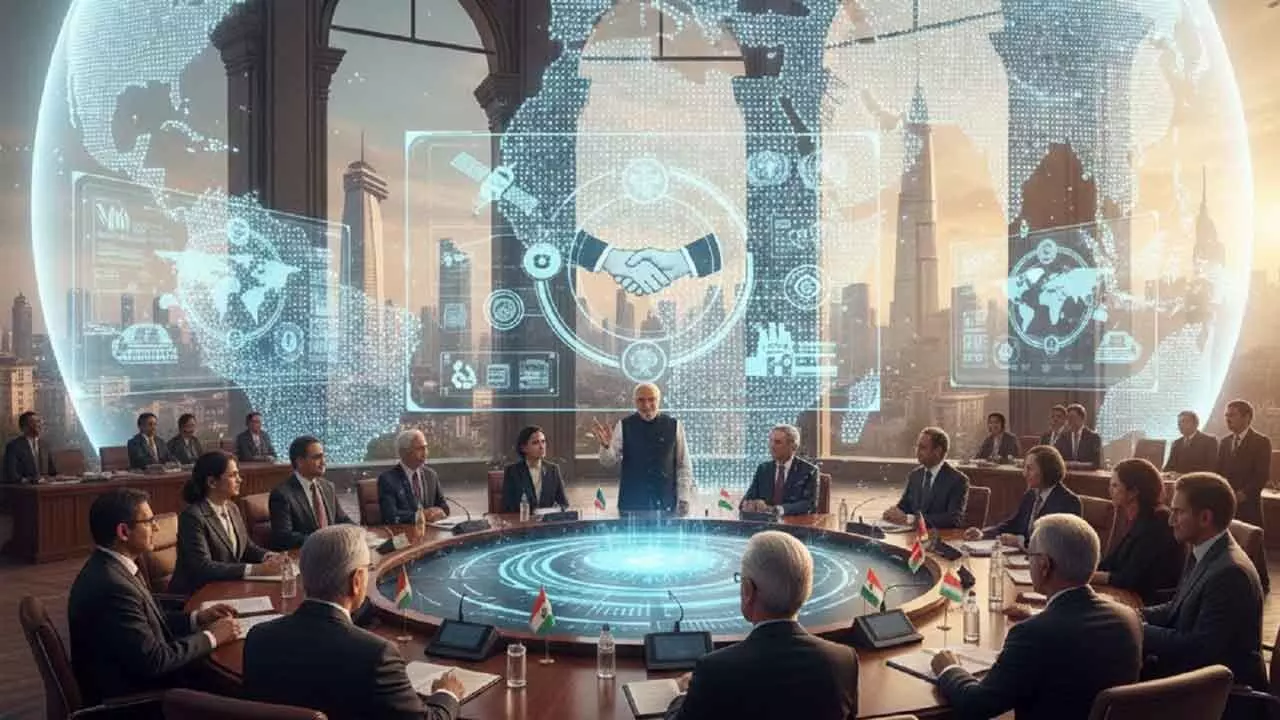

AnaIysts point out that India is becoming increasingly isolated, 'friendless', as some put it. Excluded from key international negotiations, and losing relevance despite its economic power, on account of what critics view as a rigid, outdated foreign policy, shifts in global power dynamics, growing Chinese influence, and perceived missteps in its neighborhood
Launched in 2014, the “Neighbourhood First” initiative, as an important part of India’s foreign policy, seeks to strengthen relationships with neighbouring countries through improved connectivity, cooperation and people – to – people contact.
The recent assistance provided by the country to Sri Lanka, in the wake of the devastating losses caused to life and property by Cyclone Ditwah, evoked overwhelmingly positive public and media response, and was seen as a good example of that policy in action.
Ever since the National Disaster Response Force was sent to Japan in response to a request from that country for assistance in the recovery effort following the tsunami and earthquake caused in 2011, India has often responded to requests for assistance from various countries including Nepal, Turkey, Syria, Vietnam, and Myanmar.
The response of the governments and the peoples of Turkey and Syria to Operation Dost, launched by India following the occurrence of an earthquake in those countries in 2023, served as a shining example of the extraordinary bonding that can take place, between the people and the governments of India and their counter parts in other countries, as a result of such interventions.
Likewise, Operation Sadbhav, in the context of the devastating floods caused by typhoon Yagi in Vietnam in 2024 and Operation Brahma, carried out in order to assist the government of Myanmar in relief and rescue operations after the earthquake in 2025, also elicited gratifying response from the governments and peoples of those countries, both being perceived as examples of the positive impact of the Act East Policy of the government of India.
The flipside of the coin, however, was seen in the mixed reaction evoked by Operation Maitri, a similar intervention by India in Nepal after the earthquake in 2015.
It causes one to ask whether these exercises, their considerable positive and welcome impact on relationships between countries and peoples notwithstanding, are not being undertaken at the expense of energy and other resources badly needed for disaster management within the country.
While the immediate and large-scale response received initial praise, public perception shifted as negative sentiment emerged over time. While the gesture was viewed positively by some, who perceived it as being timely and generous, many others saw it as insensitive, self-promotional, and condescending.
As the effort continued, a significant backlash emerged, even among some Nepali citizens and on the social media, accusing India of insensitive, self-serving, and nationalistic behaviour. Some perceived the coverage by the Indian media as sensationalized and exploitative, with reporters acting like "family serials," focusing on their own broadcasts rather than the victims' plight.
In fact, #GoHomeIndianMedia; hashtag trended in Nepal. Criticism was directed at the self-congratulatory and jingoistic tone, which portrayed India as a domineering "big brother" rather than an equal partner.
The Indian government and media were accused of prioritizing the promotion of India's efforts, leading many to perceive the motive behind the aid as opportunistic rather than purely humanitarian. Some international observers viewed the aid mission as an act of "disaster diplomacy" and a political tool to assert influence, especially in comparison to China's relief efforts.
There were, in addition, reports of poor coordination between Indian and Nepali agencies, leading to accusations that the Indian contingent hindered the efforts of other international aid missions.
There are activities and organisations in which India is an active partner, all of which also involve considerable investments in terms of finances as well as expending energy and other resources.
India also contributes significantly to the Asian Coordinating Centre for Humanitarian Assistance Disaster Management (AHA Centre). From the year 2002 onwards, the contribution has amounted to $5 million every year for three years.
The Prime Minister has also recently announced setting apart $5 million out of the regular contribution to the ASEAN Disaster Management and Emergency Relief Fund (ADMERF), which works to promote cooperation and coordinate disaster response among ASEAN member states, which started happening in 2022 and continued for the two following years.
It is also proposed to set up, at Gandhi Nagar, a BIMSTEC (Bay of Bengal Initiative for Multi-Sectoral Technical and Economic Cooperation), Centre for Disaster Management with India offering to contribute the sum of 100 crores every year to the institution for the first three years to kick start it, after which regular contributions from the other countries will follow.
AnaIysts point out that India is becoming increasingly isolated, 'friendless', as some put it. Excluded from key international negotiations, and losing relevance despite its economic power, on account of what critics view as a rigid, outdated foreign policy, shifts in global power dynamics, growing Chinese influence, and perceived missteps in its neighborhood. It was notably excluded from the recent Gaza peace settlement process, was significantly absent during the recent Gen Z revolution in Nepal and is being described as having an increasing trust deficit and becoming an "outlier" in global politics, with a diminishing role in key regional and international developments. Shifts in U.S. policy under leaders like Donald Trump have also been cited as complicating India's foreign policy efforts and adaptability.
There is, in addition, a growing perception that India is often clumsy or overly aggressive in its interactions with other nations, particularly China, with its policy sometimes seeming inconsistent, as it pursues both strategic partnerships and economic ties with China, failing to appreciate that assertive actions, even if intended to be defensive or to achieve objectives, risk damaging diplomatic relationships or destabilizing regional stability.
Its direct, forceful response to Chinese provocations along the border is seen by some as ill-conceived and immature. A bit of a 'bull in a china shop' attitude, as a matter of fact. Or for that matter, an approach that can earn it a 'loose cannon' label. This characterization, it must be noted, only reflects external perceptions of India's departure from its historical non-alignment, favoring a more pragmatic, assertive, and multi-aligned approach.
It, however, needs to be appreciated that India's foreign policy is a complex and evolving creature that needs to balance a range of interests and challenges.
While it is easy to be critical of India’s tendency to rush to the aid of other countries when they are in need of assistance in the wake of natural calamity and other mishaps, there are those who see it as a sign of strength and leadership, as witness, the country’s response to Covid – 19 and its efforts to promote regional stability. The country’s stance, vis a vis China also, it is argued by them, not necessarily clumsy, but a manifestation of the strategy counter challenges, a way to protect its interests.
In the ultimate analysis, however, it can hardly be gainsaid that there is much to be said in favour of what they tell you in an aircraft, during the recital of the rehearsed instructions before the takeoff. “… wear your own oxygen mask first”, they tell you, emphasising the need to protect one’s own well-being before one can effectively help others.
Some more to the saying that one cannot pour from an empty cup. Which is why the age old Telugu saying advises that, one should set one’s own house in order before trying to improve the broader world, or, in other words, fix your own problems before you involve yourself in their efforts of others.
Viewed in the context of the wisdom and maturity that these words offer, one is left wondering whether the time has not come for India, to sit back, look at the broad picture and ponder over the desirability of taking a fresh look at such initiatives.
(The writer was formerly Chief Secretary, Government of Andhra Pradesh)





