

How cow-based enterprises are turning rural assets into revenue
India’s Brown Revolution Gets a Business Pitch
How cow-based enterprises are turning rural assets into revenue

India’s opposition—more so the Indian National Congress—is no longer merely failing the government; it is failing the country. The incessant chant—“Modi has sold the country, people are suffering”—has become a lazy substitute for thought, policy and engagement. This rhetorical vandalism has now descended into outright farce, culminating in shameless shirtless protests staged at international technology summits, precisely when India is showcasing its innovation capacity and courting global partnerships. This is not protest. It is deliberate national self-harm.
Even more damning is the opposition’s refusal to listen—to voters and to the quiet but significant transformations underway in rural India. At a time when citizens are asking for solutions that raise incomes, generate jobs and stabilise agriculture, the opposition offers only slogans and sabotage.
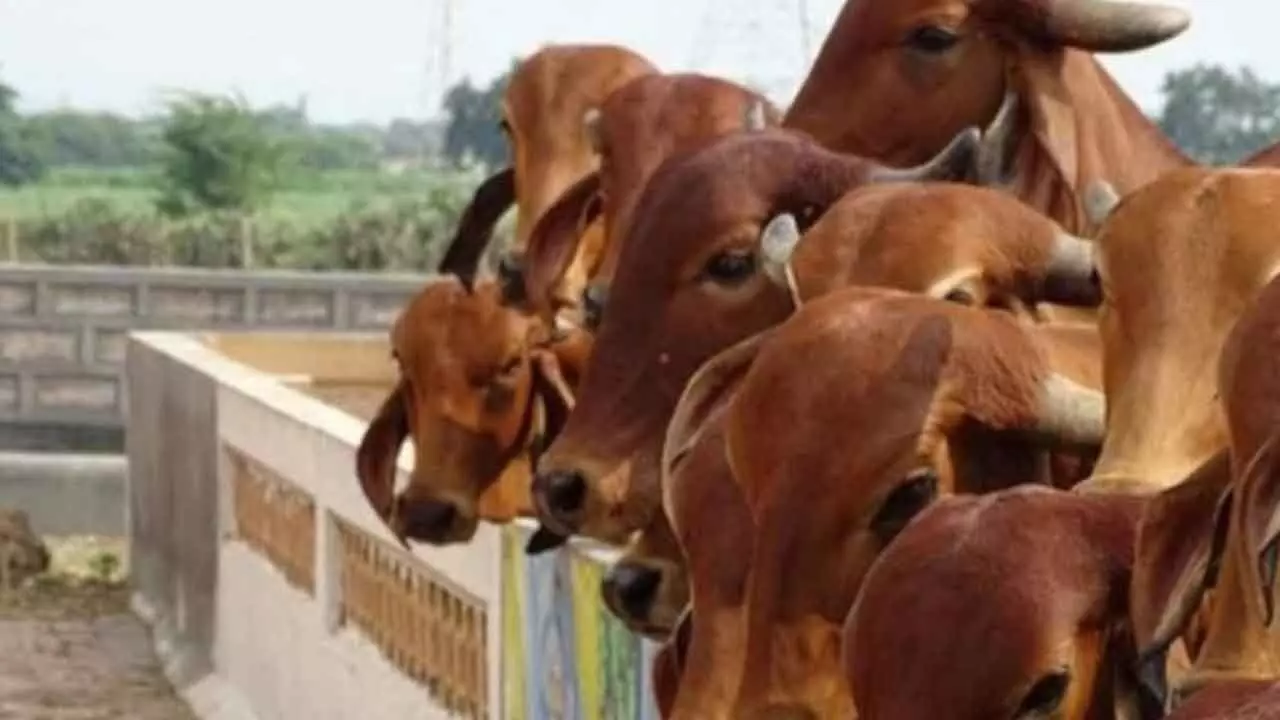
They seem utterly clueless about how even so-called low-value products like cow dung and cow urine can generate real economic returns for farmers and entrepreneurs, or how institutions such as the Global Confederation of Cow Based Industries are quietly building technology-enabled enterprises capable of transforming the rural economy. The tragedy is not merely political opposition—it is the collapse of imagination, credibility and national purpose.
Against this backdrop of political nihilism, Pune—one of India’s best centres of education, research and innovation—is preparing to host an event that speaks the language the opposition refuses to learn: economics. From March 20 to 23, 2026, the city will host Gau Tech 2026, a global summit and exhibition focused on cow-based industries, agri-technology integration and sustainable enterprise models.
Marketed as a catalyst for India’s emerging “Brown Revolution”, Gau Tech 2026 challenges lazy caricatures. Its central argument is simple but disruptive: the cow is not a cultural artefact frozen in symbolism; it is an underleveraged economic asset. At a time when artificial intelligence, automation and platform economies are reshaping labour markets, the summit positions cow-based enterprises as decentralised, technology-enabled and climate-resilient business models—particularly suited to rural India.
From Sentiment to Structured Markets
For decades, cow protection has been trapped in ideological shouting matches. Gau Tech 2026 decisively reframes the debate around economics. India’s rural economy—especially among small and marginal farmers—still depends on income streams that are low-capital, daily-cash and locally distributed. Livestock fits this logic far better than high-risk, input-heavy cropping systems.
Dairying remains the most visible pillar. Unlike crop agriculture, which is seasonal, weather-dependent and capital-intensive, milk offers predictable daily income. This steady liquidity allows rural households to manage risk, service debt and invest in education and healthcare. It is precisely the kind of economic stability that opposition rhetoric claims to champion but consistently ignores.
What is now gaining commercial traction, however, is the monetisation of non-milk outputs—particularly cow dung and gaumutra. Through organised value chains, scientific processing and digital marketing, these by-products are being transformed from informal practices into scalable businesses. Standardisation, certification and logistics are replacing superstition with supply chains.
Technology as an Economic Multiplier
A core thesis of Gau Tech 2026 is that technology strengthens, rather than displaces, traditional rural enterprises. Digital platforms are enabling farmers and cooperatives to access veterinary services, improve breeding efficiency, track productivity and reach markets directly.
Cold-chain infrastructure, modern milk processing and logistics networks have expanded access to urban and export markets. E-commerce platforms now retail cow-based organic products—ranging from A2 ghee and buttermilk to bio-pesticides, soil enhancers and sanitation products—at scale. This is rural enterprise speaking the language of markets, not slogans.
Gaushalas as Enterprises, Not Charity
One of the most consequential shifts at Gau Tech 2026 will be transformation of gaushalas from welfare institutions into viable rural enterprises. Well-managed gaushalas are emerging as production hubs for organic inputs, green consumer goods and bio-products.
Vermicompost, organic manure, herbal formulations, floor cleaners, disinfectants and eco-friendly household products are generating revenue and employment—especially for women and rural youth. These are not token activities; they are structured micro-industries.
The gaumutra industry, in particular, deserves serious attention. Unlike milk, which depends on lactation cycles, cow urine is available daily, making it a high-frequency income source. When scientifically processed, it is used in bio-pesticides, plant growth promoters, sanitation products and environmental purification solutions. With rising demand for organic agriculture and chemical-free sanitation, this segment offers genuine startup potential.
Soil Health, Cost Reduction and Climate Logic
From a business standpoint, cow-based organic inputs address one of Indian agriculture’s largest cost burdens: chemical fertilisers. Decades of input-intensive farming have degraded soil health, increased costs and weakened long-term productivity. Farmyard manure, compost and bio-fertilisers derived from cow dung and gaumutra improve soil structure, enhance water retention and boost microbial activity. Field evidence shows that farmers can lower input costs while sustaining—or even improving—yields over time.
Indigenous cow breeds, adapted to local climatic conditions, are particularly resilient. Their biological efficiency supports low-input agriculture, making them valuable assets in an era of climate volatility and water stress. From an ESG perspective, the cow-based economy exemplifies a circular, low-carbon model where waste becomes resource.
Policy, Capital and Scale
According toVallabhbhai Kathiria,former union minister and founder of the Global Confederation of Cow-Based Industries,Gau Tech 2026 is designed as a marketplace of ideas, capital and policy. Similar summits since 2023 have catalysed projects across Gujarat, Rajasthan and Maharashtra, with new initiatives emerging in Telangana, Andhra Pradesh and Karnataka.
Cow-based industries, he notes, align directly with multiple United Nations Sustainable Development Goals—poverty reduction, sustainable agriculture, clean energy and responsible consumption—making them attractive for climate finance and impact investors.
Innovation is also reshaping breeding and productivity through PPP models involving sexed semen, embryo transfer, advanced laboratories and superior bull development. Beyond dairy, cow dung is now used to manufacture paint, plaster, bricks, tiles, plywood, paper and dung logs. Bio-energy applications—biogas, CNG, CO₂ and hydrogen—are supplying industries and municipalities.
India’s civilisational understanding of the cow, articulated as early as the Rig Veda, described it as aghanya—that which must not be harmed—not merely as sentiment, but as economic wisdom.
Beyond Nostalgia
With an estimated 3.5 lakh visitors and participation from startups, investors, policymakers and cooperatives, Gau Tech 2026 is not a symbolic gathering. It is a deal-making platform. Its message is blunt: the cow-based economy is not about nostalgia or ideology. It is about resilience, decentralised growth and rural stability.
While the opposition remains trapped in protest theatre, India’s rural economy is quietly being reimagined. In a technology-driven, climate-constrained world, the cow still matters—not as myth, but as market. And that may be the most inconvenient truth the opposition refuses to confront.
(The author is a former Chief Editor at The Hans India)





