

How Budget 2026 puts content creators at the centre of India’s growth story
From classrooms to creator labs, Sitharaman’s big push for the Orange Economy
How Budget 2026 puts content creators at the centre of India’s growth story
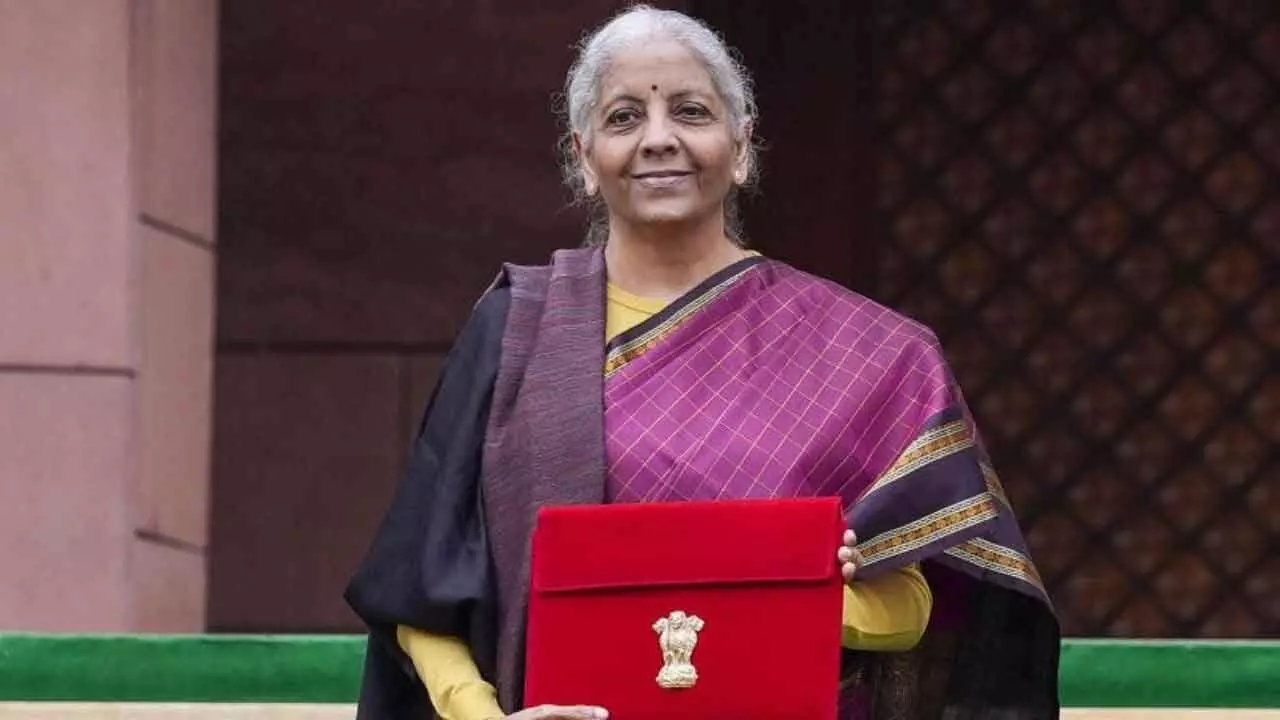

Union Finance Minister Nirmala Sitharaman presented the Union Budget for 2026–27 in the Lok Sabha, marking her ninth budget and a historic first in independent India, as it was delivered on a Sunday.
The budget focuses on economic growth, capacity building and inclusive development under the vision of ’Sabka Saath, Sabka Vikas’. Among its standout features is a strong push for the creative industries, often referred to as the ‘Orange Economy’, with several measures that directly benefit content creators.
The Orange Economy broadly covers animation, visual effects, gaming, comics (AVGC) and digital content creation.
Why the ‘Orange Economy’ matters and its place in the Budget
Globally, the ‘Orange Economy’ is expanding rapidly, and in India it is emerging as a major source of employment and cultural exports. In her budget speech, the Finance Minister noted that the AVGC sector alone will require nearly 20 lakh professionals by 2030. Recognising this potential, the government has proposed measures to energise the creative industries by equipping young people with future-ready digital skills.
Young scientist Shreyans Jain from Delhi-NCR believes the budget offers renewed hope to researchers and innovators. Many research projects had slowed due to limited government support, he says, but that is now changing. Jain, who is associated with Celestial Aerospace and works with IIT collaborators, is developing a balloon-assisted rocket launch system.
In this technology, a large balloon carries a rocket to the upper atmosphere, where thinner air reduces resistance, saving fuel and increasing payload capacity by two to three times.
The budget describes the ‘Orange Economy’ as a “new engine for creative jobs”, capable of driving services-led growth. While India has witnessed a surge in creative startups and digital careers, a persistent skills gap remains. The budget addresses this by proposing practical training infrastructure within educational institutions, ensuring that students are exposed to professional tools and techniques early on.
Key Announcement: Content Creator Labs
The most significant initiative is support for the Mumbai-based Indian Institute of Creative Technologies (IICT) to establish content creator labs. The Finance Minister announced that such labs will be set up in 15,000 secondary schools and 500 colleges across the country. These centres will train students in animation, visual effects, gaming and comics.
Why are these labs important?
Shreyans Jain points out that while many content creators today earn substantial incomes on platforms like YouTube and Instagram, access to professional training and equipment remains limited for most young Indians.
These labs will bridge that gap by offering hands-on training in video production, editing, digital storytelling and extended reality (XR). Led by IICT, the initiative is expected to nurture grassroots talent and strengthen India’s creative workforce, while also encouraging the development of original Indian intellectual property.
The budget also proposes setting up a new National Institute of Design and Development in the eastern region, further expanding opportunities for training in visual and creative design.
Digital Knowledge Grid: New Opportunities for Creators
Another notable announcement is the creation of a Digital Knowledge Grid to document India’s historical, cultural and tourism assets. This open digital platform will generate new opportunities for historians, researchers and content creators to develop videos, documentaries and educational content rooted in India’s heritage.
For creators who often struggle to access authentic source material, the grid promises reliable, high-quality data. It is also expected to boost tourism, with a pilot programme to upskill 10,000 tourist guides across 20 iconic destinations, opening further avenues for content monetisation.
Indirect Support and the Road Ahead
The budget also provides indirect support to the creative sector, including a proposed Rs 10,000 crore fund for startups and incentives for municipal bonds aimed at improving urban infrastructure. These measures could help develop creative hubs in major cities.
According to Prof. Prabhanshu Ojha of Delhi University, the budget encourages content creators through education, skilling and job creation. Initiatives such as creator labs and the Digital Knowledge Grid, he says, mark an important step towards making India a global creative powerhouse. With its strong youth focus, Budget 2026 reinforces the vision of a “Viksit Bharat”.
(The author is Delhi-based senior journalist and writer. He is author of Gandhi's Delhi which has brought to the forth many hidden facts about Mahatma Gandhi)





