

Escalating West Asia conflict risks disrupting global trade and growth
Prolonged conflict in the Middle East could disrupt energy supplies, widen deficits and strain emerging economies like India
Escalating West Asia conflict risks disrupting global trade and growth

In recent years, the global economy has been passing through a period of significant uncertainty, affecting global GDP growth and the economic stability of several countries. The Russia–Ukraine war continues despite ongoing peace efforts and negotiations. The conflict has disrupted global supply chains due to sanctions imposed on Russia by the United States and the European Union. Global trade has also faced uncertainty due to tariff disputes and policy shifts under the current US administration.
These measures have affected international trade flows and particularly impacted export-dependent economies. Although the US Supreme Court recently ruled against the administration’s tariff policy implemented under emergency powers, the US continues to pursue tariff measures under alternative provisions. Currently, tariffs of around 15 percent have been imposed for a temporary period of 150 days, which may later be replaced under other legal provisions.
In the meantime, the US has cautioned countries that entered into bilateral trade agreements during the tariff regime not to alter those agreements in response to the Supreme Court ruling, indicating that Washington may not favour any nation gaining a trade advantage due to the legal developments.
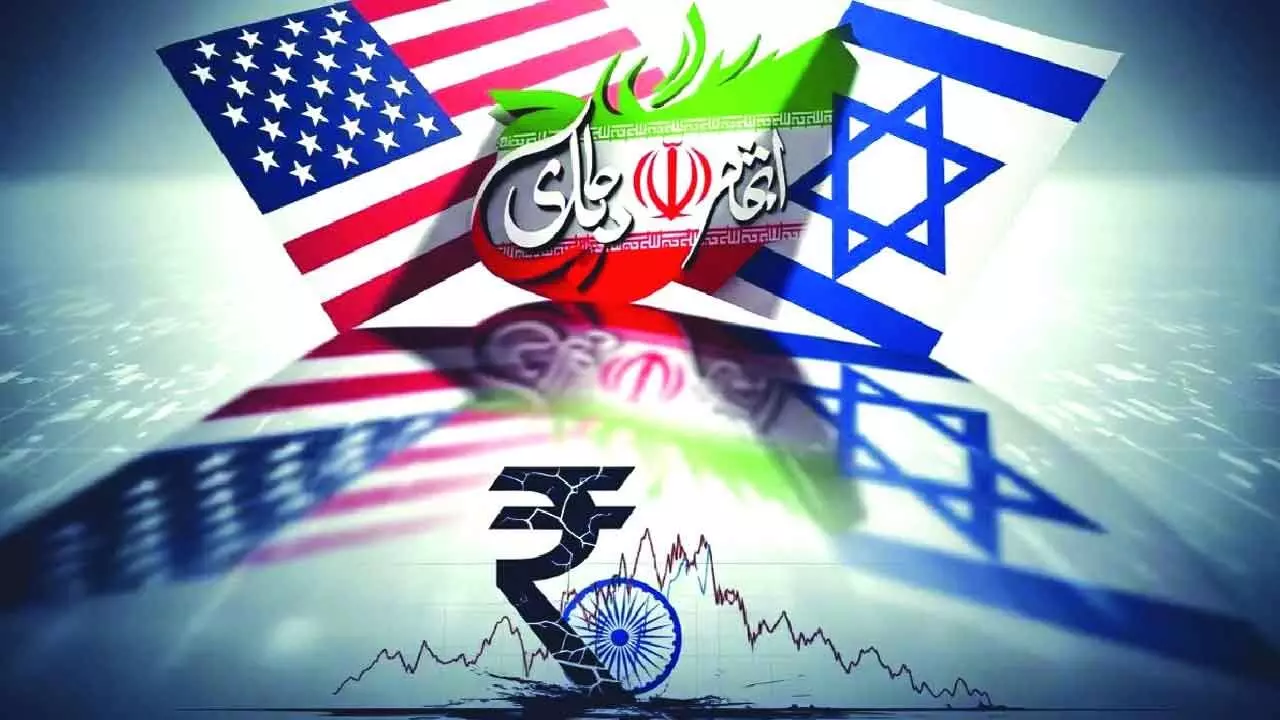
Amid these global uncertainties, a new full-fledged conflict has erupted in the Middle East. The United States and Israel launched attacks against Iran beginning February 28, triggering a rapidly escalating confrontation. The conflict has already resulted in massive destruction of infrastructure, significant loss of human lives, and displacement of populations.
Reports indicate that senior Iranian leaders, including the country’s Supreme Leader Ayatollah Khomeini, were killed in the attacks. In response, Iran has launched retaliatory strikes targeting military bases and strategic interests of the United States in the Gulf region. The conflict has thus spread across West Asia and the Middle East, severely affecting travel and daily life, with many people stranded and unable to return to their destinations.
The war has now entered its eighth day, and what was initially expected to be a short conflict may extend further. Each passing day is likely to add to the economic and humanitarian costs. According to recent reports, at least 1,332 people have been killed in US–Israel attacks on Iran since the conflict began.
According to the US military’s Central Command, more than 3,000 targets have been struck in Iran since February 28, and 43 Iranian warships have reportedly been destroyed. US President Donald Trump has demanded an unconditional surrender from Iran, stating that no negotiations would take place without such a commitment. Earlier reports suggested Iran had expressed willingness to hold talks, but the US administration indicated that it was “too late” for negotiations.
The conflict is now spreading across the broader Middle East. Qatar, Kuwait and the United Arab Emirates have reported incoming missiles and drones entering their airspace. Although many of these have been intercepted, some attacks have reportedly hit their intended targets. Saudi Arabia has also reported intercepting multiple drones near its capital, Riyadh.
There were earlier reports that the Strait of Hormuz had been closed. However, Iranian military authorities later clarified that the strait remains open, while warning that any US or Israeli ships attempting to pass through could be targeted.
The Strait of Hormuz is one of the most vital maritime routes in the world, through which a large share of global oil, natural gas, fertilisers, agricultural commodities and essential supplies pass. Even the threat of disruption has already affected shipping and global supply chains. Many vessels carrying essential goods have been delayed or rerouted due to security concerns.
As a result, freight costs have increased significantly, making exports less viable for many businesses. Exporters may be forced to delay or cancel shipments, leading to potential financial losses.
The escalating tensions between the US, Israel and Iran have sent shockwaves through the global economy. The situation threatens to disrupt global trade, increase inflationary pressures and, if prolonged, could potentially push the global economy towards a recession.
Oil prices have already begun rising, with Brent crude touching around $85 per barrel. Some analysts expect prices could rise to $100 per barrel if the conflict intensifies, particularly due to attacks on oil infrastructure and shipping disruptions through the Strait of Hormuz.
Such developments would pose a major challenge for countries like India, which depend heavily on oil imports. With Brent crude rising nearly 9 percent to around $80 per barrel, India’s import bill could increase significantly, potentially widening the current account deficit and putting upward pressure on inflation. India currently holds foreign exchange reserves sufficient to cover more than 11 months of imports.
However, the rupee is already facing depreciation pressures despite interventions by the Reserve Bank of India. If the current uncertainty leads to significant portfolio investment outflows, the rupee may face additional pressure and widen the current account deficit further.
It is estimated that a 10 percent increase in oil prices could increase inflation by around 30 basis points. However, since headline inflation in India is currently under control, some economists believe the impact could remain manageable unless the Middle East conflict escalates significantly. India has also diversified its oil import sources in recent years to reduce dependence on specific regions.
In this context, the United States has reportedly permitted India to import oil from Russia for a temporary period of 30 days despite earlier sanctions that discouraged such trade. Previously, imports of Russian oil had attracted additional tariffs of around 25 percent, prompting India to explore alternative supply sources.
India also receives substantial remittances from Indians working in Gulf countries. Any disruption caused by the conflict could temporarily affect these remittance flows, which support household incomes and domestic consumption.
These remittances also contribute positively to India’s external financial position. India maintains strong trade ties with Gulf countries, particularly in sectors such as gems and jewellery and basmati rice. These exports could face logistical challenges and higher shipping costs due to the current geopolitical tensions. Disruptions in gas supplies could also impact industries such as fertilisers, power and ceramics.
The Finance Ministry’s recent Monthly Economic Review (MER) has highlighted concerns about the potential impact of the Israel–Iran conflict on the Indian economy. The report cautions that prolonged disruptions could affect exchange rates, widen the current account deficit and push up inflation. It also notes that any disruption in the Strait of Hormuz could impact India’s energy imports, particularly crude oil and liquefied natural gas.
If oil companies are able to absorb part of the additional cost temporarily without passing it on to consumers, the inflationary impact may remain limited. However, sustained high oil prices could negatively affect India’s GDP growth and fiscal balance if higher import bills lead to increased government borrowing. At the same time, India’s strong macroeconomic fundamentals provide some cushion. The country currently has robust foreign exchange reserves, controlled inflation and a relatively manageable current account deficit.
Fiscal consolidation efforts in recent years have also strengthened the government’s ability to respond to external shocks. However, the MER cautions against complacency. As it notes, “the solidity of the post-Covid macroeconomic performance belongs to history. The future has become much more uncertain and indications suggest that uncertainty may persist for some time.”
Both the government and the Reserve Bank of India are closely monitoring the evolving situation. There may be a need to provide support measures for exporters to the Middle East and to ensure adequate supplies of oil, gas and fertilisers to minimise economic disruptions.
War inevitably results in massive destruction and enormous economic costs. Scarce resources are diverted toward defence spending rather than productive economic investment. Many countries have already increased their defence budgets significantly in response to rising geopolitical tensions.
The cost of rebuilding war-damaged infrastructure is also extremely high. In addition, the large-scale use of weapons, drones and bombers contributes to environmental damage and pollution. For ordinary people, such conflicts lead to shortages of essential goods, disruption of daily life and immense psychological stress, alongside the tragic loss of human lives.
Ultimately, war is rarely a solution to conflict. Dialogue, negotiation and diplomatic engagement remain the most sustainable ways to resolve disagreements.
At this critical juncture, global leaders must make urgent efforts to de-escalate tensions in the Middle East and seek a peaceful resolution. The ongoing conflict between the US and Israel on one side and Iran on the other threatens not only regional stability but also global economic and trade systems.
Unfortunately, a quick resolution appears unlikely. The conflict has created a complex web of regional and global tensions that make diplomatic solutions difficult. Nevertheless, the international community must intensify efforts toward de-escalation and dialogue to prevent further economic damage and humanitarian suffering.
(The author is former Chairman & Managing Director of Indian Overseas Bank)





