

Election integrity, money power and the democratic test before India
As elections grow more expensive worldwide, transparency becomes democracy’s frontline
Election integrity, money power and the democratic test before India
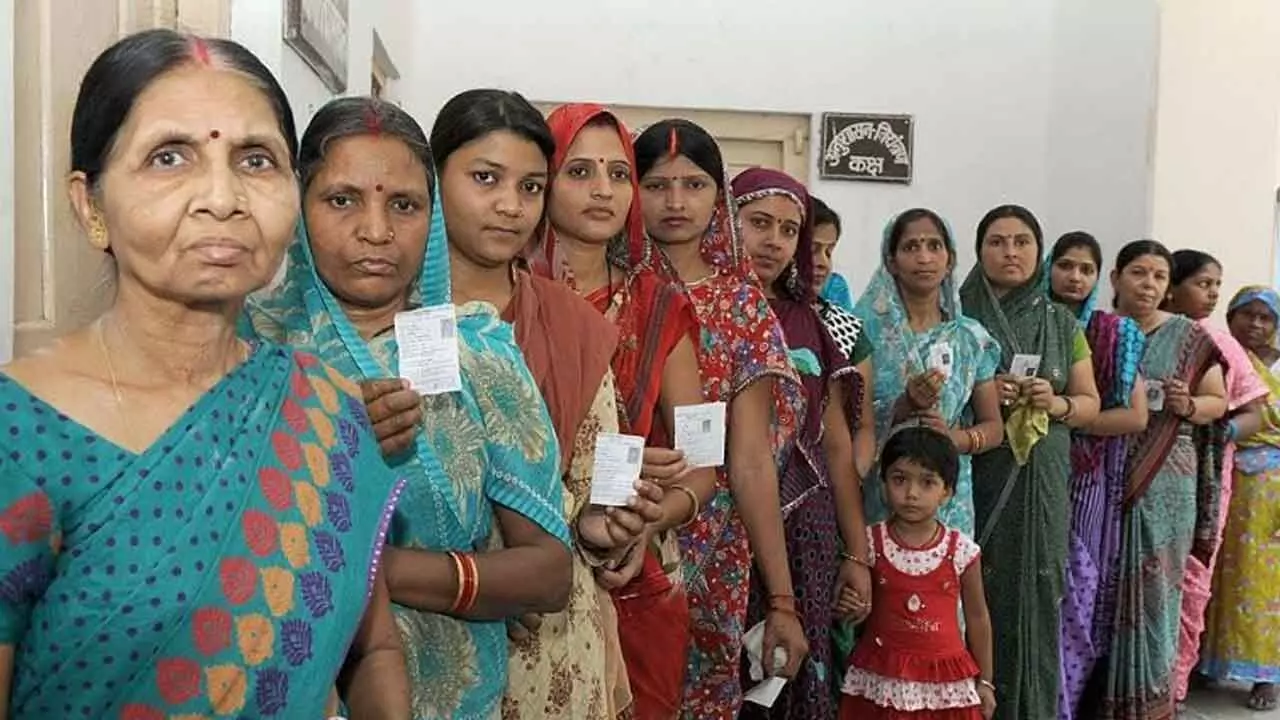

India’s ability to conduct free, fair and regular elections across a vast and diverse electorate remains one of the most impressive achievements of its democratic polity. Yet, as elections worldwide grow increasingly expensive, the corrosive influence of opaque funding, corporate donations and emerging threats such as disinformation and AI poses a serious challenge to electoral integrity.
While India’s Constitution envisaged an independent Election Commission insulated from executive control, evolving political and financial realities have strained that vision
The one aspect of the democratic polity of India that has impressed me most is the ability of the system to conduct free, fair, and impartial elections at regular intervals. I make that statement subject, of course, to the defects and weaknesses which all constitutional, statutory, and administrative arrangements are prone to suffer from.
But for the occasional hiccup here and there, the electoral arrangements in India have, by and large, acquitted themselves commendably, particularly having regard to the size of the country with diversity and the vast number of voters. Despite disturbing trends in recent attempts at manipulation and erosion of electoral integrity.
Almost every country periodically holds elections of one type or another. One study has shown that only 15 countries, including Nepal and Afghanistan, are absent from that list.
The year 2024 is often called the year of elections, with dozens of countries holding national elections, from Ecuador to Pakistan and from Indonesia to Slovakia. Nearly half the population of the world was eligible to vote in the election in that year and, quite naturally, the Global Democratic Community, a network of interconnected efforts by organizations, governments, and individuals promoting democracy worldwide, has recognised election integrity as a key issue in the fight against powers that attempt to suppress the vox populi in choosing the leaders of the country.
The pernicious evil of funding of elections, by corporate entities and other sources, in manipulating and impairing the integrity of the electoral processes in various countries, has been receiving special attention as a major scourge in the world today, along with Artificial Intelligence, disinformation, and hate speech. It was among the crucial issues identified by the International Anti-Corruption Conference, held in Lithuania last year.
Even as the Indian Constitution was being drafted in 1949, leaders such as B.R. Ambedkar recognised the importance of maintaining the sanctity of franchise and the need to insulate the election machinery from government control.
That vision was embedded in Article 324 of the Constitution, which entrusted to the Election Commission of India the sacred duty of superintendence, direction, and control of elections in the country. The independence and the neutrality of that body were regarded as imperatives and not merely administrative conveniences.
The idea that every government needs to be accountable to those who put it where it is, both in day-to-day matters and at the end of its tenure, is central to the concept of democracy, as it is practised in India.
A disturbing trend, noticed across countries of the world today, is that elections are becoming increasingly expensive, with the expenditure being largely met through donations from outside the government. An unholy nexus is emerging between the elected representatives and donors, who, quite naturally, seek favours from them later.
The need for such expenditure acts as a barrier to entry into electoral politics, especially for well-meaning citizens without the necessary wherewithal. Studies have estimated the expenditure on the presidential and Congressional elections in 2024 as being of the order of US$16 billion. And, in India, political parties are estimated to have spent about one lakh crores of rupees in the recent elections to the Lok Sabha.
An unfortunate situation, exacerbated by the fact that corporate funding in elections in India lacks transparency, fostering corruption and quid pro quo deals, apart from creating an uneven playing field and an increased dependence on black money.
Such funding buys access to the powers that be and creates the potential for seeking policy favours, exploiting the political-corporate coziness. As a witness, the Niraa Radia tapes that hit the headlines a few years ago. The opacity of the relationships also creates space for organised crime to gain increasing influence in many developing nations.
As a consequence, increasing demands are being made for greater accountability and public funding models to ensure fairness and curb undue corporate influence.
Corporate funding of elections works in many ways, including companies giving money directly to the parties or their candidates. An attempt made in recent times by the government of India to introduce the concept of anonymous electoral bonds suffered from various weaknesses and, in the event, was struck down by the Supreme Court of India for lack of transparency.
Different countries have adopted different approaches to tackle the menace. While Germany allows unlimited corporate donations up to a point, massive corporate spending characterises elections in the United States. At the other extreme, Brazil, in a significant regulatory move, has totally banned corporate donations.
In India, the government first, in 1960, legalised corporate donations and then, in 1969, totally banned it in order to curb the influence of big businesses on politics. It then amended the Companies Act, allowing corporate entities to make political contributions, subject to certain limits and compliance requirements relating to disclosure.
That move, however, proved ineffective, resulting in a significant increase in black money transactions were popularly known as 'briefcase politics', with parties and business representatives finding unofficial ways to exchange funds and favours
Another form which corporate financing of elections has assumed, a rather alarming and dangerous face of it, is the assistance provided by armament manufacturers to the political parties and the governments of countries, particularly superpowers, such as America, France, Russia, and China.
And, very unfortunately, the manufacturers benefit from continuing international conflict, which increases demand for weapons and military equipment, benefiting them at the cost of suffering and agony to backward countries and poor people.
As far as India is concerned, the Foreign Contribution Regulation Act (FCRA) prohibits political organisations from receiving foreign contributions.
However, when all has been said and done, experts in the field point out that any real electoral reform will require transparency in party finances and internal democratic processes, if it is to be equality for all candidates.
Some more electoral reforms, largely work in progress, are on the table, including those raised out of the Election Commission’s Report of 2016. They include amending the law to ensure that financial assistance provided by political parties to candidates falls within the candidates’ prescribed expenditure limits, establishing a ceiling on total expenditure by political parties, which should be no more than the expenditure limit for individual candidates multiplied by the number of candidates from the parties contesting the election, and speedy disposal of election-related litigation. All these, however, require bipartisan political support and prompt implementation.
And Myanmar has taken the historic decision of leaving the list of countries that do not conduct elections, by conducting elections beginning on 28 December 2025.
That the public perception, and that of experts, is that they were a sham, and were merely held to subvert the will of the people by imposing favoured candidates, is a different matter. One leading newspaper, in fact, has gone to the extent of calling the entire exercise a farce.
But, when all has been said and done, an election is an election, and there are different perceptions about every one of them all over the world. One has to wait this out and see how it pans out.
(The writer was formerly Chief Secretary, Government of Andhra Pradesh)





