

Democracy meets street power; Battle for Bengal may turn bitter
High stakes, higher risks in Bengal
Democracy meets street power; Battle for Bengal may turn bitter

With the Budget Session drawing to a close, the dust in Parliament has begun to settle. The political battle between the BJP and a fractured opposition has now decisively shifted from Delhi to the states, with key Assembly elections around the corner.
A larger question arises: does the conduct of political parties in Parliament influence voter behaviour in state elections? The answer is—only marginally. Assembly elections are shaped far more by local factors: the accessibility of the MLA, constituency-level performance, delivery on promises, and community connect.
Ideological battles in Delhi often take a backseat. Less edifying, but equally real, is the role of last-minute inducements, the money the parties would be paying to certain section of votershoping that it would influence outcomes at the margins.
West Bengal, however, is a different contest altogether and will have more elements than what have been mentioned above.
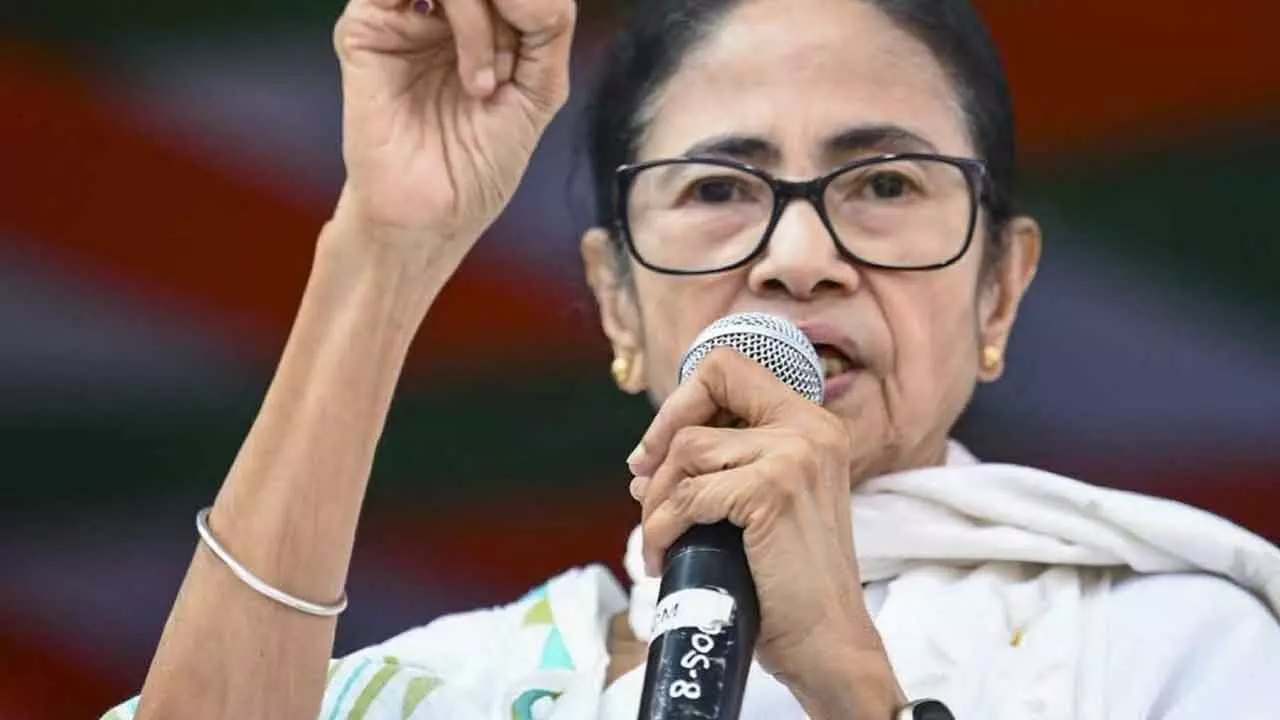
The Congress, after a long series of electoral setbacks, is unlikely to be a decisive player. The real battle is between the Trinamool Congress led by Mamata Banerjee and an increasingly assertive BJP.
Contrary to expectations, the Hindutva plank may not yield the kind of dividends the BJP hopes for. Its impact could remain limited in a state where regional identity and welfare politics carry significant weight. Prime Minister Narendra Modi has raised concerns over demographic shifts, but whether that translates into votes remains uncertain.
For Mamata Banerjee, the campaign narrative is likely to focus on alleged institutional overreach—questions over voter list revisions, the Election Commission’s decisions on polling phases, administrative reshuffles, and central agency actions. Yet, these issues too may not fully resonate with the average voter preoccupied with everyday concerns.
At this stage, the Trinamool Congress appears to hold an advantage. But writing off the BJP would be premature. Its footprint in Bengal has expanded steadily over the past decade. Despite falling short in 2016 and 2021, the party has shown persistence—and recent electoral successes elsewhere will only embolden it.
The bigger concern, however, is not who wins, but how the election is conducted.
As Bengal heads into another electoral cycle, the mood is tense. Shrill rhetoric, aggressive mobilisation, and fears of violence have once again come to the fore. Mamata Banerjee’s combative style has drawn criticism, with the BJP alleging that such language fosters intimidation.
But in Bengal, political messaging is rarely just about optics. It is aimed at the cadre—the last-mile worker who can influence whether a voter reaches the booth. Strong words are often calibrated signals. The problem is that in a charged environment, rhetoric can quickly translate into action.
Electoral violence in West Bengal is not new. It is rooted in a long history of cadre-based politics where territorial control has often shaped outcomes. This culture has survived political transitions—from the Left Front era to the present—and, if anything, intensified in a more polarised landscape.
The rise of the BJP has transformed the contest into a high-stakes, bipolar battle. Every booth matters. Every vote is contested. In such a climate, elections begin to resemble existential contests, where restraint is often the first casualty.
What is most disturbing is not the recurrence of violence, but its normalisation. It no longer shocks—it is anticipated.
The Election Commission has taken steps to contain risks through phased polling and deployment of central forces. These measures are necessary, but not sufficient. The real deficit lies in enforcement. Without swift and credible punishment, deterrence remains weak, and the cycle continues.
West Bengal’s elections today are as much a test of institutions as of political parties. Can the democratic process function without fear? Can voters exercise choice without coercion?
Bengal has no shortage of political awareness or engagement. What it lacks is assurance.
Until that changes, elections in the state will remain fiercely contested—but conducted under a lingering shadow of fear.
(The author is a former Chief Editor at The Hans India)





