

Centre should further energise economy to achieve the goal of developed India
Steep fall in food-led CPI inflation and resilient GDP momentum give RBI room for cautious easing
Centre should further energise economy to achieve the goal of developed India
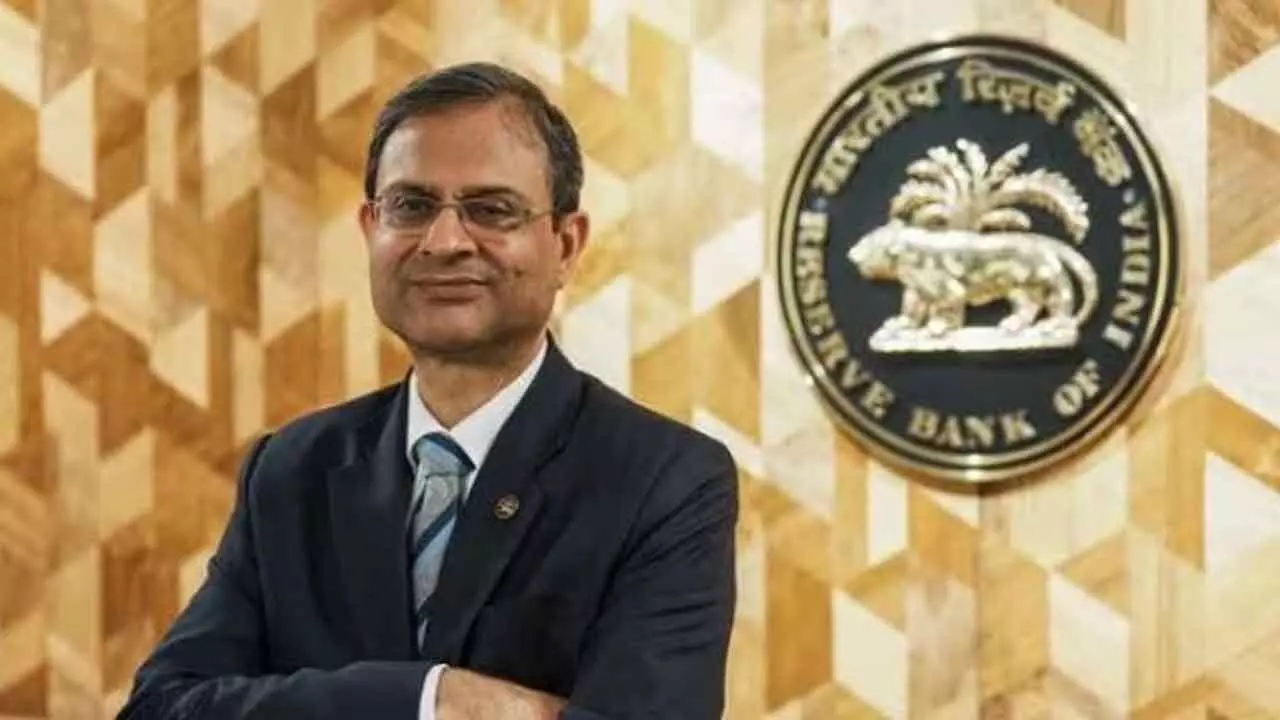

With economists split on whether the RBI would cut rates or hold steady, the central bank opted for a 25 bps reduction in the repo rate to 5.25% after headline inflation slid to a historic low of 0.3% in October
There was a mixed opinion amongst economists and the market that few expected a repo rate cut by the RBI, and few thought that the RBI may not cut the repo rate and maintain the status quo. There was also a difference of opinion on whether the RBI will continue to maintain its stance as neutral or is likely to change its status to accommodate.
However, a recent substantial fall in CPI inflation or headline inflation below the RBI mandate of a lower threshold of 2 per cent particularly considerable ease of food prices and headline inflation coming down to 0.3 per cent in October 2025, there was a case and space for RBI to bring down the repo rate at least to the extent of 25 basis points.
However from the India's real GDP growth perspective, it was felt that as Economy as at Q2 2024-26, has registered a real GDP growth rate of 8.2 per cent and for half year real GDP growth was at 8 per cent, the annual growth rate being revised upwards by Rating Agencies and Economists upwards, there may not be compelling reason to further ease the repo rate at this juncture.
It is gratifying to note that the RBI, after meeting in the MPC on 3rd, 4th and 5 th, decided in favour of Repo rate cut and reduced the repo rate by 25 bps to 5.25 per cent. Accordingly standing deposit facility rate under the Liquidity Adjustment Facility shall stand adjusted to 5.0 per cent, and the marginal standing facility and Bank rate to 5.50 per cent.
This repo rate cut action of the RBI has been welcomed by the market, and in spite of global un-certainties and the US Tariffs issue, and likely trade agreement with the US is yet to get signed, this positive action from the RBI will provide a further boost to India's rising real GDP growth, and markets welcome. RBI, further looking at the evolving liquidity conditions and the outlook, decided to conduct OMO purchases of Government securities of Rs1,00,000 crore and also a 3 year USD/INR Buy Sell swap of $5 billion this month to inject durable liquidity into the system.
This liquidity infusion and OMO purchase proposed by RBI can help in market stability as well as in further productive credit growth in the remaining days of this financial year, as this period will be a busy season and credit growth picks up further due to enhanced demand.
The headline inflation is at an all-time low as of October 25. This is due to higher khariff produc-tion, healthy rabi sowing, adequate reservoir levels and conducive soil moisture as per RBI. This has led to a correction in food prices. Moreover, it is expected that global commodity prices are likely to moderate going forward, except barring some metal prices.
The underlying inflation pressures are even lower as the impact of the increase in prices of precious metals is about 50 bps. It may be noted that the food group registered a deflation of (-) 3.7 per cent on y-0-y basis after registering (-) 1.4 per cent deflation in September.
Within the food group, vegetables, cereals and spices recorded a deflation of (-) 27.6 per cent, (-)16.2 per cent and (-) 3.3 per cent respectively. Similarly, CPI inflation for Q1 for 2026-27 and Q2 are projected at 3.9 per cent and 4.0 per cent, respectively, at the RBI mandate level of 4 per cent.
This headline inflation at ease level, if it happens as projected, may provide further space to the RBI to ease the repo rate. However, the risks are evenly balanced.
As far as Grown is concerned, despite 8.2 per cent real GDP growth of Q2, some of the emerg-ing signs of weakness in a few indicators like PMI manufacturing, have moderated to a 9-month low at 56.6 in November 2025.
Similarly growth index of industrial production (IIP) moderated to 0.4 per cent in October 2025 from 4.6 per cent in September 2025. Construction indicators viz steel consumption and cement production, recorded a modest growth of 2.4 per cent and 5.3 per cent respectively during October 25.
Electricity demand remained in a contractionary zone in November 2025. Due to GST rationalisation, even though a reduction in GST revenue was ex-pected, paralelly it was expected that due to higher consumption; the reduction in GST revenue will be lesser.
On the External side, as of November 25, India's foreign exchange reserves are at a comfortable level at $686.2 billion, providing robust import cover of 11 months,even though lesser than earlier at more than $704 billion on September 24.
However, recently Indian currency Rupees have de-preciated heavily and has fallen below 90 to the US dollar for the first time, with a 5.3 per cent year to year drop, thereby the sharpest annual decline since 2022 and also as Asia's worst-performing currency so far this year.
However, since the fall is against the US Dollar the Indian currency may not indicate weakness in view of India's strong macroeconomic fundamentals and strength of the external sector. According to Group Chief Economist Soumya Kanti Ghosh SBI " the decline in the value of the currency is being driven to the edge by trifecta of limbos in US India Trade deal, FPI outflows, chiefly equities ( after two years of robust inflows) and RBI clear stance of distancing itself from "interventionist regime" while wagering all it takes on exces-sive volatility by traders, arbitrageurs and jobbers. Separately, the offshore NDF has also gained momentum while signs of resurgence in the Dollar index are quite palpable”
According to RBI, India's current account deficit moderated from 2.2 per cent of GDP in Q2 24-25 to 1.3 per cent in Q2 25-26. India's inward remittances increased by 10.7 per cent y-0-y to $39.0 billion in Q2 25-26. Gross foreign direct investment (FDI) flows to India grew by 19.4 per cent to 51.8 billion from April to September 25 from $43.4 billion during the same period last year.
Net FDI inflows increased by 127.6 per cent to $7.7 billion in April to September 25 from $3.4 billion during the same period last year. There has been a moderation in ECB and Non Resi-dent deposits in the relevant period. The merchandise exports have contracted, whereas the im-ports rose, thereby resulting in a trade deficit of $41.7 billion on October 25.
India's merchandise trade deficit surged to an all time high of $41.7 billion in October 25 from $26.2 billion in Octo-ber 24. Foreign Portfolio Investors turned net buyers in India by late October 25, investing heavi-ly in equities (around Rs14,600 crore) and debt Rs3507 crore, reversing months of outflows.
Overall, India's external sector remains resilient, according to the RBI. Moreover India's external debt to GDP ratio declined to 18.9 per cent as at the end of June 25 from 19.1 per cent as at the end of March 25, while the net international investment position (IIP) moderated to(-) 8.0 per cent of GDP as at the end of June 25 from (-) 8.6 per cent of GDP at the end of March 25. Ac-cordingly, RBI has stated that "we are confident of meeting our external financing requirements comfortably"
RBI has been utilising the space available for positive rate action, and the same, along with gov-ernment-favoured ecosystem policies, India's Economy has been registering higher real GDP growth, and despite an unfavourable and challenging external environment, according to RBI, India's economy has shown remarkable resilience and is poised to register high growth.
This is a remarkable achievement as compared to global economic trends, and we need to further energise the Indian economy as we have a lot of growth to catch up against our desired developed India - Viksit Bharat.
We have been witnessing speeches with which the government has been address-ing key issues like trade agreement, GST Reforms, and Labour Reforms, which will help India to keep up with growth Momentum. We trust that all the stakeholders also will come forward and keep the growth flag high.
(The author is former Chairman & Managing Director of Indian Overseas Bank)





