

Beyond ‘Manavadu’: India’s long road to a casteless society
As technology races ahead, social divisions rooted in caste and community continue to hold India back
Beyond ‘Manavadu’: India’s long road to a casteless society
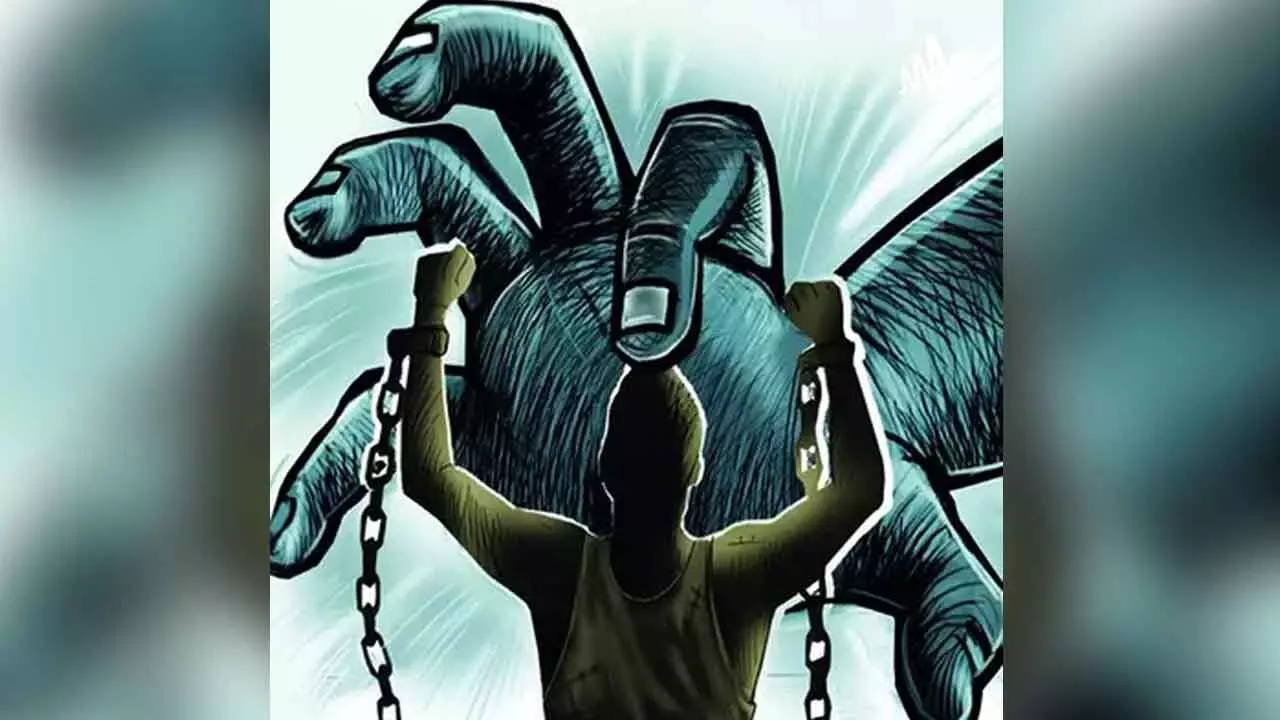

Even as the world stands on the threshold of a new age, an era of instant communication and artificial intelligence, the legacy of the past continues to haunt humanity in the form of armed conflicts between nations, terrorism, climate change, skewed distribution of wealth and income, and inequitable access to basic human needs.
Strangely enough, at a time when humanity ought to be moving towards treating itself as a single entity and dismantling, once and for all, the barriers of religion, race and creed, divisive forces continue to act as speed breakers on that journey.
In India, in particular, caste and community still play a depressingly significant role in multiple spheres, such as admissions to educational institutions, recruitment for employment, prospects of promotion, and even the selection of candidates by political parties to contest elections.
Ruling parties, both at the national and State levels, generously spend public money on doles and freebies for different sections of society, with an eye on furthering their electoral prospects.
There is a word in Telugu—‘Manavadu’—which loosely translates to “one of us”. It is a versatile word, assuming different forms and nuances in different contexts. When two Indians meet in London, it could simply mean an Indian. In Delhi, it may signify someone from the same State. In Hyderabad, it could refer to a person from the same religion. In a district headquarters such as Jodhpur, it may imply belonging to the same community; and at the village level, the same sub-caste within that community, and so on, ad infinitum. Like the proverbial continuous subdivision of fundamental particles of matter into ever smaller units, there is literally no end to this phenomenon.
What was intended, in ancient vedic times, as an arrangement of convenience from the point of view of division of labour and functions, has now become all pervasive and vicious - cancer that is eating away into the vitals of the body politic.
Even in the 21st century, when ambitious plans are underway to inhabit planets beyond Earth, thanks to spectacular advances in science and technology, it is deeply painful to find educational and healthcare institutions being established in order to cater to from a certain religion, community, or caste. I recall two colleges in a town where I once served, each catering to different sub-castes of the same caste.
Even in a metropolis like Hyderabad, student hostels exist that admit only members of a particular community or caste. It is high time the specters of religion, creed, caste, and community were by law, confined only to personal and private matters, and any attempt by individuals or institutions to perpetuate the evil in the public domain was made as a punishable offence.
That, of course, may sound like wishful thinking. The reality is that governments, both at the Centre and in the States, are increasingly recognising, encouraging and actively supporting divisions along caste, religious, and community lines.
Concessions for pilgrimages to Amarnath, Mecca or Jerusalem, as the case may be, offered to Hindus, Muslims and Christians respectively, make a mockery of the very idea of secularism. Instead of remaining equidistant from all faiths, governments are encouraging all religions through direct interventions. The same applies to the generous treatment extended to organisations meant exclusively for the upliftment of specific religious denominations.
It is understandable that the central and state governments should be establishing institutions to promote the socio-economic development of certain backward regions, and for the betterment of the people living there. For instance, the National Rainfed Areas Development Authority or the Central Arid Zone Research Institute.
However, establishing institutions merely to appease the sentiments of particular sections of society can only encourage fissiparous tendencies.
One redeeming feature visible in various parts of the country today is that marriages, which once never crossed the boundaries created by religions, communities, castes, sub castes are now beginning to take place without reference to any or all of them.
Alliances between persons belonging even to different countries are now beginning to take place, one development that augurs well in the vision of the future of the whole world as a single entity comprising a sole species of inhabitants, known as ‘human beings’.
Fortunately, many developments are taking place that serve to encourage one to think that there is a need of equity soon to be entered into. Time when everything and anything can be done by anyone, irrespective of religion, region, caste, community or sex.
From navigating spacecraft, to serving in the defence forces, from being an academicianor a scientist, to being a businessman or a professional such as a doctor, lawyer, or accountant, one is finding an increasingly large number of people answering to the requirements of the callings without regard to such distinctions. If elections could also be following suit, what more can one wish for?
Much as Karl Marx once envisioned a “classless society”, perhaps the world can now look forward to becoming a ‘casteless’ society!
(The writer was formerly Chief Secretary, Government of Andhra Pradesh)





