

2026 begins, but the Opposition refuses to change
As elections approach, the opposition still resists a serious reset
2026 begins, but the Opposition refuses to change
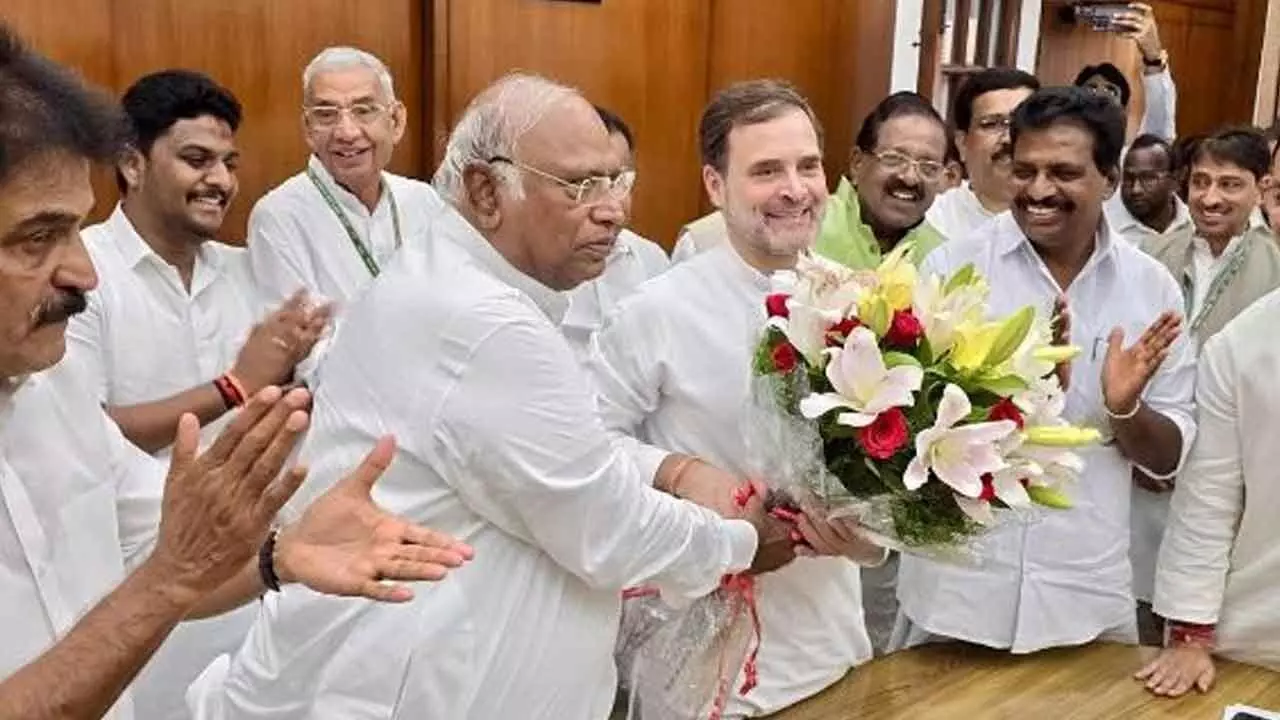

As India enters 2026, the opposition remains trapped in a cycle of reflexive negativity, despite repeated electoral setbacks. This op-ed argues that the refusal to recalibrate stems not from strategy but from deeper structural failures—an unresolved leadership vacuum, organisational decay, and a politics of grievance that has replaced persuasion.
Outrage has become cheaper than ideas, obstruction easier than alternatives. Media-driven messaging, faith in “external rescue,” and performative victimhood have narrowed the opposition’s appeal and credibility. Unless it shifts from protest to preparation and offers a mature, governance-ready vision, 2026 risks becoming another lost year for democratic accountability
As India steps into 2026, a puzzling continuity defines its political landscape: an opposition seemingly determined to persist with a relentlessly negative narrative, despite repeated electoral evidence that such an approach fails to resonate with the wider electorate. This refusal to recalibrate is not accidental. It stems from a complex mix of political psychology, unresolved leadership deficits, organisational decay, and a deeply entrenched culture of grievance that has steadily replaced the politics of persuasion.
At its core, negativity has become the opposition’s default survival mechanism. Years of electoral setbacks—particularly at the national level—have conditioned opposition parties to view politics less as a contest of competing visions and more as a daily struggle for relevance. Crafting a positive, governance-oriented narrative demands intellectual rigour, policy seriousness, and internal discipline. By contrast, opposing every government initiative requires little preparation while guaranteeing instant visibility. Outrage is cheaper than ideas, and obstruction is far easier than offering workable alternatives.
This tendency is reinforced by the quality of public articulation. Several opposition spokespersons routinely display either alarming ignorance or wilful distortion on matters of national importance. For instance, questioning the role of the Border Security Force whenever infiltration or terrorist incidents occur betrays a fundamental misunderstanding of how such threats operate.
Infiltrators do not enter through designated checkpoints; they exploit porous terrain, difficult geography, and, in the case of terrorism, often receive cover fire or logistical support from hostile states. Persistently raising such questions on national television is not naïveté—it is irresponsibility masquerading as critique.
The opposition also continues to suffer from an unresolved leadership vacuum, with no signs of improvement as 2026 approaches. It lacks both a widely accepted national leader and a credible collective leadership mechanism capable of enforcing coherence. In such conditions, negativity becomes the only unifying glue. A positive agenda would immediately provoke uncomfortable questions: Who owns it? Who is accountable if it fails? Who speaks for the opposition as a whole? Blanket criticism allows individual leaders to evade responsibility while preserving personal visibility. Anger, after all, unites factions more reliably than ideas ever could.
Organisational decline has further narrowed strategic imagination. Parties that once prided themselves on ideological depth and grassroots mobilisation now function largely as media-centric outfits. Research wings are weak, policy cells are under-resourced, and cadre training is neglected. Messaging is driven less by voter engagement and more by television debates and social media cycles. In such an ecosystem, negativity thrives because it travels faster, costs less, and delivers instant gratification.
Course correction would require rebuilding party institutions—a slow, unglamorous process few leaders appear willing to undertake. This explains why even repeated official clarifications are dismissed. Despite clear statements by the government, the Prime Minister, and the chiefs of the three-armed forces that there was no third-party mediation in Operation Sindoor, sections of the opposition continue to claim otherwise, amplifying speculative foreign assertions while distrusting their own institutions. The opposition ecosystem seems prepared to believe everyone except the elected government of the country.
Equally damaging is the opposition’s lingering faith in what may be called “external rescue”. There remains a belief that forces outside electoral politics—judicial interventions, institutional pushback, economic disruptions, or international pressure—will eventually weaken the ruling establishment. This fosters a politics of amplification rather than preparation: spotlight every controversy, magnify every crisis, and wait for circumstances to turn. A positive narrative grounded in policy and governance readiness would puncture this illusion by forcing the opposition to rely on its own credibility rather than hoped-for disruptions.
Victimhood politics has also become internally rewarding. By portraying themselves as perpetually wronged—by institutions, media, or the system—opposition parties seek to energise a committed base and command sympathy in select public spaces. Yet this strategy has delivered diminishing returns. Election after election has shown that what sustains morale within a narrow ecosystem alienates the undecided voter, who prioritises stability, competence, and solutions over grievance. Over time, constant victimhood begins to resemble helplessness rather than resistance.
There is, finally, a deeper fear driving this negativity: the fear of political erasure through agreement. In an intensely polarised environment, even selective support for government initiatives is seen as ideological surrender. Nuance is mistaken for weakness; cooperation for complicity. Total rejection becomes a signal of moral absolutism. Yet this misunderstands democratic opposition, which derives its legitimacy not from perpetual dissent but from credible scrutiny and principled engagement.
The cumulative effect is an opposition that appears more invested in the government’s failure than in the nation’s progress. Parliamentary debates descend into theatrics, walkouts replace argumentation, and serious policy critique is crowded out by slogans. The result is not stronger accountability but a diminished democratic conversation—one that paradoxically strengthens the dominance it seeks to challenge.
With elections in four states and mounting economic and social pressures, 2026 demands an opposition capable of maturity and imagination. This does not mean abandoning criticism; it means elevating it—opposing where necessary, supporting where justified, and offering a clear alternative rooted in national interest rather than partisan reflex.
If the opposition continues on its present course, 2026 risks becoming yet another lost year—defined by noise without consequence and protest without purpose. Democracies do not merely need opposition; they need an opposition that aspires to govern. Until that ambition replaces grievance as the organising principle, negativity will remain the opposition’s comfort zone—and its greatest political limitation.
(The author is a former Chief Editor at The Hans India)





