

How PM Modi outplayed the tariff pressure game
How PM Modi turned US tariff pressure into a strategic win, using patience, supply chain leverage, and geopolitical balance to reshape trade negotiations.
India-US trade deal
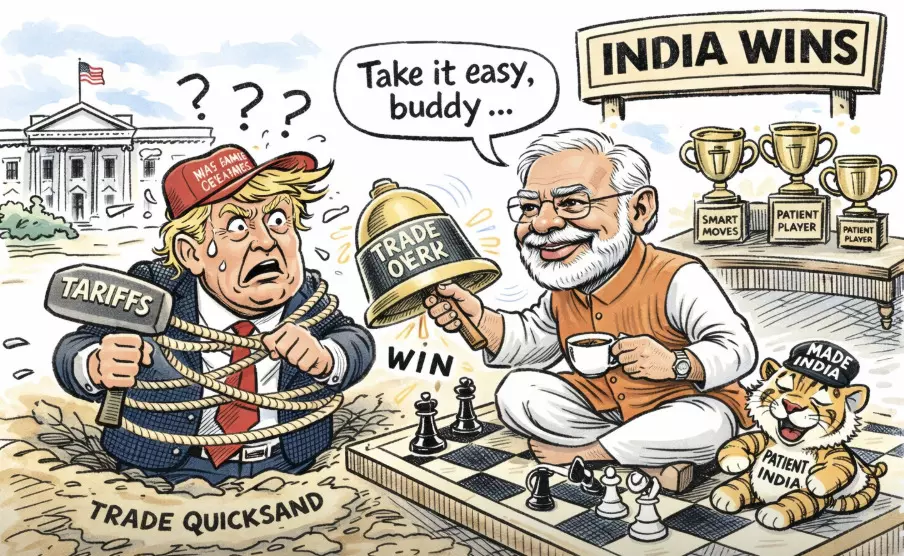
When tariff tensions rose between the US and India, many expected New Delhi to yield under economic pressure. Instead, Prime Minister Narendra Modi transformed a high-stakes trade standoff into a calculated diplomatic and strategic advantage.
When tariff tensions began tightening between Washington and New Delhi, many expected India to blink first. The United States, armed with market leverage and a history of aggressive trade posturing, seemed ready to squeeze concessions out of one of the world’s fastest-growing major economies. But the script didn’t unfold that way. Instead, Prime Minister Narendra Modi turned what looked like a pressure tactic into a strategic negotiation win.
The dispute wasn’t just about duties on steel, agriculture, or tech components, it was about leverage, positioning, and long-term economic influence. The U.S. approach leaned on short-term pressure: raise tariffs, restrict trade preferences, and force faster compliance. India responded with patience and calibrated counter-moves rather than confrontation.
First, New Delhi reframed the issue. Instead of treating tariffs as a crisis, India positioned them as part of a broader realignment of global supply chains. The government doubled down on its manufacturing push, production-linked incentives, and “China+1” positioning. This quietly strengthened India’s bargaining power — global firms still needed access to India’s market and labor base.
Second, Modi’s administration avoided headline-grabbing retaliation. Instead of escalating loudly, India used selective duties and regulatory levers that signaled resolve without triggering a full-blown trade war. The message was subtle but clear: India could absorb friction longer than expected.
Third, geopolitics played in India’s favor. As strategic competition intensified globally, Washington needed New Delhi as a reliable partner in technology, defense, and regional stability. That reality softened the edge of tariff threats. Trade pressure has limits when broader alliances are at stake.
What made the difference was negotiating style. The U.S. side pushed with urgency; India moved with endurance. Modi’s team treated the tariff standoff like a long chess game, not a street fight. Each delay, each technical committee, each phased discussion bought time — and time shifted leverage.
By the end, the tariff conversation evolved from punitive measures to mutual accommodation. Instead of appearing to concede under pressure, India emerged as a player that could negotiate firmly without derailing strategic ties.
The episode showed something important about India’s current economic diplomacy: it doesn’t rush, it doesn’t rattle easily, and it understands that in trade politics, endurance can be more powerful than aggression.
In the tariff duel, pressure was the opening move, patience was the winning one.





