

Trump’s next move in focus after India–EU seal ‘Mother of All’ trade deal
After India and the EU seal a landmark trade deal, global focus turns to President Trump, as the pact is seen as a hedge against U.S. tariff policies.
What's Trump’s next move?
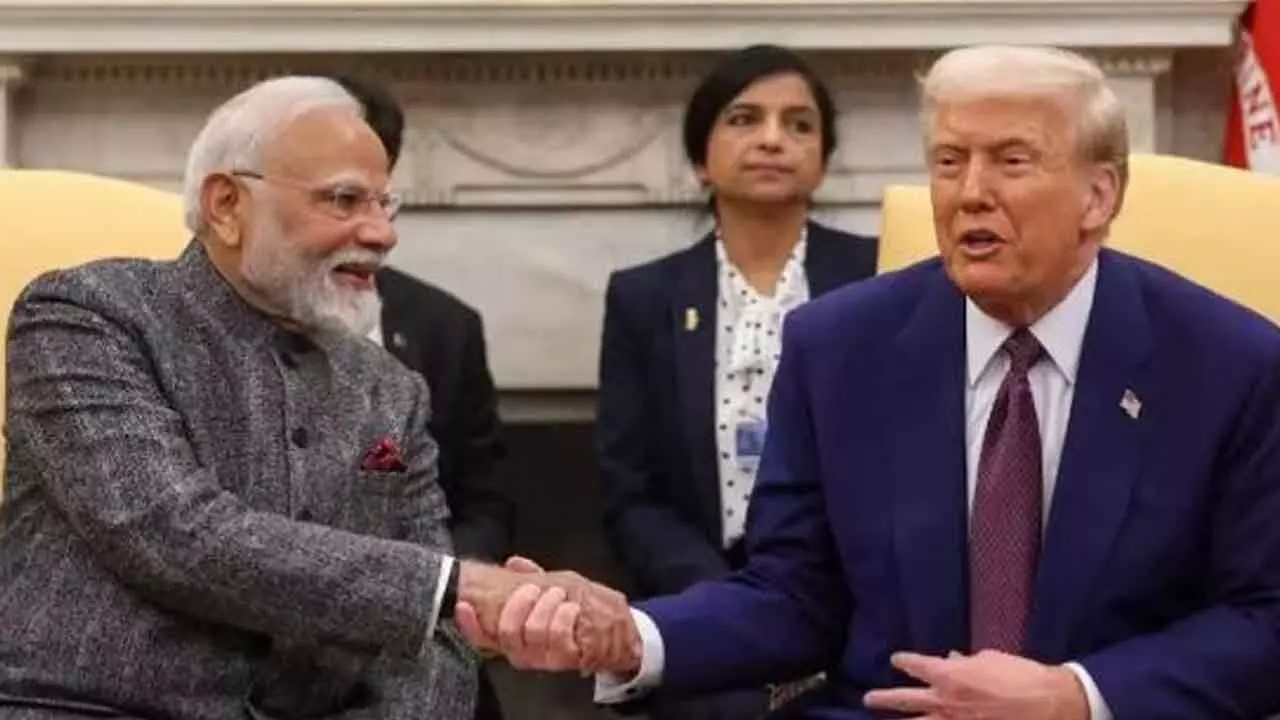
Following the landmark India–EU free trade agreement, global attention has shifted to U.S. President Donald Trump’s response, as the pact is widely viewed as a strategic move by both sides to reduce exposure to unpredictable American trade policies and tariffs.
The newly announced free trade agreement between India and the European Union has been hailed as historic by leaders on both sides, but global markets and policymakers are now closely watching one key figure: U.S. President Donald Trump.
Described by Indian Prime Minister Narendra Modi and European Commission President Ursula von der Leyen as the “mother of all deals,” the agreement marks the conclusion of nearly two decades of negotiations. The pact aims to gradually eliminate tariffs on the majority of goods traded between the two economic heavyweights, while easing non-tariff barriers and expanding cooperation across strategic sectors.
While New Delhi and Brussels celebrate the breakthrough, the deal is being widely interpreted as a strategic hedge against increasingly volatile U.S. trade policies. Under Trump’s leadership, Washington has pursued an aggressive tariff strategy, imposing duties on both allies and competitors, creating uncertainty for export-driven economies.
Although President Trump has not publicly responded to the India–EU deal, signals from Washington suggest unease. U.S. Treasury Secretary Scott Bessent recently criticized Europe for deepening trade ties with India, arguing that the United States had taken tougher measures, including tariffs linked to India’s continued purchases of Russian oil.
Despite that criticism, Indian officials have struck a conciliatory tone. Petroleum and Natural Gas Minister Hardeep Singh Puri emphasized that India’s relationship with the United States remains strong and expressed confidence that bilateral trade engagement would continue. He stressed that India supports the multilateral trading system and sees expanded access to European markets as a natural extension of its global trade strategy.
For the European Union, the deal comes at a time when its industries face higher U.S. tariffs despite prior transatlantic trade understandings. European policymakers are increasingly seeking diversified trade partnerships to shield their economies from sudden policy shifts in Washington.
Trade analysts say the agreement reflects pragmatic economics. With both the U.S. and China becoming more inward-looking, India and the EU are opening markets to each other in sectors where past protectionism had slowed progress, including autos, industrial goods, and services.
Still, the diplomatic balancing act is delicate. Europe remains dependent on U.S. security guarantees through NATO, and leaders are wary of provoking tensions with Washington. European lawmakers have framed the deal as part of a broader push for greater economic sovereignty while maintaining transatlantic ties based on mutual respect.
As the EU–India summit unfolds, praise for the agreement is expected to dominate official statements. Yet the geopolitical subtext is unmistakable: major economies are reshaping alliances to reduce vulnerability to unilateral trade shocks.
Whether President Trump responds with fresh tariff threats, renewed negotiations, or strategic restraint could shape the next chapter in global trade diplomacy. For now, the India–EU pact stands as both an economic milestone and a signal of shifting power dynamics in international commerce.





