

The Unbreakable Bond Between Patel and Nehru in India’s Freedom Struggle
The Nehru vs Patel debate overlooks history: Gandhi had long chosen Nehru as successor, and Patel loyally supported him, playing a key role in building modern India.
The Unbreakable Bond Between Patel and Nehru in India’s Freedom Struggle
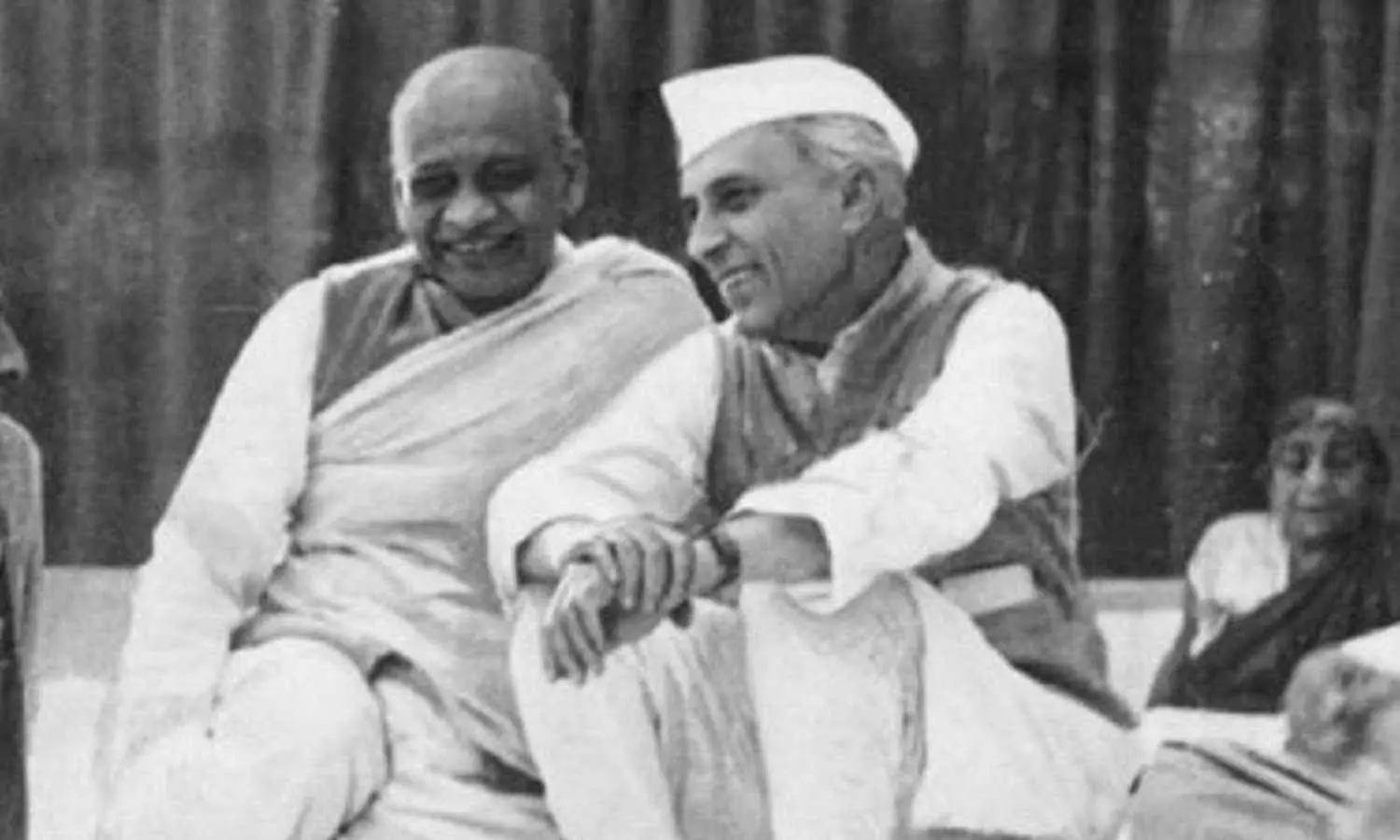
An argument has been going on regarding whether Sardar Vallabhbhai Patel should have been a prime minister or not. This is happening even after numerous years of independence. In the end, history stands testimony to the fact that the succession in favor of Jawaharlal Nehru was settled and publicly endorsed by Mahatma Gandhi long before 1946, leaving no room for any doubt.
Congress Conferences That Shaped India's Future
When speaking of defining moments experienced by the Indian National Congress before the Quit India Movement, the Lahore session of 1929 and Karachi session of 1931 crop up. At Lahore, Gandhi specifically chose Jawaharlal Nehru, adored by the youth and the masses, for the chairmanship of the session, who stood at 40 years of age. It was here that the resolution demanding complete independence, Purna Swaraj, was formally announced.
At the age of 56, Sardar Patel presided over the Karachi session to ratify the Gandhi-Irwin Pact and approved the resolution on Fundamental Rights which Nehru had drafted. Interestingly, many of its principles were incorporated into the Constitution of India. When impatient youth demanded instant independence, Patel addressed them:
"Gandhiji is now almost 63 years old. I am 56. Should we, the old, be anxious for independence or you, the young! We are interested in seeing India free before we die. We are far more in a hurry than you."
Patel and Nehru: Partners in Nation-Building
On September 2nd, 1946, when the interim government was formed, Jawaharlal Nehru became vice-president of the Executive Council, and Patel held the portfolio of Home, Information, and Broadcasting. On sending a letter of invitation to Patel to join him in August 1947, Nehru wrote:
"The writing is superfluous because you are the strongest pillar of the Cabinet."
In his reply, Patel spoke of his unwavering fidelity.
"I hope to have the satisfaction of serving Mamata Kashmir for the rest of my life. Should we unite, our strength will be invincible!"
As the first Deputy Prime Minister of India, Sardar Patel played a leading role in integrating 562 princely states into the Union of India; a task which historian Morarji Desai has called Patel's most fascinating achievement. While this was happening, the administrative skill and assistance of V. P. Menon and Lord Mountbatten, the last Viceroy of India, also proved to be mayoral.
On Support to Nehru on the Critical Issues
Despite occasional disagreements, Patel supported Nehru on different important issues. During 1949, he often balanced Nehru's advice to maintain a stiff upper lip, flash show of muscular power or strategic restraint, sending a clear political message by letting Nehru overcome domestic opposition ruthlessly to take Kashmir. Liaquate Nehru and 1950 Pact of Nehru also very brilliantly, when Sardar personally appeared to West Bengal's public and sought support for Nehru.
Gandhi had expressed long ago his preferences for leadership in India:
"I have said for some years, and say now, that not Rajaji, not Sardar Patel but Jawaharlal Nehru will be my successor."- January 25, 1942.
Patel's Respect and Admiration for Nehru
Personal letters of Patel suggest an intense sense of admiration for reasoning Nehru. In 1946, he praised Nehru's dedication to the cause of the nation, confirming right up to his death:
"I have held Jawaharlal Nehru to be my leader. The Chacha (Gandhi) made him his successor... It is incumbent upon all the soldiers of the Mahatma to do his darling wish."
The rhetoric of historian Rajmohan Gandhi:
"To represent and unify Indians from all walks of life and ages and across all classes and religions, Jawaharlal seemed more optimal than Vallabhbhai."
Lessons of History
One thing missed in the debate is the historical facts:
- Gandhi in any case had set out his plans for the succession years before he was actually assassinated.
- Paying reverence to Gandhiji's selection, Patel stood four-square behind Nehru.
- Age and health were to make Patel's premiership a difficult and short one.
As early as November 1948, Patel clarified his position: "After the Mahatma's death, we have come to realize that his judgment was correct in nominating Pandit Nehru as his heir and successor."
Today, the partnership between Nehru and Patel, later described as "unbreakable" by Patel, stands as a few of India's early instances of joint leadership. To pit the two against one another in historical distortion serves no purpose for the two individuals and for the country as a whole.
With the remembrance of Sardar Vallabhbhai Patel death anniversary in India in December 15, it would be a moment to recall his contribution, loyalty to Gandhi, and his central logic as the source of the formation of modern India.





