

PM Modi Malaysia Visit: Trade, AI and defence ties take centre stage
India and Malaysia strengthen trade, semiconductor, defence, and AI ties as Modi and Anwar reaffirm strategic partnership and boost Indo-Pacific cooperation.
PM Modi Malaysia Visit
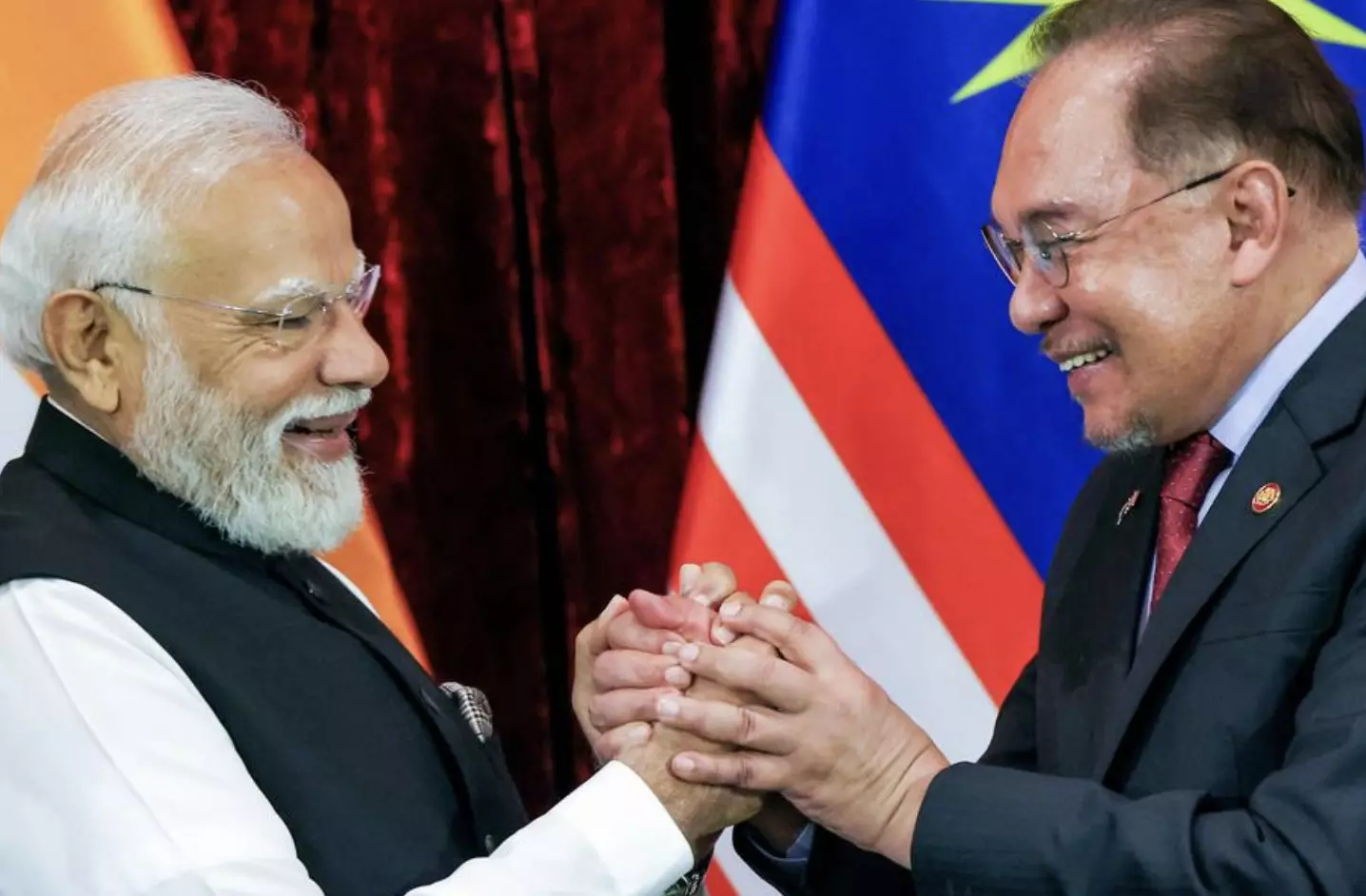
India and Malaysia reaffirmed their comprehensive strategic partnership as Prime Minister Narendra Modi and Malaysian PM Anwar Ibrahim pledged stronger cooperation in trade, semiconductors, defence, AI, and maritime security, alongside counter-terrorism coordination and expanded economic engagement across the Indo-Pacific region.
VIDEO | As part of his two-day official visit to Malaysia, Prime Minister Narendra Modi engaged with top Malaysian business leaders and CEOs in Kuala Lumpur.
— Press Trust of India (@PTI_News) February 8, 2026
(Source: Third Party)
(Full video available on PTI Videos - https://t.co/n147TvrpG7) pic.twitter.com/tIVuQUn2gE
India and Malaysia have renewed their commitment to deepen bilateral ties, with both nations positioning each other as “trusted partners for growth” while expanding cooperation across trade, technology, defence, and regional security.
During Prime Minister Narendra Modi’s two-day official visit to Malaysia, his first since ties were elevated to a Comprehensive Strategic Partnership in August 2024, he held extensive talks with Malaysian Prime Minister Anwar Ibrahim in Kuala Lumpur and Putrajaya. The discussions highlighted economic collaboration, strategic security interests, and emerging technology partnerships as key pillars of the relationship.
Modi emphasised that India’s growing global trade footprint has strengthened international trust in the country. Referring to India’s trade engagements with countries such as the UK, UAE, Australia, New Zealand, Oman, the EU, and the US, he said, “Trust has become India’s strongest currency,” underlining India’s reputation as a reliable economic partner.
A major focus of the talks was expanding trade and industrial collaboration. Both sides agreed to explore partnerships in semiconductors, artificial intelligence, digital technologies, healthcare, food security, and advanced manufacturing. The semiconductor sector, in particular, was identified as a strategic area, reflecting global efforts to build resilient supply chains and reduce dependence on limited production hubs.
Defence and security cooperation also featured prominently. Modi stated that India and Malaysia would strengthen collaboration in counter-terrorism, intelligence sharing, and maritime security. With both countries located along critical sea lanes in the Indo-Pacific, maritime stability and freedom of navigation were highlighted as shared priorities. Defence ties are set to become more comprehensive, with increased exchanges and cooperation in capacity building.
Touching on the broader regional outlook, Modi described the Indo-Pacific as the world’s emerging growth engine and reaffirmed India’s commitment to peace, development, and stability in the region in partnership with ASEAN nations. He noted that India and Malaysia share centuries-old civilisational and cultural ties, reinforced by Malaysia’s large population of Indian origin.
Malaysian Prime Minister Anwar Ibrahim echoed these sentiments, calling the partnership truly comprehensive. He highlighted expanding collaboration in trade, investment, connectivity, defence, healthcare, tourism, and food security. Anwar praised India’s rise on the global economic stage and expressed confidence that both governments would execute joint initiatives swiftly.
Following the talks, the two leaders witnessed the exchange of 11 cooperation agreements covering areas such as semiconductors, disaster management, and peacekeeping. Malaysia also signalled support for India’s efforts to open a consulate in Sabah state on Borneo island, further strengthening diplomatic and economic outreach.
Both sides discussed promoting local-currency settlement for cross-border transactions, a move aimed at easing trade and reducing currency risks. Malaysia expressed hope that bilateral trade would surpass last year’s level of $18.6 billion, reflecting the momentum in economic ties.
Overall, the visit underscored a deepening strategic alignment between India and Malaysia, blending economic ambition with shared security and regional stability goals.





