

Mumbai Development Debate Returns as Mahayuti and MVA Face Off Ahead of BMC Polls
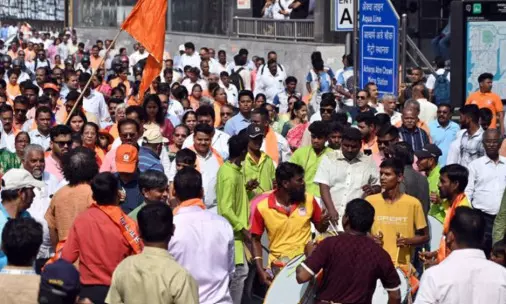
image for illustrative purpose
Mumbai, often described as India's financial capital, is once again at the centre of a political debate over development as parties gear up for the Brihanmumbai Municipal Corporation (BMC) polls. Supporters of the ruling Mahayuti alliance argue that major infrastructure projects move faster under Devendra Fadnavis led governments, while critics accuse the Mahavikas Aghadi MVA of slowing or stalling key works when in power. With the BMC election approaching, both sides are using Mumbai's development record as a key political weapon. Leaders backing the Mahayuti maintain that their governments revive Mumbai's image as dhavanari Mumbai, a city that moves with speed and purpose. They argue that delays in roads, Metro corridors and connectivity projects directly affect crores of commuters and businesses. According to them, interruptions in work are often driven by political rivalry rather than technical, environmental or financial constraints. Between 2014 and 2019, when Devendra Fadnavis served as Chief Minister, several long pending infrastructure proposals moved from files to execution. Projects stalled for years received approvals, Metro corridors expanded, planning for the coastal road progressed and construction began on the Mumbai Trans Harbour Link, later named Atal Setu. Supporters describe this phase as one of Mumbai's most decisive infrastructure pushes in recent decades. Those backing the Fadnavis government say administrative clearances were quicker and decision making was decisive, helping shape a broader vision for transport and connectivity.
They argue that the pace set during this period became evident when political leadership later changed, pointing to shifting timelines for tunnels, bridges and the underground Metro 3. Under Uddhav Thackeray leadership Critics of the 2019 to 2022 Uddhav Thackeray led Mahavikas Aghadi government allege that development momentum slowed considerably. They describe the coalition as being driven by power sharing rather than execution, claiming that infrastructure slipped down the priority list as internal coordination became central. The Metro 3 car shed issue at Aarey emerged as the most prominent flashpoint. Opponents
argue that halting work at the earlier site was politically motivated and aimed at denying credit to the previous government. They claim the decision led to cost escalations of nearly Rs 10,000 crore and delayed faster east-west connectivity by several years. Opponents further allege that several welfare linked and infrastructure schemes saw reduced emphasis during the Mahavikas Aghadi tenure, including the Jalyukt Shivar initiative and metro expansion plans. As residents grappled with potholes congestion and long commute times, critics claim that directives from Matoshree disproportionately affected projects associated with Devendra Fadnavis.
The lockdown period drew sharper political criticism. As Mumbai faced immense pressure on
healthcare employment and transport, rivals accused leaders from the Uddhav Thackeray camp
and allied groups of mismanagement and corruption. Allegations related to food supply
contracts and procurement during the pandemic deepened political tensions, with critics arguing
that leadership priorities appeared disconnected from public hardship.
After the 2022 political shift
Following the 2022 change in government, with Eknath Shinde as Chief Minister and Devendra
Fadnavis as Deputy Chief Minister, Mahayuti supporters claim that stalled projects were revived
quickly. They point to the opening of Atal Setu, described as the country's longest sea bridge,
as a key symbol of renewed administrative urgency. Other projects also gained momentum. The coastal road has significantly reduced travel time between south Mumbai and Worli, while the Mumbai Ahmedabad bullet train, earlier criticised as unnecessary, is now progressing rapidly. New metro routes have begun operations, gradually reshaping daily commuting patterns across the city. Political stakes ahead The return of a Mahayuti government in the 2024 Assembly elections under Devendra Fadnavis has reinforced claims of continuity in development across Maharashtra, including Mumbai. However, the contest for control of the Brihanmumbai Municipal Corporation remains politically charged, with parties linked to the earlier Mahavikas Aghadi seeking a comeback. Critics warn that a return of what they describe as a speedbreaker approach could once again slow civic works. They argue that ego driven politics and percentage based decision making risk pushing Mumbai back on infrastructure and basic services. Supporters of uninterrupted growth
insist the city cannot afford further pauses. As Mumbai stands at another political crossroads, the central question dominating public discourse remains whether the city will push for gatiman vikas or return to a phase marked by delays, uncertainty and stalled projects.
Under Uddhav Thackeray's leadership
The Metro 3 car shed issue at Aarey emerged as the most prominent flashpoint. Opponents argue that halting work at the earlier site was politically motivated and aimed at denying credit to the previous government. They claim the decision led to cost escalations of nearly Rs 10,000 crore and delayed faster east-west connectivity by several years. Opponents further allege that several welfare-linked and infrastructure schemes saw reduced emphasis during the Mahavikas Aghadi tenure, including the Jalyukt Shivar initiative and metro expansion plans. As residents grappled with potholes, congestio,n and long commute times, critics claim that directives from Matoshree disproportionately affected projects associated with Devendra Fadnavis. The lockdown period drew sharper political criticism. As Mumbai faced immense pressure on healthcare employment and transport, rivals accused leaders from the Uddhav Thackeray camp and allied groups of mismanagement and corruption. Allegations related to food supply contracts and procurement during the pandemic deepened political tensions, with critics arguing that leadership priorities appeared disconnected from public hardship.
After the 2022 political shift
Following the 2022 change in government, with Eknath Shinde as Chief Minister and Devendra Fadnavis as Deputy Chief Minister, Mahayuti supporters claim that stalled projects were revived quickly. They point to the opening of Atal Setu, described as the country's longest sea bridge, as a key symbol of renewed administrative urgency. Other projects also gained momentum. The coastal road has significantly reduced travel time between south Mumbai and Worli, while the Mumbai-Ahmedabad bullet train, earlier criticised as unnecessary, is now progressing rapidly. New metro routes have begun operations, gradually reshaping daily commuting patterns across the city.
Political stakes ahead
The return of a Mahayuti government in the 2024 Assembly elections under Devendra Fadnavis has reinforced claims of continuity in development across Maharashtra, including Mumbai. However, the contest for control of the Brihanmumbai Municipal Corporation remains politically charged, with parties linked to the earlier Mahavikas Aghadi seeking a comeback. Critics warn that a return of what they describe as a speedbreaker approach could once again slow civic works. They argue that ego-driven politics and percentage-based decision-making risk pushing Mumbai back on infrastructure and basic services. Supporters of uninterrupted growth insist the city cannot afford further pauses. As Mumbai stands at another political crossroads, the central question dominating public discourse remains whether the city will push for gatiman vikas or return to a phase marked by delays, uncertainty and stalled projects.





