

India Most Trusted Partner Towards Sustainable Future: Minister
India Most Trusted Partner Towards Sustainable Future: Minister
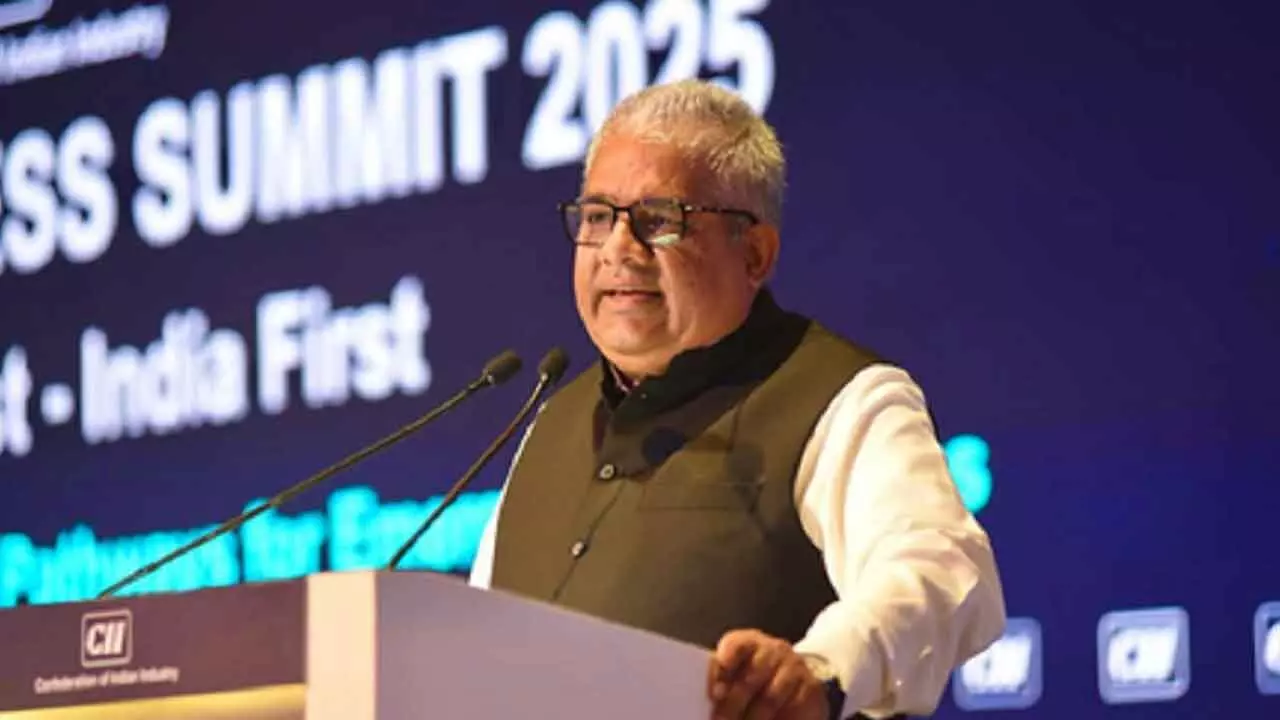
New Delhi: In a world characterised by geopolitical uncertainties, India remains the most trusted partner globally and this trust is attributed to political stability, visionary leadership, cultural values and unwavering commitment to a sustainable future, Union Minister for Environment, Forest and Climate Change, Bhupender Yadav, has stressed.
Addressing the CII ‘Annual Business Summit 2025’ in the national capital, the minister outlined India's climate policy architecture, focusing on three key drivers.
“India is transitioning from a linear to a circular economy model, aiming to reduce waste and en-hance resource efficiency. The government has introduced Extended Producer Responsibility (EPR) guidelines for various sectors, including tyres, batteries, plastics, and e-waste, to promote recycling and sustainable consumption,” he told the gathering.
Between 2022 and 2024, the recycling sector attracted investments totalling Rs 10,000 crore, re-flecting industry commitment to sustainable practices.
The circular economy sector is projected to be worth $2 trillion by 2050, creating approximately 10 million jobs.
Under the leadership of Prime Minister Narendra Modi, India has launched Mission LiFE (Life-style for Environment) and nationwide campaign 'Ek Ped Maa Ke Naam', a community-driven initiative aimed at environmental conservation.
“The introduction of Green Credit Rules under Mission LiFE incentivises voluntary actions to-ward environmental conservation, fostering a culture of sustainability,” said the minister. India also recognises the challenges posed by climate change and is committed to building resili-ence through adaptation strategies. The government has released the draft framework of the cli-mate finance taxonomy, outlining methodologies for classifying activities under adaptation and mitigation.
Moreover, the development of the first National Adaptation Plan, to be submitted to the United Nations Framework Convention on Climate Change (UNFCCC), focuses on enhancing adaptive capacity, strengthening knowledge systems, and reducing exposure to climate risks, he men-tioned.





