

India-Japan MSME partnerships likely to drive next wave of growth: Report
Japan aims to help its companies view India as a production base, considering its export-focused policies and its extensive trade agreement network
India-Japan MSME partnerships likely to drive next wave of growth: Report
New Delhi: As global supply chains realign and businesses look at setting up facilities outside China, India has emerged as a long-term strategic investment destination, with competitive export potential for Japan’s mid-sized companies to partner Indian MSMEs (micro, small and medium enterprises) to drive growth.
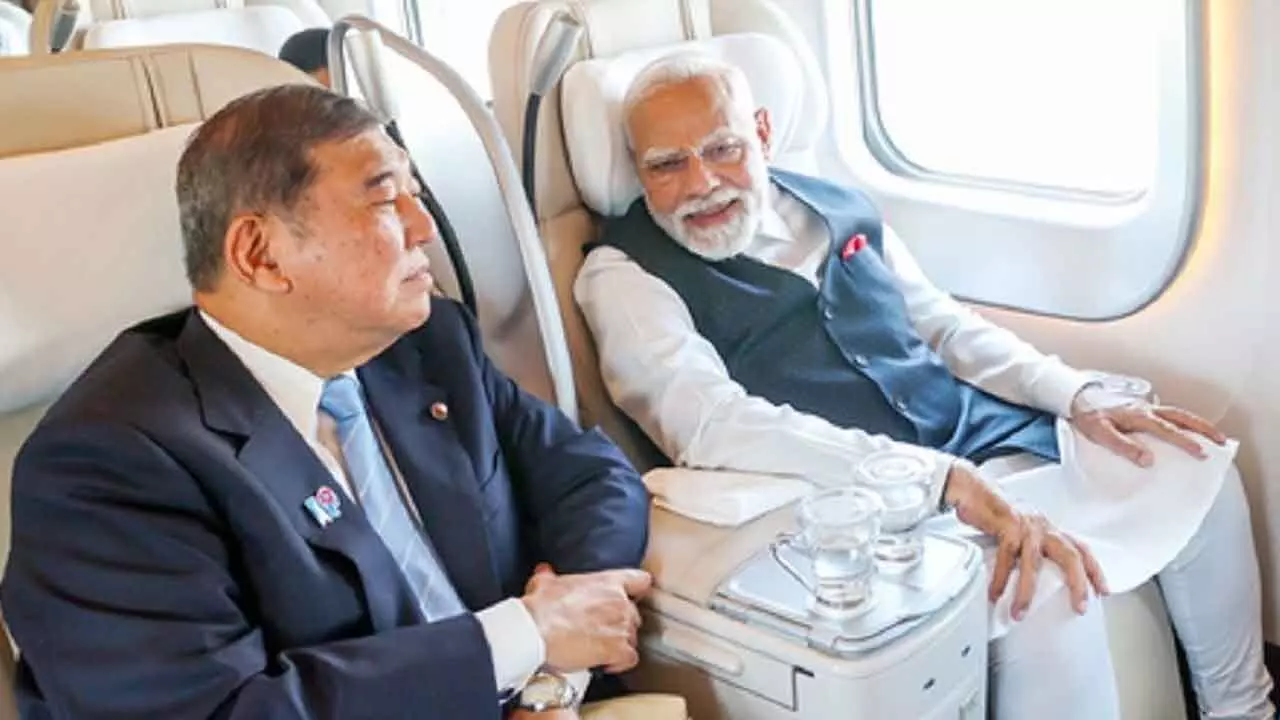
The India–Japan 'Joint Vision for the Next Decade', adopted during Prime Minister Narendra Modi's visit to Tokyo in August 2025, encourages cooperation among SMEs (small and medium enterprises) by fostering visits by Japanese SMEs to India and by expanding downstream industries.
Japan aims to help its companies view India as a production base, considering its export-focused policies and its extensive trade agreement network, according to an article in Japan Forward news portal.
Several new sectors have been identified where cooperation between the two countries could accelerate in the coming decade. Semiconductors and electronics are among the most promising areas. Japan's strengths in upstream semiconductor technologies align with India's rapidly expanding electronics market and strong government policy support, the article points out.
This could lead to joint development of OSAT (outsourced semiconductor assembly and test) and ATMP (assembly, testing, marking and packaging) facilities for semiconductors and deeper integration of electronics supply chains.
India’s large domestic market acts as a buffer against global market volatility and provides a solid base for sustained business growth. Furthermore, its strategic geopolitical positioning further enhances its appeal for targeting markets in the Middle East and in Africa. Japanese firms that establish manufacturing units in India can capitalize on these global connections to expand their international footprint.
Besides, India's current and upcoming free trade agreements and bilateral partnerships with major global economies have opened new markets amid global uncertainties, the article observes.





