

How Delhi Can Fix Its Smog: Beijing Opens Its Pollution Playbook
Beijing’s decade-long fight against smog offers Delhi a clear roadmap, from strict vehicle norms to industrial restructuring and regional action.
Beijing’s cleaner skyline showcases how tough pollution controls transformed a former smog capital into a global example.
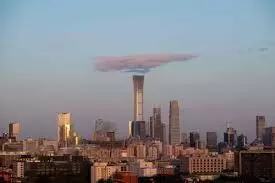
Once infamous as the world’s “smog capital,” Beijing has transformed its air quality through tough, sustained action. Now, China is openly sharing those lessons with Delhi as India’s capital continues to battle hazardous pollution levels.
In a series of posts on X, Chinese Embassy spokesperson Yu Jing outlined how Beijing achieved a dramatic turnaround after years of choking smog caused by rapid urbanisation, rising vehicle numbers, and heavy industry.
“Both China and India understand the challenge of air pollution amid fast-paced development,” Jing wrote. “While the problem is complex, China’s consistent efforts over the past decade have delivered clear improvements.”
A Decade of Change, Backed by Data
The figures indicate the progress made by Beijing. The annual PM2.5 average of the city in 2013 was an alarming 101.7 micrograms per cubic metre. However, this figure continued to decline and by the year 2024, it reached only 30.9 micrograms — such a huge decrease that most of the environmentalists have already included it in the list of global pollution control case studies.
Step 1: Target Vehicle Emissions
According to Jing, Beijing’s clean-air push began with strict controls on transport emissions. The city adopted ultra-stringent vehicle norms equivalent to Euro 6 standards, phased out ageing and high-emission vehicles, and imposed limits on car ownership through licence-plate lotteries.
Authorities also restricted driving through odd-even and weekday rules, while simultaneously expanding public transport. Beijing invested heavily in one of the world’s largest metro and bus networks and accelerated the shift to electric vehicles. Importantly, the city coordinated pollution reduction efforts with the surrounding Beijing–Tianjin–Hebei region.
“Cleaner air doesn’t happen overnight,” Jing noted, “but it is achievable.”
Step 2: Reshape Industry
The second pillar of Beijing’s strategy focused on industrial restructuring. More than 3,000 heavy and polluting industries were shut down or relocated. The relocation of Shougang, one of China’s largest steelmakers, alone reduced inhalable particulate matter by nearly 20 per cent.
Vacated industrial sites were converted into parks, commercial districts, and technology hubs. The areas that underwent redeveloping included the venues for the Winter Olympics, which was held in 2022. The capital was cleared of the non-core activities such as wholesale markets and logistics hubs, while the manufacturing in general moved to the neighboring Hebei province. Beijing retained higher-value research, development, and service sectors.
Lessons for Delhi: Scale and Urgency Matter
Indian environmental experts say these ideas are not new — but execution has been the missing link.
Anumita Roychowdhury, the Executive Director for Research and Advocacy at the Centre for Science and Environment, observed that the Chinese strategy was applicable to the whole region and not limited to a specific city. “Action wasn’t limited to Beijing. It covered 26 cities and towns, recognising that air pollution does not respect boundaries,” she said.
She added that China moved quickly and at scale, including deep energy transitions such as eliminating coal not just in industry but also in household use. “Beijing capped the number of cars sold each year while building massive public transport infrastructure. Delhi-NCR has similar plans on paper, but the scale is far smaller,” she noted.
Roychowdhury also criticised Delhi’s largely reactive approach to smog. “Emergency measures are not enough. “Pollution regulation must be enforced non-stop all over the year.”
Beijing's lesson is clear: smog in winter is back in Delhi, and it has to be treated with tough measures, coordination among regions, and a long-term focus — no more just fighting the problem seasonally.





