

From metros to tier-2 cities: Inside India’s expanding consumption boom
A fast-growing affluent class is powering consumption, redefining markets and shifting India’s economic centre of gravity
From metros to tier-2 cities: Inside India’s expanding consumption boom
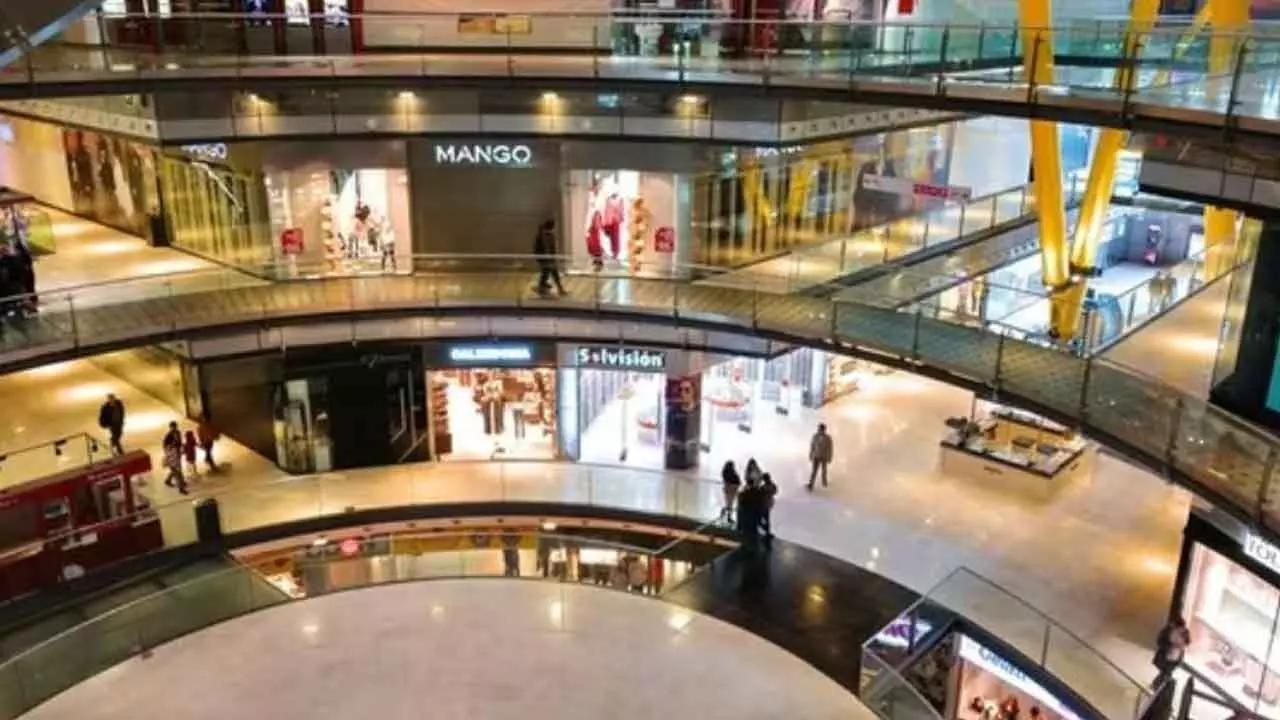
India’s economic transformation is increasingly being driven by a rapidly expanding affluent population. Rising incomes, booming asset values across equities, gold and real estate, and deeper access to financial services are creating a powerful consumption engine that now extends well beyond major cities.
With an estimated 50–60 million Indians already spending on discretionary products—and projections pointing to an affluent segment of nearly 100 million by 2027—luxury brands, premium healthcare, specialized real estate and asset managers are racing to tap this opportunity.
While the trend underscores widening wealth disparities, it also reflects structural strengths: strong GDP growth, a young and digitally fluent workforce, rising household savings and resilient financial rails
India's growing affluence is marked by a rapidly expanding high-net-worth population, increasing consumer spending (especially in luxury & experiences), rising asset values (stocks, gold, real estate), and a shift in consumption to smaller cities, creating significant market opportunities but also highlighting wealth disparity.
This trend is driven by India's strong economic growth, entrepreneurship, and broader access to financial services, with projections suggesting the affluent segment could reach 100 million by 2027.
The number of High-Net-Worth Individuals (HNWIs) and Ultra-HNWIs is increasing rapidly, with one new millionaire household emerging every 30 minutes, according to some reports. Income Growth: The segment of Indians earning over Rs10 lakh annually (roughly $10,000+) is growing much faster than the general population.
Card spending in non-metro areas surged 175 per cent (2019-2024), and credit card usage is rising faster than debit cards, signaling greater financial participation. Significant wealth has been generated from booming stock markets (Sensex), rising gold prices, and increasing real estate values.
Global luxury brands in jewelry, watches, and fashion are expanding their presence in India. There is growth in premium healthcare, specialised real estate, and high-value asset management. Smaller cities are becoming key growth centers for consumption.
Looking at the number of people who take a flight at least once a year, the number of people who order from food delivery services at least once a month, the number of people who file income taxes on sums of more than 1 million rupees ($12,046), and the number of people who have credit cards and postpaid mobile connections. Whichever way we looked, it seemed that the unique number of people who use discretionary products and services is somewhere in the region of 50 or 60 million.
Then we looked at the income pyramid, which tells us what the top 60 million people earn. It seems to be around an annual $10,000 per person. The population of Indians with incomes higher than $10,000 is 120 million, as per a Goldman Sachs report.
Nominal GDP is forecast to grow at ~11 per cent CAGR between FY2024 and FY2030, reaching about US$7.3 trillion. Private consumption already contributes roughly 60 per cent of GDP growth, and India could become the world’s third-largest consumer market by 2026.
This is not just an urban phenomenon. The narrowing gap between rural and urban spending is still large, but shrinking adds breadth to the story. Rural households once devoted the bulk of their budgets to food - that share has been falling, replaced by outlays on mobility, communication, and small durables. When the basic calorie is secure, status goods arrive quickly.
That translates into a larger, more productive labor pool, rising from ~980 million people of working age (15–64) in 2024 to ~1.07 billion by 2033, or roughly 70 per cent of the population, so long as job creation, skills, and inclusive policy keep pace.
Household savings are large and greasing the consumption wheel. India currently saves ~US$650 billion annually (~18 per cent of GDP). Projections suggest annual household savings could exceed US$1 trillion by 2030 and approach US$1.6 trillion by 2035, with financial savings (mutual funds, etc.) rising as a share of the pie. Monthly SIP inflows stood atRs29,361 crore in September 2025, a window into the mainstreaming of equity investing through disciplined retail flows.
Two macro sensitivities could test India’s next 10 years. First, job creation: the IT services complex has long been a generator of high-quality employment. It now faces a massive business model shift in an AI-first world, potentially altering near-term hiring intensity.
Second, asset prices: a sharp reversal in equities or gold would cool the wealth effect that’s been buoying sentiment. Policy continuity on infrastructure and manufacturing, alongside measured credit dispersion, will be critical shock absorbers.
Digital rails make credit safer - credit makes upgrades possible - upgrades expand formal retail - formal retail boosts taxes - taxes pay for infrastructure - infrastructure lowers time costs - lower time costs raise real disposable incomes and higher real incomes fund the next upgrade. When one cog slows, for example, when asset prices correct, the others keep turning. That is what resilience looks like in a consumption-led cycle.
Demography is also reshaping demand. About 712 million Gen Z and Millennials, the world’s largest cohort, are digitally fluent, globally exposed, and increasingly confident about their finances; social media shapes tastes while e-commerce puts brands within one-tap reach from metros to smaller towns, lifting discretionary spending.
Investment behavior is moving in tandem: between FY2013 and FY2023, the share of mutual-fund investors aged 18–24 inched up to 4 per cent, but the 25–35 brackets (Millennials plus younger Gen Z) saw the sharpest gains, signaling a durable broadening of equity participation.





