

Delhi Air Quality Alert: AQI Likely to Turn ‘Severe’ Over Weekend
Delhi’s AQI hits ‘very poor’ at 376; dense fog and winter conditions may worsen air quality over the weekend before improvement by Feb–Mar.
Dense fog blankets Delhi as air quality deteriorates, raising health concerns across the city.
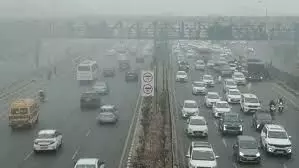
On Saturday, December 20, 2025, Delhi's Air Quality Index (AQI) reached its maximum level, which is 376, and thus classified as “very poor.” The day before it was 374. The places where very poor air quality was measured and hence pollution even higher were: Sarai Kale Khan with 428, Akshardham 420, Rao Tularam Marg 403, and Barapullah flyover 380 according to Central Pollution Control Board (CPCB) data.
In addition to heavy fog and unfriendly winter weather, city officials also predicted difficulties in air quality due to the fact that the best anti-pollution measures were put in place and still, the situation was going to worsen. The India Meteorological Department (IMD) has already warned of fog conditions by giving an orange alert and has predicted that the freezing cold along with the fog will continue for the next few days as winter has just started.
Understanding AQI Levels
CPCB classifies AQI as follows:
0–50: Good
51–100: Satisfactory
101–200: Moderate
201–300: Poor
301–400: Very Poor
401–500: Severe
When Air Quality to Become Better?
Shambhavi Shukla, who is the Programme Manager at the Centre for Science and Environment (CSE), made a statement forecasting the improvement of air quality in Delhi from the month of February to March. She claimed that “the quality of air would slowly but surely get better, especially after the monsoon season of July-August, since rain is the major factor in the trapping of dust particles”. Moreover, rain has the effect of cleaning up the atmosphere by reducing PM2.5 and PM10 levels.
What Are The Reasons Delhi Has Fog and Pollution?
The winter fog covers the tiniest particles and thus makes the air quality worse. A research paper published in 2024 titled ‘Role of meteorology and air pollution on fog conditions over Delhi during the peak winter 2024’ stated that fog was present for 46% of the time in January 2024. The factors responsible for this include:
Cold wave and severe cold wave conditions
Weak or absent western disturbances
High relative humidity and temperature inversions
Shallow boundary layer and poor ventilation
High levels of PM2.5 and PM10
Lack of significant surface winds
Meteorologists’ predictions, coupled with thick fog and smog, resulted in the air quality being rated as hazardous, which in turn caused health problems and made people change their daily routines.
The authorities have been closely following the condition and recommending preventive measures especially for the at-risk groups like kids, old people, and those having breathing problems.
Health Advisory
Do not go outside at all during the early hours and at night
If it is feasible, make use of indoor air purifiers
When out, put on a mask
Follow the daily AQI numbers through the CPCB and SAFAR apps
People living in Delhi are warned to stay alert because despite the fact that pollution levels will be high until the weather gets better.





