

Congress' "Two-Thirds Majority" Jab at BJP Over 'One Nation, One Poll'
Congress' "Two-Thirds Majority" Jab at BJP Over 'One Nation, One Poll'
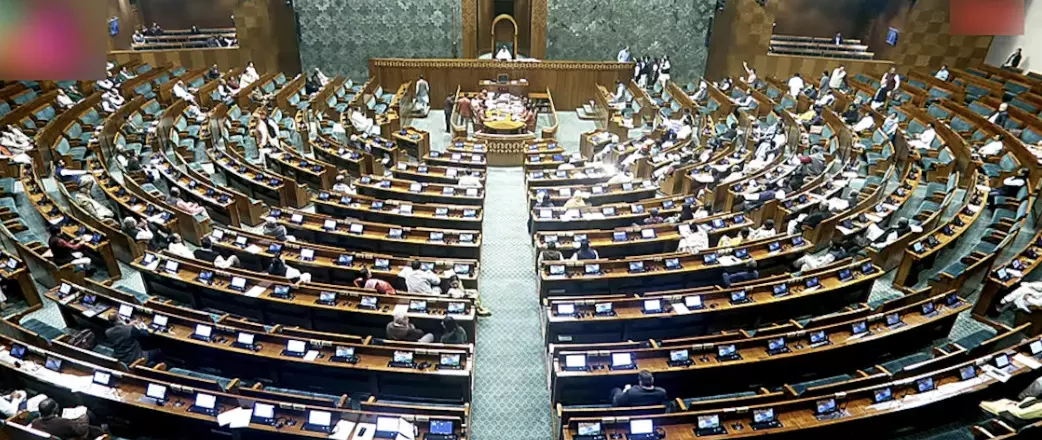
The Lok Sabha held a division vote on Tuesday to introduce two bills aiming to amend the Constitution and allow simultaneous federal and state elections, part of the ruling BJP's 'one nation, one election' initiative. The bills, introduced by Law Minister Arjun Ram Meghwal, passed with a simple majority—269 MPs in favor and 198 against—but fell short of the two-thirds majority required for constitutional amendments.
Congress MP Manickam Tagore highlighted this shortfall on X, pointing out that only 269 out of the 461 votes were in favor, far from the 307 needed for a two-thirds majority. Shashi Tharoor echoed this sentiment, suggesting the government lacks sufficient support to pass the bills and should reconsider its approach.
According to parliamentary rules, amendments to the Constitution need a two-thirds majority of members present and voting. Congress emphasized that if the vote were to pass the bill, it would require 307 votes out of the 461 participating members, but only 269 supported the introduction, indicating insufficient backing.
Despite the BJP-led National Democratic Alliance (NDA) holding 293 MPs, they still need additional support from non-aligned parties to reach the required threshold. Currently, the YSR Congress and the Akali Dal have pledged their support, but Prime Minister Narendra Modi still needs at least nine more votes to advance his 'one nation, one election' agenda in the Lok Sabha.
With the bills likely heading to a joint committee dominated by the BJP, the party has issued notices to over 20 absent MPs, enforcing a three-line whip to ensure their presence in future votes.
Opposition Criticism The Congress and other opposition parties, including the Samajwadi Party, Trinamool Congress, and DMK, have strongly opposed the bills. They argue that simultaneous elections undermine the Constitution's basic structure. Critics like Dharmendra Yadav warned that the proposal could lead to authoritarian rule, while Mamata Banerjee condemned it as an anti-federal move threatening India's democracy.
The bills also face scrutiny over their financial implications, with concerns about the Election Commission's need to spend ₹10,000 crore on new electronic voting machines every 15 years.
BJP Allies' Support Conversely, BJP allies like Andhra Pradesh's Telugu Desam Party and Maharashtra's Shiv Sena faction have voiced their support, citing positive experiences with simultaneous elections in their regions.
BJP's Response Law Minister Meghwal defended the bills, arguing that they represent long-needed electoral reform and will not harm the Constitution. He assured that the amendments are aimed at streamlining the electoral process without tampering with the Constitution's fundamental principles.
What Is 'One Nation, One Election'? The concept involves synchronizing Lok Sabha and Assembly elections across India. Currently, only a few states vote alongside the general elections, while the rest follow their separate five-year cycles. Implementing this system would require a constitutional amendment and ratification by state governments and major political parties.
The future of the 'one nation, one election' proposal hinges on the BJP's ability to secure the necessary support in Parliament and navigate the complex process of constitutional amendment.





