

Budget 2026 to focus on PMJAY expansion, rural healthcare infra
Budget 2026 may boost PMJAY, rural healthcare infrastructure, PPPs and insurance coverage as India aims to raise public health spending toward 2.5% of GDP.
Budget 2026 to focus on PMJAY expansion
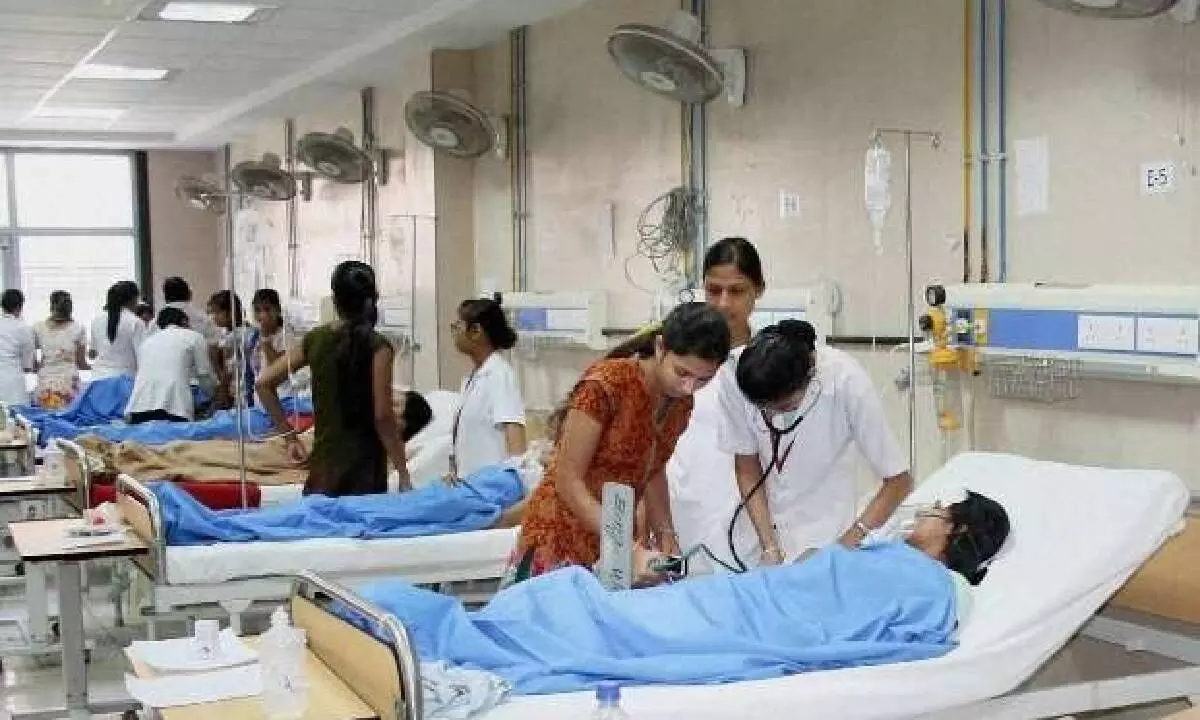
India’s healthcare sector is urging Budget 2026 to go beyond incremental funding and drive structural reforms, with stronger rural infrastructure, expanded insurance coverage under PMJAY, PPP incentives, and higher public health spending to move closer to the National Health Policy target.
As India prepares for the Union Budget 2026–27, the healthcare sector is calling for a decisive policy shift from gradual budget increases to deep structural reforms. While public health allocations have risen steadily, industry leaders stress that spending still remains below 2 percent of GDP — well short of the National Health Policy goal of 2.5 percent.
The healthcare allocation rose from ₹87,657 crore in FY25 to around ₹95,958 crore in FY26, marking a 9.46 percent increase. However, experts say the next budget must deliver a “booster dose” to a sector projected to reach a $500 billion valuation by 2047.
Beyond Metros: Infrastructure Push
One of the central expectations from Budget 2026 is the decentralisation of healthcare infrastructure. Currently, advanced medical facilities remain concentrated in Tier-1 cities, leaving Tier-2, Tier-3 cities and rural regions underserved. Industry stakeholders are urging the government to provide incentives for hospitals and healthcare providers to expand into smaller towns.
Hospital leaders emphasize the need for affordable capital, faster regulatory clearances and realistic reimbursement structures under government schemes. Delayed payments under public health programs, they say, limit reinvestment and slow capacity expansion. Public-private partnership (PPP) models are also expected to receive renewed policy support, enabling private expertise to strengthen secondary care in underdeveloped regions. Industry bodies have proposed a dedicated Healthcare Infrastructure Fund to facilitate long-term financing.
Expanding Insurance and Reducing Patient Costs
India has made notable progress in lowering out-of-pocket (OOP) healthcare spending, which fell from 62.6 percent in 2014–15 to 39.4 percent in 2021–22, driven by initiatives like Ayushman Arogya Mandirs and the Pradhan Mantri Jan Arogya Yojana (PMJAY).
For Budget 2026, stakeholders are seeking further expansion of PMJAY’s beneficiary base and higher insurance cover per family. The scheme’s recent extension to citizens aged 70 and above is seen as a positive step. However, hospital operators caution that payment delays and inadequate reimbursement rates threaten sustainability.
The industry is also advocating GST reductions on health insurance premiums and medicines, correction of inverted duty structures on medical devices, and a uniform 5 percent GST rate to reduce hospital input costs. Raising the tax deduction limit for preventive health check-ups from ₹5,000 is another key demand to promote early diagnosis and a prevention-first approach.
Disease Elimination Targets
The budget will also reflect progress on major national health missions. India has achieved the Kala Azar elimination target of fewer than one case per 10,000 population across endemic regions.
Tuberculosis remains a major challenge. Although incidence has fallen by 17.7 percent between 2015 and 2023, India is still far from its 2025 elimination target. Analysts expect increased allocations to nutrition and support programs such as the Ni-kshay Poshan Yojana to accelerate progress. The government’s long-term commitment to eliminating diseases like sickle cell anaemia by 2047 also remains in focus.





