

Apparel exports up 1.6% in April-Jan period, says report
Several key markets have shown encouraging growth,says AEPC Chairman Sakthivel
image for illustrative purpose
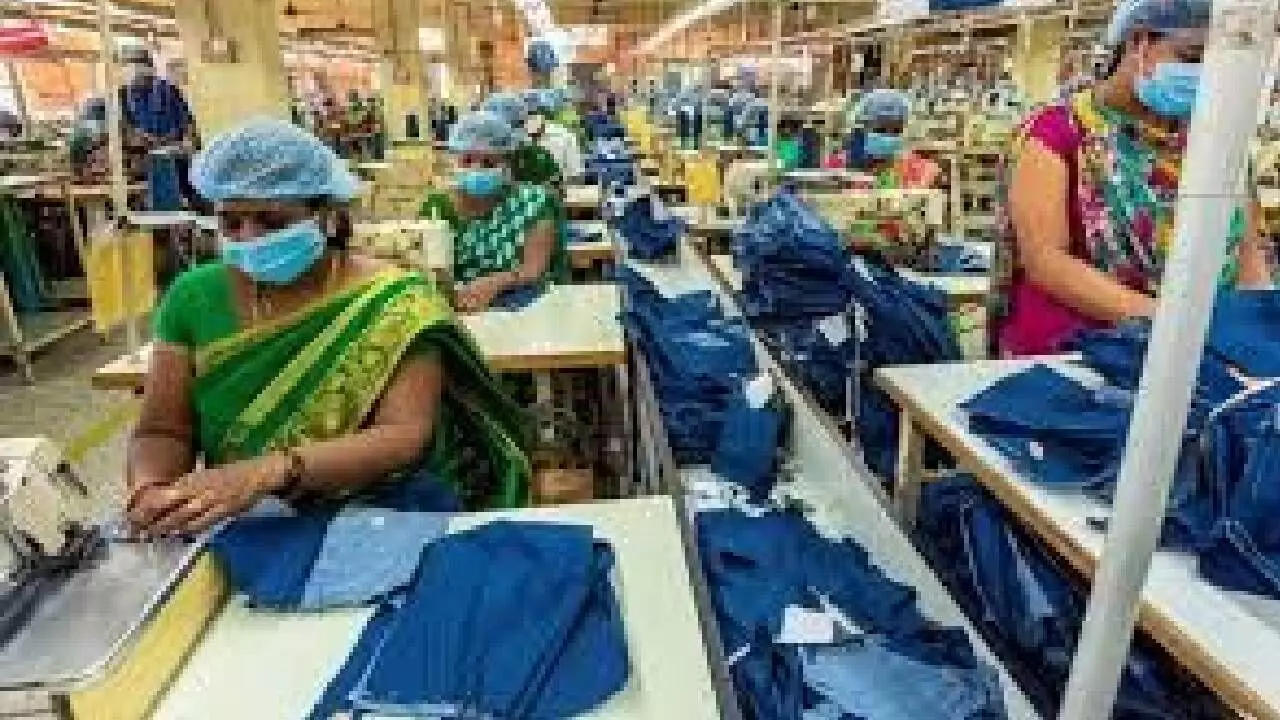
New Delhi: India's apparelexports registered a moderate growth of 1.6 per cent during April-January 2025-26 despite global headwinds and supply chain disruptions, AEPC said on Monday.
Apparel Export Promotion Council (AEPC) Chairman A Sakthivel said exports to several key markets have shown encouraging growth, including Italy (16 per cent), the UK (4.8 per cent), UAE (10.6 per cent), Saudi Arabia (18.5 per cent), Germany (8.7 per cent), and Spain (7.1 per cent).
Strong performance has also been recorded in Japan, Iceland, and Australia.
"Despite global headwinds, geopolitical uncertainties, and ongoing supply chain disruptions, the sector registered a moderate export growth of 1.6 per cent during April–January 2025-26 compared to the corresponding period of the previous financial year," he said.
The council on Monday celebrated its 48th foundation day. Over the years, the council has consistently taken up industry concerns with the government and relevant stakeholders to promote, protect, and safeguard the interests of the ready-made garment (RMG) sector, Sakthivel said.
He added that several key government initiatives that are expected to accelerate sectoral growth, including PM Mitra Parks, Production Linked Incentive (PLI) Scheme, Mega Textile Parks, the Export Promotion Mission, and the Samarth skilling programme.
Additional support measures such as promoting extra-long staple cotton cultivation, enhancing ease of doing business, improving credit access for MSMEs through expanded credit guarantee coverage, and establishing national centres of excellence for skilling are also expected to provide significant momentum to the industry, he said.
"Looking ahead, AEPC plans to further expand the global footprint of Indian apparel exports through diversification into new and non-traditional markets, supported by targeted export promotion activities during 2026-27," Sakthivel said.
According to report, this broader export performance shows that textiles and clothing faced softer demand compared with some other merchandise segments. The 1.6 % increase in apparel shipments reflects continued global demand but also challenges in some markets and competitive pressures.
Ready-Made Garments (RMG), a key component of apparel exports, have shown positive year-on-year growth in other partial datasets, indicating pockets of resilience even if overall export growth remains modest.
Indian textile and apparel exports have been affected by trade dynamics in major markets, such as lower exports to the United States due to higher tariffs, which at times have weighed on growth.
Exporters continue to adapt by diversifying to markets in the EU, UK, West Asia and Africa, helping cushion impact from tariff-related volatility.
The Government of India has been strengthening industry support, such as extending the Textile PLI (Production-Linked Incentive) scheme to boost competitiveness, attract investments, and improve global market share.
New export promotion initiatives and financial schemes like the Market Access Support (MAS) Scheme aim to help exporters navigate market challenges and expand reach. Indian apparel exporters are benefiting from manufacturers seeking alternatives to traditional suppliers ( Bangladesh and China) amid shifting global trade patterns.





